

In the dynamic and highly competitive world of the travel industry, the difference between a standard booking and a high-value relationship often comes down to a single factor: communication.
For travel agents aspiring to dominate the profitable luxury sector, understanding destinations is not enough; you must also be fluent in the "language of luxury."
At Vincent Vacations, we believe that knowing how to communicate effectively with discerning clients—in both written and spoken form—is the cornerstone of building trust. Words are more than just descriptors; they are the tools used to convey professionalism, quality, and care.
This comprehensive guide will explore the nuances of luxury linguistics, helping you refine your skills to meet the exacting standards of the upscale market.

Part 1: Decoding the Luxury Mindset
Before mastering the vocabulary, an agent must understand who they are speaking to. The term "luxury travel" is not a monolith; it covers a wide spectrum of travelers, each with distinct desires, financial capabilities, and expectations.
To serve this market effectively, you must identify where your client falls on the luxury spectrum early in the relationship.
According to industry analysis, luxury clients generally fall into three primary categories:
1. The Aspiring Luxury Traveler
This client represents the entry point into the high-end market. They may be experiencing luxury travel for the first time or actively working toward a financial status that allows for it.
- The Motivation: They are often looking to treat themselves for a special occasion.
- The Spend: They are willing to pay a premium for specific amenities or add-on experiences that enhance their trip.
- The Limitation: They may not yet have the means to afford the most exclusive, top-tier options, requiring the agent to balance high-end feel with budget reality.
2. The Premium Luxury Traveler
This client is established and affluent. They have the means to afford luxury travel consistently and are driven by a desire for elevated service standards.
- The Motivation: They seek higher-end amenities and, crucially, more personalized service.
- The Spend: They are willing to pay for exclusive experiences and often prefer high-end luxury brands that align with their own affluent lifestyle.
3. The Ultra-Luxe Traveler
This is the apex of the market. For the Ultra-Luxe traveler, money is rarely an object; time and privacy are the currencies that matter most.
- The Motivation: They demand the absolute ultimate in luxury, convenience, and exclusivity.
- The Spend: They will pay a significant premium for the most opulent accommodations, private jets, and amenities that ensure they are separated from the general public.
Understanding these distinctions helps you determine not only the travel recommendations you make but also the tone you use to earn their trust.

Part 2: The Art of "Luxury Linguistics" in Marketing
In the "revenge travel" era, where demand for high-end experiences is surging, your marketing materials must cut through the noise. The use of precise, evocative words is key to differentiating luxury products from standard counterparts.
The Power of Evocative Description
Luxury travel providers must convey a sense of opulence and exclusivity immediately. Standard adjectives like "great" or "nice" fall flat in this sector. Instead, your marketing should utilize words that evoke deep desire and a sense of grandeur.
Key Marketing Adjectives:
- Opulent: Suggests rich, superior quality.
- Extravagant: Implies a level of luxury beyond the necessary.
- Exclusive: Signals that the experience is not available to everyone.
- Breathtaking: Describes settings that are visually stunning.
Consider the difference in these approaches:
- Standard: "Stay at our nice beach resort with good food and a spa."
- Luxury: "Escape to a world of luxury at our 5-star resort in the Caribbean. Indulge in private beachfront villas, gourmet dining, and world-class spa services".
The latter uses descriptive language to paint a detailed picture, setting the experience apart from standard options.
Precision is Paramount
Luxury travelers are discerning; they tend to know exactly what they want and, perhaps more importantly, what they don't want. Therefore, vagueness is the enemy of the luxury sale.
You must convey detailed information about amenities, accommodations, and destinations in a clear, concise manner. For example, when marketing a safari, do not simply say "go on a safari." Instead, say: "Experience the best of both worlds with a luxury safari adventure. Stay in a private villa in the heart of the African wilderness and enjoy personalized safari excursions and five-star service".

Part 3: The Vocabulary of the Elite Agent
When conversing with prospects, specific words act as "trust signals." Travelers look for these terms—consciously or subconsciously—to determine if an agent truly understands their standards.
At Vincent Vacations, we train our agents to integrate the following terms into their daily vocabulary to convey exclusivity:
1. "Bespoke"
This is perhaps the most powerful word in the luxury arsenal. It describes customized experiences tailored specifically to the client's preferences. It signals that you are not selling a pre-packaged tour, but crafting something unique.
2. "Private Villa"
Used to describe luxury vacation rentals, this term conjures images of seclusion and exclusive amenities. It appeals directly to the Ultra-Luxe traveler's need for privacy.
3. "Exclusive Access"
This phrase describes experiences unavailable to the general public, such as VIP event access or private tours. It validates the client's status.
4. "Personalized Service"
This implies that the provider will go above and beyond to ensure every need is met. It reassures the Premium and Ultra-Luxe client that they will be taken care of.
5. "Off the Beaten Path"
This describes unique, exotic destinations less known to the general public. It implies the experience will be special and unique, appealing to the seasoned traveler who has "seen it all".
6. "All-Inclusive" (The Luxury Context)
In standard travel, this often implies budget buffets. In luxury travel, it implies that the client’s every need is anticipated and taken care of—from meals to activities—without the hassle of transactions.
Become a Travel Agent: Unleash Your Full Potential
Ready for a career that's as fulfilling as it is rewarding? Becoming a travel agent with Vincent Vacations means building a business around your passion for travel.

Part 4: Elevating the Conversation – What to Say (and What to Avoid)
Luxury travel is associated with elegance and refinement. Consequently, your verbal and written communication must reflect this. Agents should avoid overly casual or colloquial language, opting for a polished, formal style that makes clients feel valued.
The following table outlines how to upgrade your daily interactions from "Standard" to "Luxury".
| Instead of saying this... | Say this to convey Luxury & Service... | Why? |
|---|---|---|
| "No problem" | "My pleasure" or "It is my honor to assist you" | "No problem" suggests the request could have been a problem. "My pleasure" centers the service ethic. |
| "I'll try" | "I will make it happen" | "Trying" implies the possibility of failure. Luxury clients want confidence and results. |
| "I don't know" | "I will research that for you and get back to you promptly" | Never leave a dead end. Always offer a proactive solution. |
| "I'm busy" | "I will make time for you" | Never make a luxury client feel like an inconvenience or a secondary priority. |
| "Let me check" | "I will verify that for you" | "Verify" sounds authoritative and precise; "check" sounds casual. |
| "That's too bad" | "I apologize for the inconvenience" | Take ownership and show empathy professionally rather than sympathetically. |
| "Cheap" or "Budget" | "Economical" or "Affordable" | The word "cheap" devalues the experience. Even aspiring luxury travelers want value, not cheapness. |
| "Okay" | "Certainly" or "Absolutely" | Affirmative, confident responses build confidence in your ability to execute. |
| "I'll call you back" | "I will get back to you shortly" | Sets a professional expectation of a timeline. |
Your Host Travel Agency
Launched by industry veterans, Vincent Vacations is working to carve out a niche as a boutique, community-driven option designed by advisors, for advisors.
Learn MoreNote on Tone: While these phrases are more formal, you do not need to be stiff. The goal is to use language appropriate for the context that makes the client feel comfortable.

Part 5: The Written Standard – Crafting the Perfect Email
In luxury travel, your email correspondence is often the first impression a client has of your brand. It must be grammatically flawless and tonally perfect.
When reaching out to a luxury client, you must convey gratitude, competence, and an understanding of their unique position. Below is an analysis of an effective communication structure, based on industry best practices.
The "Vincent Vacations" Blueprint for Luxury Correspondence:
- The Gratitude Opener:
Always begin by extending sincere gratitude. Acknowledging that they have "entrusted us with the opportunity to assist" sets a tone of humility and service.
Example: "We are honored that you have entrusted us with the opportunity to assist you in creating an unforgettable experience". - Acknowledging the Complexity:
Validate their need for an agent by acknowledging that planning a luxury vacation can be a "daunting task." This subtly reinforces the value of your expertise. - The Promise of Personalization:
Explicitly state that your team provides "personalized, top-notch service." Mention your resources and knowledge regarding luxury accommodations and exclusive activities.
Key Phrase: "We have the resources and knowledge to craft a customized itinerary tailored to your preferences and budget". - The Confident Close:
Reiterate your commitment to excellence. Phrases like "exceed your expectations" are standard benchmarks in this industry.
By adhering to these structural elements, you reassure the client that you are capable of handling high-stakes, high-cost travel planning.

Part 6: Cultural Fluency in a Global Market
Finally, it is vital to remember that luxury travel is an inherently international industry. Language matters not just in English, but across borders.
Luxury travel providers must be able to communicate effectively while respecting cultural differences. What is considered "attentive" service in one culture may be viewed as intrusive in another. Being "fluent" in luxury travel means understanding these subtleties to ensure you use the appropriate tone for different regions.
For example, when describing a European tour, you might focus on "the epitome of luxury" and "finest hotels". When selling a remote destination, the language shifts to "unwind in style" and "breathtaking settings". Adapting your message to the destination and the culture of the client is crucial for reaching a global audience.
For Both Aspiring and Experienced Travel Advisors
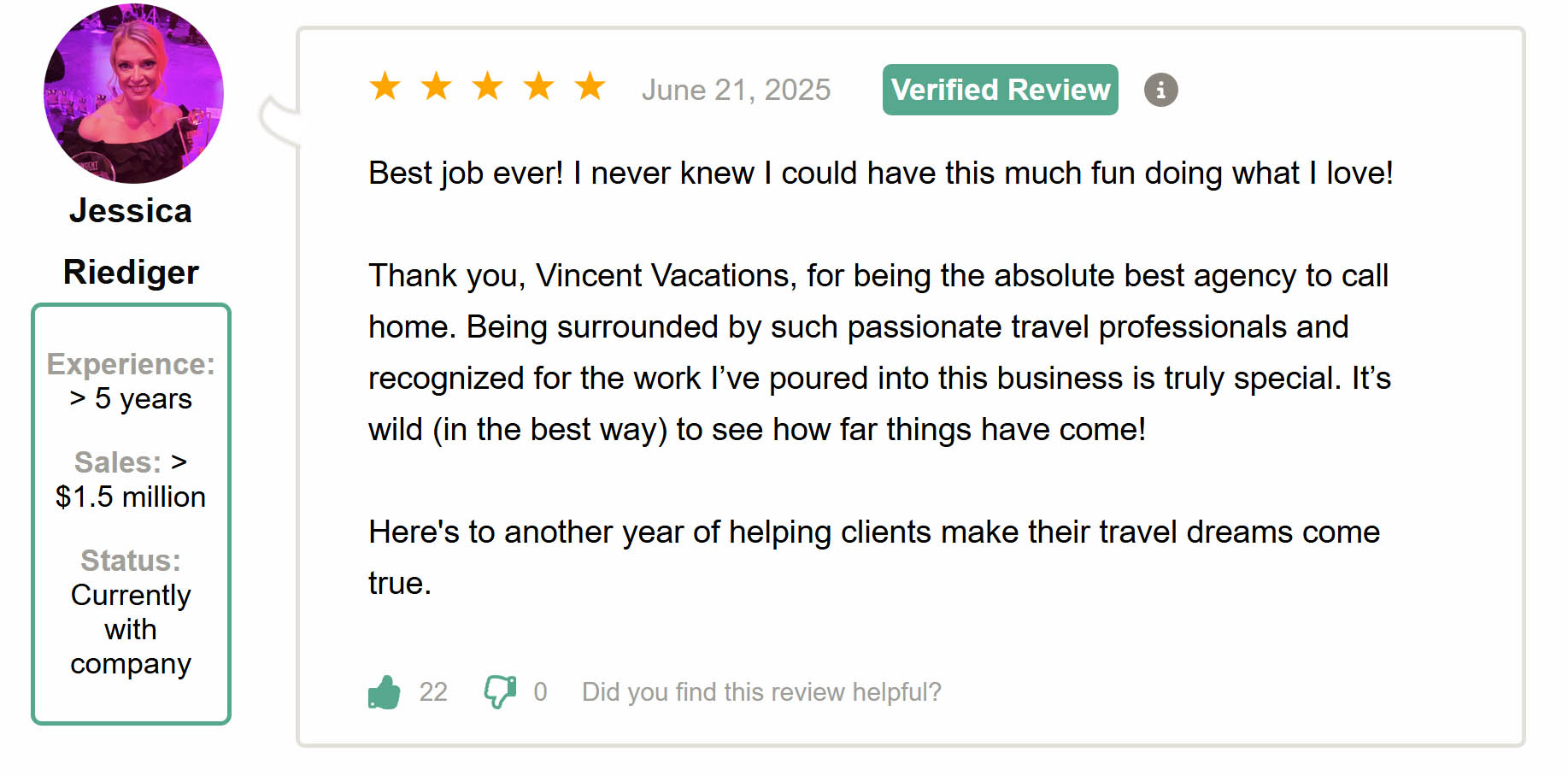
Build a travel business doing what you love - on your own terms. Start booking trips the day you join, with a best-in-class education curriculum developed by industry experts.
Conclusion: Your Next Step in Luxury Travel
No two travelers are exactly alike, but the principles of luxury linguistics remain constant. Whether you are dealing with an Aspiring traveler saving for their honeymoon or an Ultra-Luxe CEO booking a private jet, the specific words you choose will define your success.
Refining these skills is the key to success in this profitable sector. By using precise, descriptive, and evocative language, you differentiate your services and convey the opulence your clients desire.
Are you ready to become fluent in the language of luxury?
At Vincent Vacations, we provide the resources, training, and host agency support to turn these linguistic strategies into a thriving business. Join us today, and let us help you exceed your clients' expectations.
Learn more about this by signing up as a member, today! Vincent Vacations Application Form.
To learn more techniques and how to grow your travel business, read more on our Articles page.