By Rosie Ferrara
Luxury & Expedition Cruise Specialist at Vincent Vacations. Sailing aboard the National Geographic Venture on the 8-day “Among the Great Whales” Baja California itinerary, experiencing whale nursery lagoons, Sea of Cortez marine sanctuaries, and onboard naturalist fieldwork.
“I read once that we come to nature to find perspective. In much of our own lives, we tend to think we’re pretty special. Our egos take over and we think we’re bigger than we actually are. When you encounter a Blue Whale, you kind of see that you’re not that special at all. Getting so close to an animal of this size puts everything in perspective.”
We arrived in Loreto, Mexico, prepared to embark on our very first Lindblad Expeditions voyage. The 8-day itinerary, titled “Among the Great Whales,” circumnavigates the southern Baja California Peninsula, bridging the Pacific Ocean’s wild whale nurseries with the calm, biodiverse waters of the Sea of Cortez. While we had observed whales previously in Alaska, nothing could have prepared us for the profound intimacy, scientific depth, and raw wilderness access delivered on this expedition.
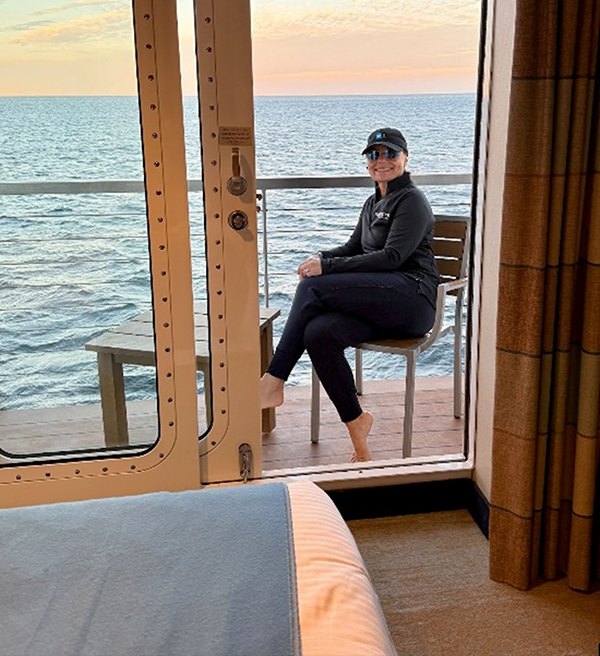
We boarded the beautiful National Geographic Venture in San Carlos on Sunday evening. Upon escort to our accommodations, we were delighted to discover an exceptionally spacious stateroom featuring warm timber finishes, floor-to-ceiling glass sliding doors, and a private step-out balcony overlooking the harbor — a thrilling, generous upgrade that set the stage for an extraordinary week at sea.
Rosie Ferrara in her balcony stateroom aboard the National Geographic Venture in San Carlos, Baja California Sur.
The Lindblad Difference: Oren and the 7 Naturalists
That first evening in the observation lounge, we met our Expedition Leader, Oren. A charismatic, deeply knowledgeable leader with infectious passion, Oren laid out our mission for the week: we would encounter great whales up close, snorkel alongside sea lions, kayak through protected turquoise archipelagos, hike cactus-studded desert ridges, and navigate pristine lagoons aboard local shallow-draft pangas.
Oren encouraged every guest on board to embrace each adventure with open arms, introducing a spirited catchphrase that echoed through every sunrise: “You should try it, you’ll love it!” And without exception, we did.
This was not a conventional “sit on the sun deck and sip cocktails” cruise; it was an authentic, working scientific expedition. As Oren introduced the team of seven onboard Naturalists, we initially wondered why an 85-passenger ship required such a sizable expedition faculty. But within twenty-four hours, the depth of their marine biology, botany, geology, and acoustic expertise became the intellectual heartbeat of our voyage. Many of the naturalists were born and raised in Baja California, bringing intimate generational connections, cultural insight, and deep conservation respect to every excursion.
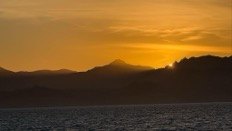
Dawn breaking over Baja California as guests prepare for the morning stretch.
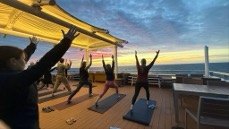
Daily 6:45 AM sunrise stretch on deck with onboard naturalist Anne Marie.
Our journey began at 6:45 AM on the sun deck with naturalist Anne Marie leading a sunrise stretch class as the morning sky transformed into brilliant shades of coral, amber, and gold. Setting this mindful, invigorating intention each morning quickly became an indispensable ritual.
Following breakfast, we boarded transfer coaches toward our first whale-watching harbor, stepping aboard open pangas piloted by seasoned local captains. The wind picked up, whipping ocean spray as rolling swells tested our sea legs. Our patience was rewarded almost immediately: a towering spout of pressurized water erupted against the horizon — a magnificent humpback whale. Seconds later, a dainty second blast appeared beside her: a newborn calf!
The naturalists aboard our panga gasped in sheer delight — this was the very first calf of the entire winter calving season! Witnessing their genuine excitement and scientific joy amplified our own wonder.
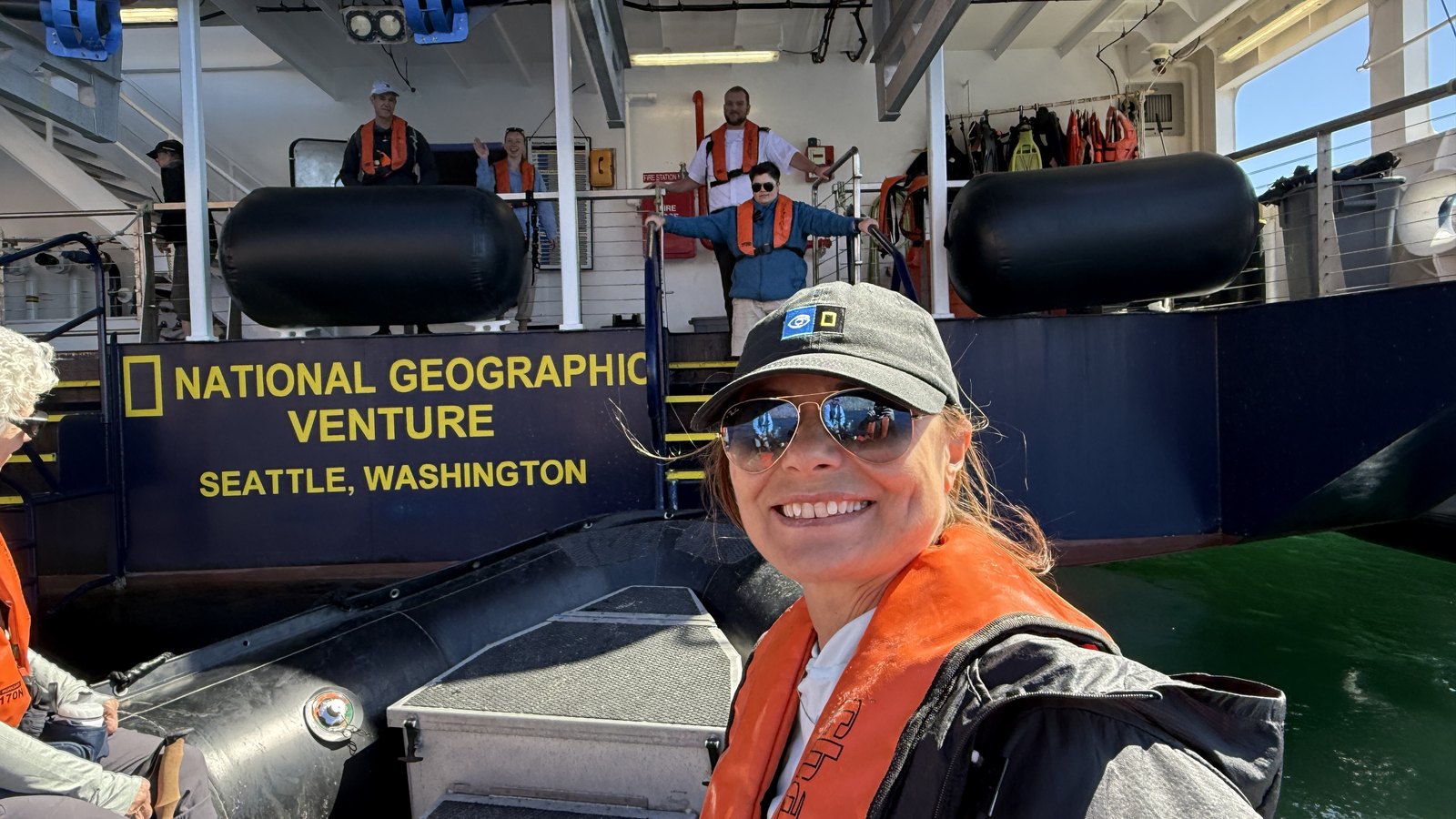
Guests aboard local open pangas during an intimate whale-watching expedition in Baja California waters.
For lunch, Lindblad brought us to a charming locally owned seaside restaurant where authentic Mexican cuisine and warm hospitality were second to none. This seamless partnership with local communities is a hallmark of Lindblad’s travel philosophy. During the afternoon panga excursion, we observed dozens of shorebirds, spotted a wild coyote foraging along the tidal flats, and stopped at an artisanal oyster farm to taste ocean-fresh oysters straight from the bay while learning about sustainable local mariculture.
Day two elevated our whale encounters from mere observation to an unforgettable immersion. Transferring from the Venture’s motorized Zodiacs directly into local pangas, we entered a tranquil coastal harbor inundated with California gray whales.
These majestic cetaceans were actively spyhopping — lifting their massive heads vertically out of the water just past eye-level to study the boat and look directly at us. Flukes breached, double spouts discharged like geysers, and curious calves approached within arm’s reach. For over an hour, passengers turned continuously from port to starboard, overwhelmed by the concentration of life in this protected nursery.
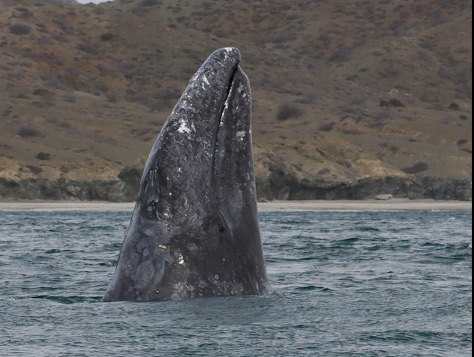
A curious gray whale spyhopping vertically to inspect our panga in Magdalena Bay.
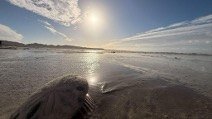
Beachcombing along the untouched shoreline of Sand Dollar Beach after our first wet landing.
In the afternoon, Oren organized our first “wet landing” at remote Sand Dollar Beach. The Zodiac nudged up against the pristine sandbar, allowing us to swing our legs over into knee-deep surf and wade ashore.
We hiked across sweeping coastal sand dunes to the barrier beach. Just as we crested the ridgeline, a solitary coyote trotted across the shoreline in the distance, framing an iconic Baja wilderness tableau. We spent an idyllic half hour beachcombing for intact sand dollars and shells before returning by Zodiac to the Venture as a dramatic Pacific sunset melted into twilight.
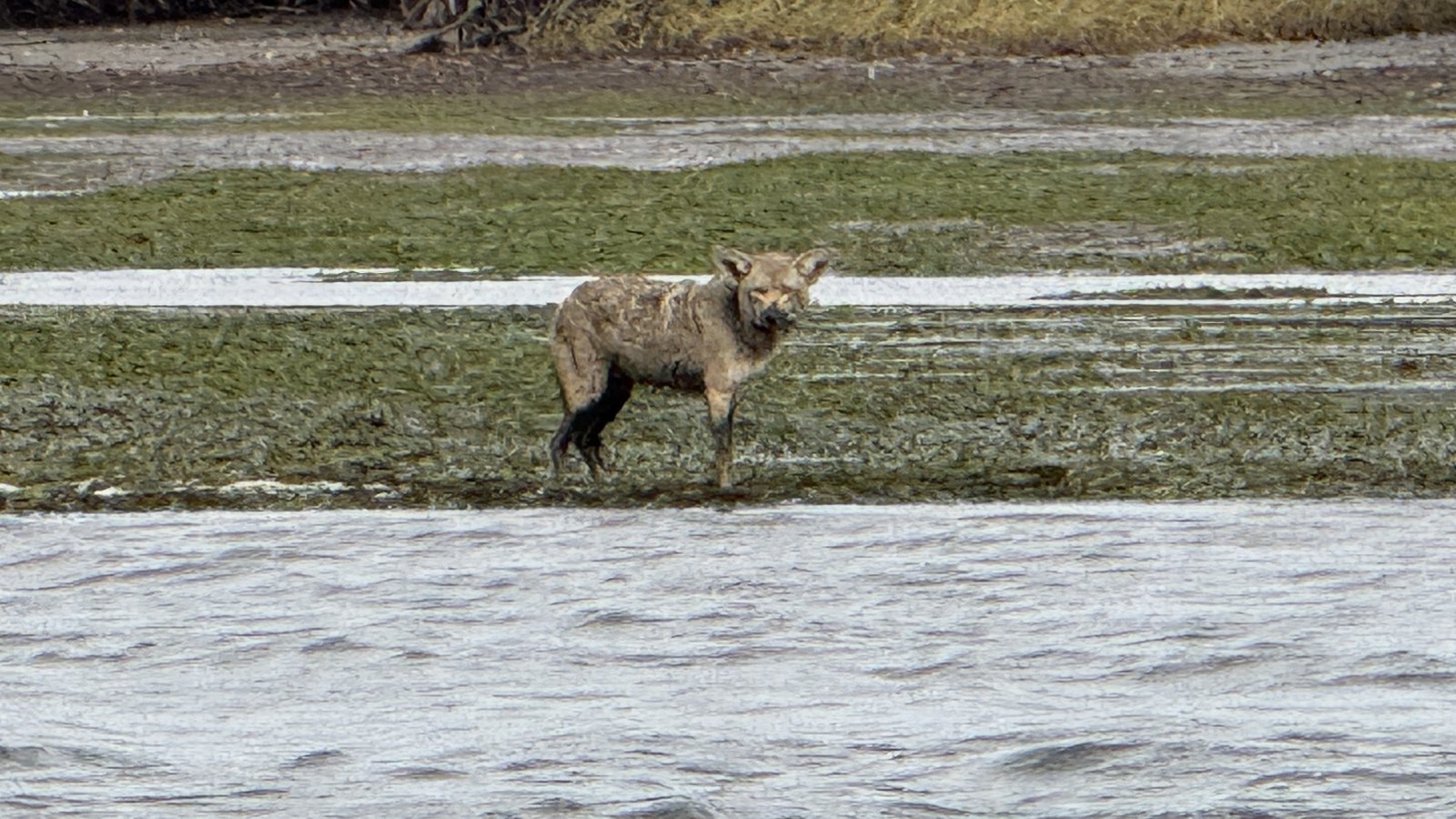
The wild desert dune landscapes of coastal Baja California, where desert sands meet the Pacific surf.
Day three was designated as a sea transit day as the National Geographic Venture navigated south around the tip of the Baja Peninsula into the Sea of Cortez. While many anticipated a quiet day of reading, it turned into the most emotionally breathtaking day of the entire voyage.
Following an enriching lecture on cetacean communication by the naturalists, distant blows were sighted off our starboard bow. The Captain immediately cut the ship’s main engines, drifting in complete silence. One of the marine biologists deployed a submerged hydrophone (underwater microphone) over the side, feeding the live audio directly into the ship’s public address speaker system.
Within moments, the entire ship fell dead silent. Through the speakers echoed the haunting, melodic songs of singing humpback whales communicating across the blue depths. For three uninterrupted minutes, nobody uttered a single syllable; several guests, including myself, had tears rolling down our cheeks. Hearing these majestic creatures sing in real-time beneath our feet was an encounter no mega-cruise ship could ever duplicate.
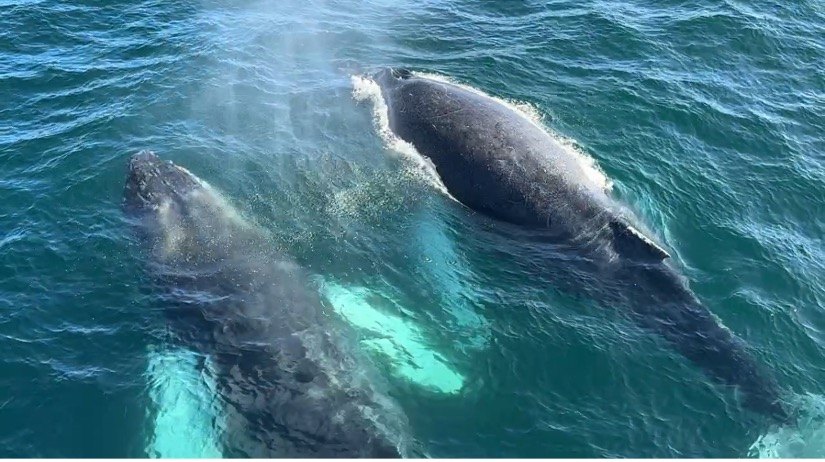
Two humpback whales gracefully surfacing alongside the National Geographic Venture during an extraordinary 45-minute encounter.
Suddenly, an immense exhalation erupted directly against our starboard hull. We rushed to the railing to find two immense humpback whales gliding barely 15 feet from the ship. With engines silent, the whales spent the next 45 minutes playing around the Venture — diving beneath our keel, surfacing on the port side, showing their broad flukes, and blowing their spouts as all 85 passengers cheered in unison. Even the veteran Captain and seasoned expedition staff admitted they had rarely witnessed such sustained, curious interaction.
We anchored in Bahía Los Muertos (Bay of the Dead), greeted by a crimson sunrise over the Sea of Cortez. Despite its grim historical namesake — rooted in a 19th-century tuberculosis outbreak — the bay today is a vibrant marine sanctuary of crystalline turquoise water.
Lindblad provided all guests with professional-grade snorkeling equipment, including wetsuits, masks, and fins. For those of us who had not snorkeled in years, the expedition staff conducted a patient, thorough refresher clinic on the beach. Submerging into the refreshing 68°F water, we drifted among schools of yellow-and-black sergeant majors, pufferfish, and pristine coral formations.
When my mask seal became uncomfortable 20 minutes into the swim, naturalist Megan immediately swam over, calmed me, guided me safely back to shore, and assisted in resetting my gear. This attentive focus on passenger safety and peace of mind is what distinguishes Lindblad’s expedition staff above all others.
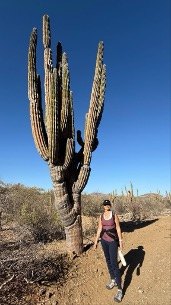
Rosie beside a massive 30-foot cardon cactus — cardons take nearly 100 years just to sprout their first branch!
That afternoon, Zodiacs ferried us to an untouched stretch of desert coastline for a 2-hour guided botany hike. Our naturalist guides introduced us to Baja’s resilient flora, highlighting endemic cardon cacti (Pachycereus pringlei).
We learned that these desert giants do not even begin growing their distinctive side arms until they reach approximately 100 years of age. Standing beside a towering 30-foot specimen that had witnessed three centuries of Baja history was deeply humbling.
Evenings on board were filled with lively conversation in the dining salon, where well-traveled guests shared tales from past polar voyages, Amazonian adventures, and African safaris over chef-curated multi-course dinners.
Day five brought us to Isla Espíritu Santo, a UNESCO-protected biosphere reserve accessible exclusively with specialized permits and certified naturalist guides. The archipelago is a geological wonderland of rust-colored volcanic cliffs plunging dramatically into luminous aquamarine bays.
Following an onboard briefing, we launched tandem kayaks along the sheltered mangrove coastline. Brown pelicans plunged into the shallows around our paddles, great blue herons stood motionless on volcanic perches, and curious sea lions surfaced nearby to investigate. The absolute tranquility of paddling these glassy coves with the National Geographic Venture anchored gracefully in the distance was pure rejuvenation.
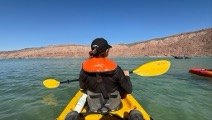
Paddling across the serene, protected waters of Isla Espíritu Santo National Park.
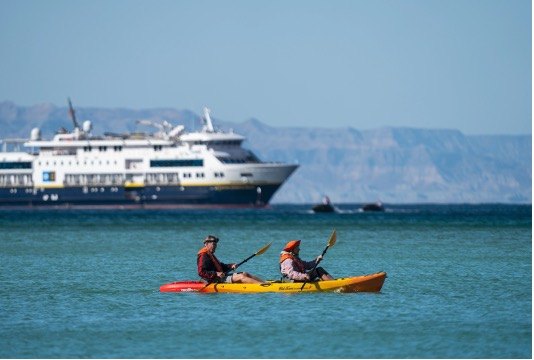
National Geographic Venture resting quietly at anchor in a remote turquoise inlet.
After kayaking, we undertook a cross-island hike to an exposed ridge where powerful Pacific swells crashed against sheer sea cliffs. Returning to the ship for a fresh lunch, the Venture sailed toward the colonial port of La Paz for a private cultural showcase: the Festival Mexicana.
Held weekly for Lindblad guests during the expedition season, this vibrant performance featured local youth dancers (ages 10 to 22) showcasing traditional regional dances in flowing ribbon dresses, followed by breathtaking lasso rope tricks and a lively mariachi ensemble. A short walk escorted by mariachis brought us to a historic courtyard restaurant for an authentic Baja culinary feast.
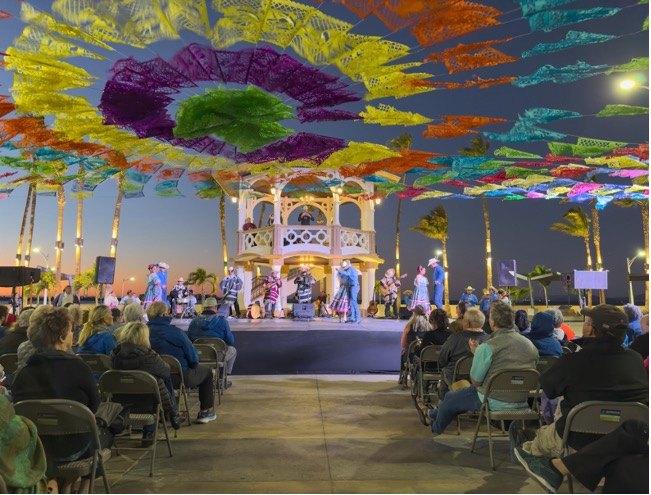
Youth folkloric dance troupe performing at Festival Mexicana in La Paz.
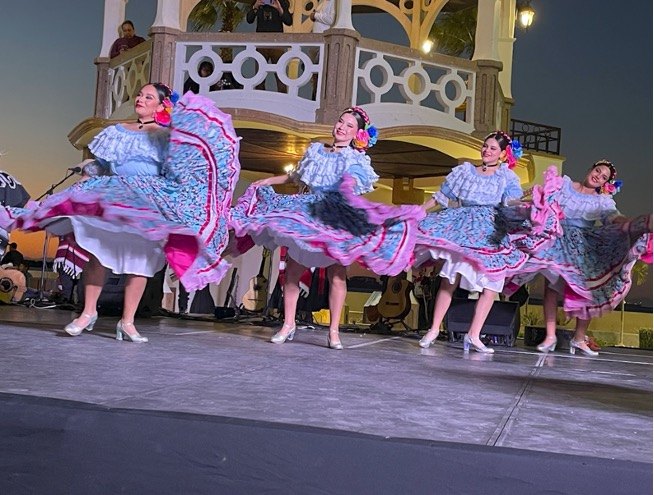
Vibrant traditional costumes celebrating Mexican heritage and community artistry.
At daybreak, rhythmic barking echoed across our stateroom balcony. We had arrived at Los Islotes, an isolated rocky outcrop that hosts a thriving rookery of more than 800 California sea lions.
My husband Dave joined the 7:00 AM snorkeling Zodiac. Wetsuits zipped and masks cleared, eight guests slipped into the crystal-clear water and were immediately surrounded by playful young sea lion pups. These agile “dogs of the sea” swam acrobatically around, under, and beside the snorkelers with joyous curiosity. While reaching Los Islotes from La Paz by commercial charter requires a punishing 4-hour round-trip panga ride, Lindblad’s expedition ship positioned us directly beside the rookery before morning crowds arrived.
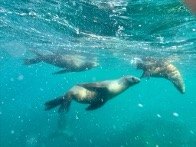
The bustling sea lion rookery of Los Islotes in the northern Sea of Cortez.
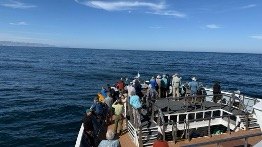
All guests and naturalists gathered on the observation bow scanning for great whales.
Cruising north into deep pelagic waters later that afternoon, excitement reached a fever pitch. A naturalist spotted a colossal vertical spout erupting 20 feet into the air, quickly followed by three angled blows on the horizon. We had encountered both a pod of deep-diving Sperm Whales and the holy grail of marine biology: the elusive Blue Whale — the largest animal to have ever existed on Earth!
The crew noted that a Blue Whale had not been sighted on this route in over an entire calendar year. For nearly an hour, this 90-foot ocean giant surfaced, fed on krill, and raised its massive flukes before sounding into the azure abyss. Seeing an animal larger than three school buses gliding effortlessly through the water was an indelible, life-affirming spectacle.
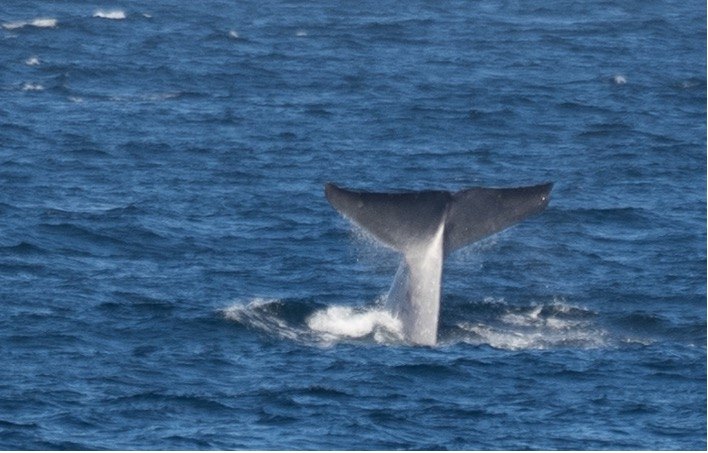
Spectacular fluke dive of a great whale surfacing in the Sea of Cortez.
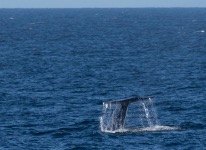
The powerful flick of a whale tail sending ocean spray across the glassy surface.
As dawn broke on our final morning, we found ourselves asking the universal question of every extraordinary journey: “Do we really have to leave?”
Sipping coffee on deck with naturalist Mauro, I expressed how deeply I had fallen in love with Baja California’s wild landscapes and warm people. His face beamed with pride as he warmly replied, “Rosie, this is your home now too. Come back anytime.”
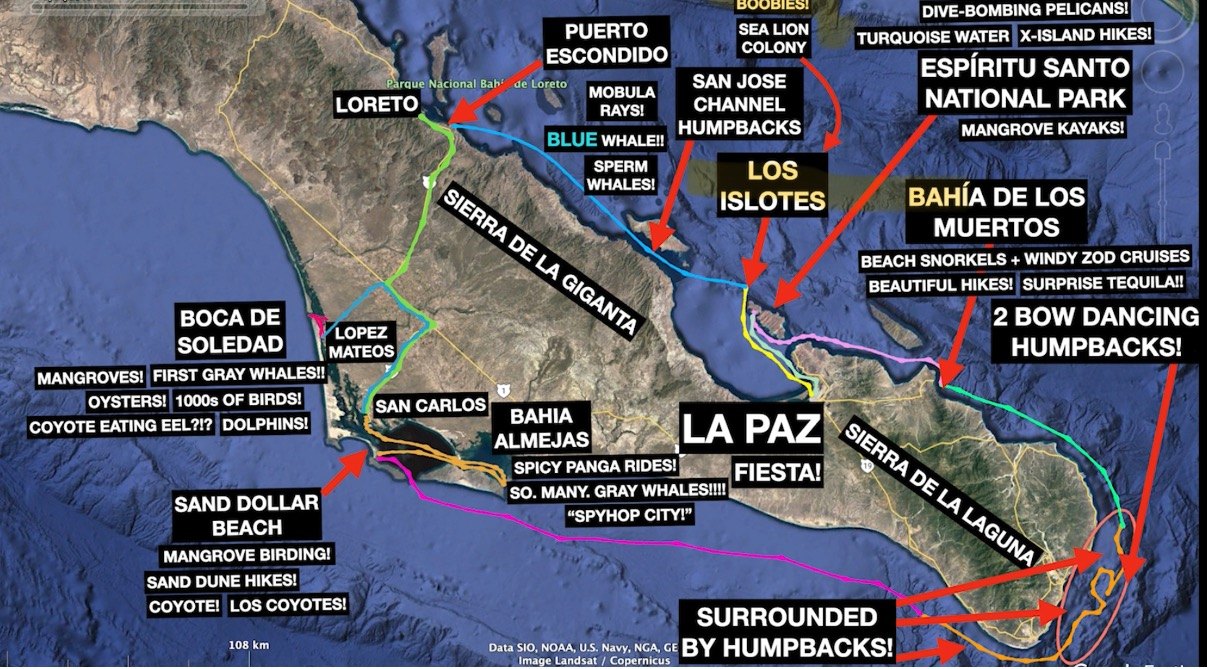
Complete 8-day expedition navigation track from San Carlos through Magdalena Bay, around Cabo Falso, into the Sea of Cortez, Isla Espíritu Santo, Los Islotes, and Loreto.
Expedition Vessel & Journey Specifications
Vessel: National Geographic Venture
Purpose-built coastal expedition vessel accommodating just 100 guests in 50 spacious outside cabins. Features shallow draft, generous bow viewing decks, and state-of-the-art acoustic tracking.
Expedition Gear Onboard
Fleet of motorized Zodiacs, open-cockpit tandem kayaks, stand-up paddleboards, full snorkeling gear (including 3mm wetsuits), hydrophone microphone, and underwater ROV camera.
Wildlife Encountered
Blue Whales, Sperm Whales, California Gray Whales (mothers and spyhopping calves), Humpback Whales, California sea lions, bottlenose dolphins, desert coyotes, and magnificent frigatebirds.
Conservation & Community
Partnership with local panga fishing co-ops in Magdalena Bay, support for youth dance troupes in La Paz, regional seafood sourcing, and onboard scientific research.
Why Lindblad Expeditions Stands in a Class of Its Own
Reflecting on this remarkable week, what resonated deepest was not just the majestic megafauna, but the heart and integrity of the entire operation.
Lindblad Expeditions and National Geographic exist in a true 50-year alliance designed around two core principles: exposing travelers to pristine, hard-to-reach ecosystems in an environmentally responsible manner, and investing directly into the local communities that steward them. From our panga captains in Magdalena Bay to our bus drivers, oyster farmers, restaurant hosts, and local naturalists, this commitment to ethical, regenerative travel is visible at every turn.
We were also struck by the remarkable loyalty of our fellow passengers. Many guests aboard the Venture were on their sixth, eighth, or even twelfth Lindblad voyage. Once you experience expedition cruising with a 1:12 naturalist-to-guest ratio, flexible itineraries that stop for whale breaches rather than rigid timetables, and intimate access to remote wilderness, mainstream cruising feels obsolete.
Furthermore, expedition voyages are not restricted to young, rugged adventurers. On our sailing, solo travelers, multi-generational families, and active retirees all found their own perfect pace, supported by a staff dedicated to ensuring every guest felt safe, respected, and thoroughly fulfilled.
Ready to Experience the Great Whales of Baja California?
Whether you dream of touching a curious gray whale calf in Magdalena Bay, listening to live humpback whale songs beneath your ship, or kayaking through the turquoise coves of Isla Espíritu Santo, Vincent Vacations secures preferred Lindblad Expeditions amenities, stateroom upgrades, and personalized pre/post voyage arrangements.
Plan Your Lindblad Baja Expedition →
Or speak directly with an Expedition Specialist: (888) 803-4177
Frequently Asked Questions: Baja with Lindblad Expeditions
What is the best time of year to see whales in Baja California?
▼
The peak whale-watching season in Baja California runs from mid-January through March. During this window, thousands of California gray whales arrive in the warm, sheltered nursery lagoons of Magdalena Bay, San Ignacio, and Ojo de Liebre to mate and nurse newborn calves. Humpback whales, blue whales, fin whales, and sperm whales are also abundant in the Sea of Cortez during these winter months.
How physically demanding is Lindblad’s “Among the Great Whales” expedition?
▼
The itinerary is designed for travelers of varying fitness levels. Excursions include gentle beach walks, moderate coastal hikes across sand dunes, guided kayaking, and panga rides. Lindblad executes “wet landings” where guests step into shallow, knee-deep surf from Zodiacs, assisted by several crew members. Snorkeling clinics and gear are provided for both novices and experienced swimmers.
What gear and equipment are provided aboard the National Geographic Venture?
▼
Lindblad provides complete snorkeling equipment (including 3mm neoprene wetsuits, masks, snorkels, and fins), sit-on-top tandem kayaks, stand-up paddleboards, and Zodiac landing craft. Onboard scientists also utilize a hydrophone (underwater acoustic microphone), an underwater video camera operated by a dive specialist, and an electronic chart navigation display in the lounge.
Why choose Lindblad Expeditions over large conventional cruise lines in Baja?
▼
Conventional large cruise ships can only call at commercial deep-water ports like Cabo San Lucas and Ensenada, never entering the protected whale nursery lagoons or UNESCO biosphere archipelagos. The 100-guest National Geographic Venture possesses a shallow draft permitting entry into remote inlets, anchors overnight in pristine wilderness bays, employs a 1:12 naturalist ratio, and supports local fishing communities directly.
Explore More Expedition Cruise Guides & Reviews