A 1:00 AM Awakening: How a Childhood Letter Sparked a Lifetime of Astrotourism
My memories of seeing the Northern Lights for the very first time are vivid. I was probably eight or ten years old, fast asleep in our little country house about an hour north of Toronto. My father came home from working an afternoon shift at about 1:00 a.m. He gently woke me up and asked me to come outside with him: “I want you to see something very special.”
“We went to the backyard and he pointed to the sky to the north. Shimmering curtains of green light—and a bit of pink if memory serves—were dancing across the night sky. No rigid patterns, no fixed form, it was as though a diaphanous veil was being gently blown across the atmosphere, and somehow kept aloft. Mesmerizing. Bed? Who could possibly sleep after an experience like that?”
I was completely fascinated! What were the Northern Lights? What caused them? When could I see them again? In those days before the internet, my mother suggested I write a physical letter to the McLaughlin Planetarium in Toronto. So I did. And I waited. Weeks later, an envelope arrived addressed directly to me from the planetarium. The astronomer took the time to explain the magnetic fields, solar wind, and why the aurora was such a rare, unpredictable cosmic gift.
Well, that was in the 1970s! Today, modern solar physics and satellite heliophysics allow scientists to forecast coronal activity with remarkable precision—which brings us to the monumental event currently underway: the Solar Maximum.
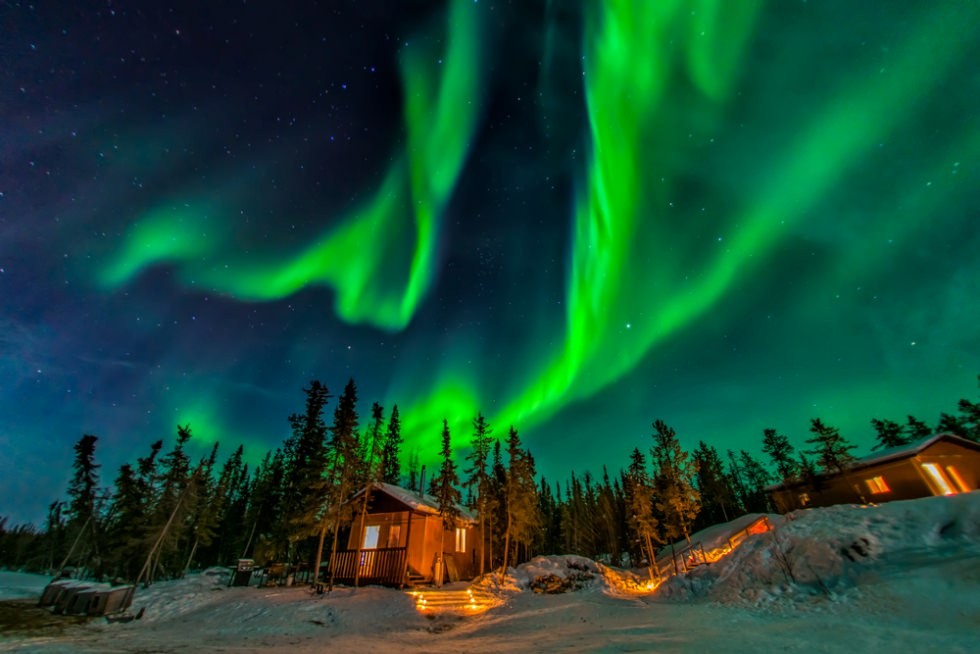
Karl Kannstadter’s featured visual: Vibrant emerald curtains of the Aurora Borealis illuminate the starry subarctic sky above a snow-draped wilderness cabin.
What Is the Solar Maximum, and Why Is It the Best Time to Go?
The Solar Maximum is the peak phase of the Sun’s natural 11-year solar magnetic cycle. During this period, solar magnetic fields become entangled, causing a dramatic surge in sunspots, solar flares, and coronal mass ejections (CMEs). These energetic events blast billions of tons of magnetized plasma across the solar system as high-velocity solar winds.
When these charged solar particles collide with the gases in Earth’s upper atmosphere—predominantly oxygen and nitrogen—they release photons of light, creating the undulating green, violet, crimson, and pink ribbons known as the Aurora Borealis (and in the Southern Hemisphere, the Aurora Australis).
Why the 2024–2026 Solar Maximum Is Extraordinary
During a Solar Maximum, auroral displays become significantly more frequent, vastly more colorful, and geometrically wider. Instead of faint green glows restricted only to the extreme Arctic Circle, auroral ovals expand southward, enabling travelers to witness intense coronal coronas with the naked eye from Norway, Iceland, Finland, Canada, and Alaska.
The 4 Essential Conditions for Seeing the Northern Lights
Even during a Solar Maximum, witnessing the aurora requires four specific environmental and astronomical factors to align:
1. Total Darkness
Artificial light pollution washes out faint auroral ribbons. You must escape city centers and streetlights into dark-sky wilderness preserves or open ocean waterways.
2. Crystal-Clear Skies
Auroras dance between 50 and 400 miles above Earth’s surface—far above weather clouds. Overcast or stormy skies will block the view completely regardless of solar intensity.
3. High Latitude (Auroral Oval)
Optimal viewing lies within the auroral oval, typically between 60° and 72° North latitude. Positioning yourself under this magnetic belt drastically multiplies sighting odds.
4. Solar Wind & Flare Activity
There must be active geomagnetic energy (measured on the Kp Index from 0 to 9) arriving from the Sun to energize our magnetosphere.
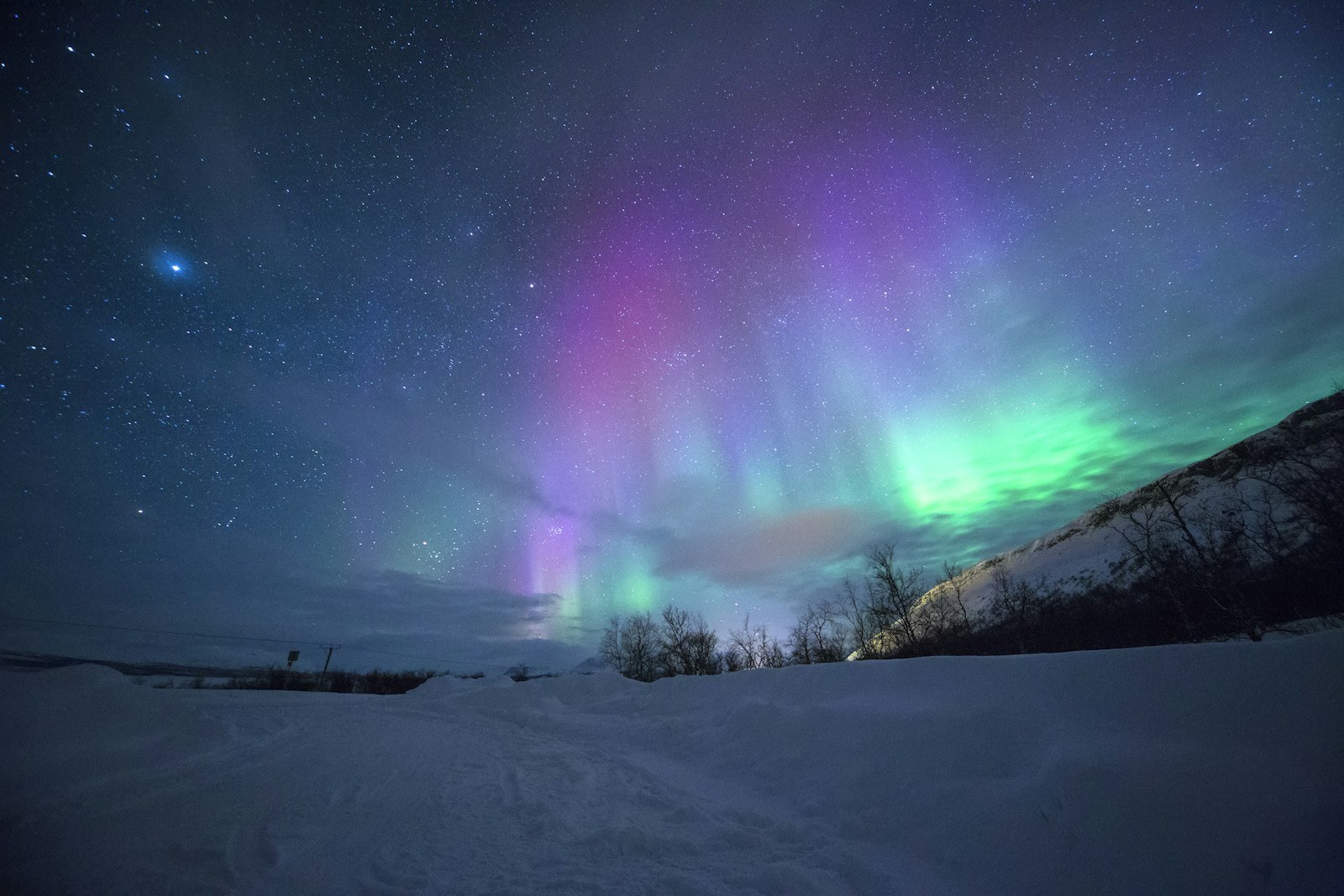
Multi-hued violet and green aurora reflecting across the calm waters of an Arctic fjord in Tromsø, Norway.
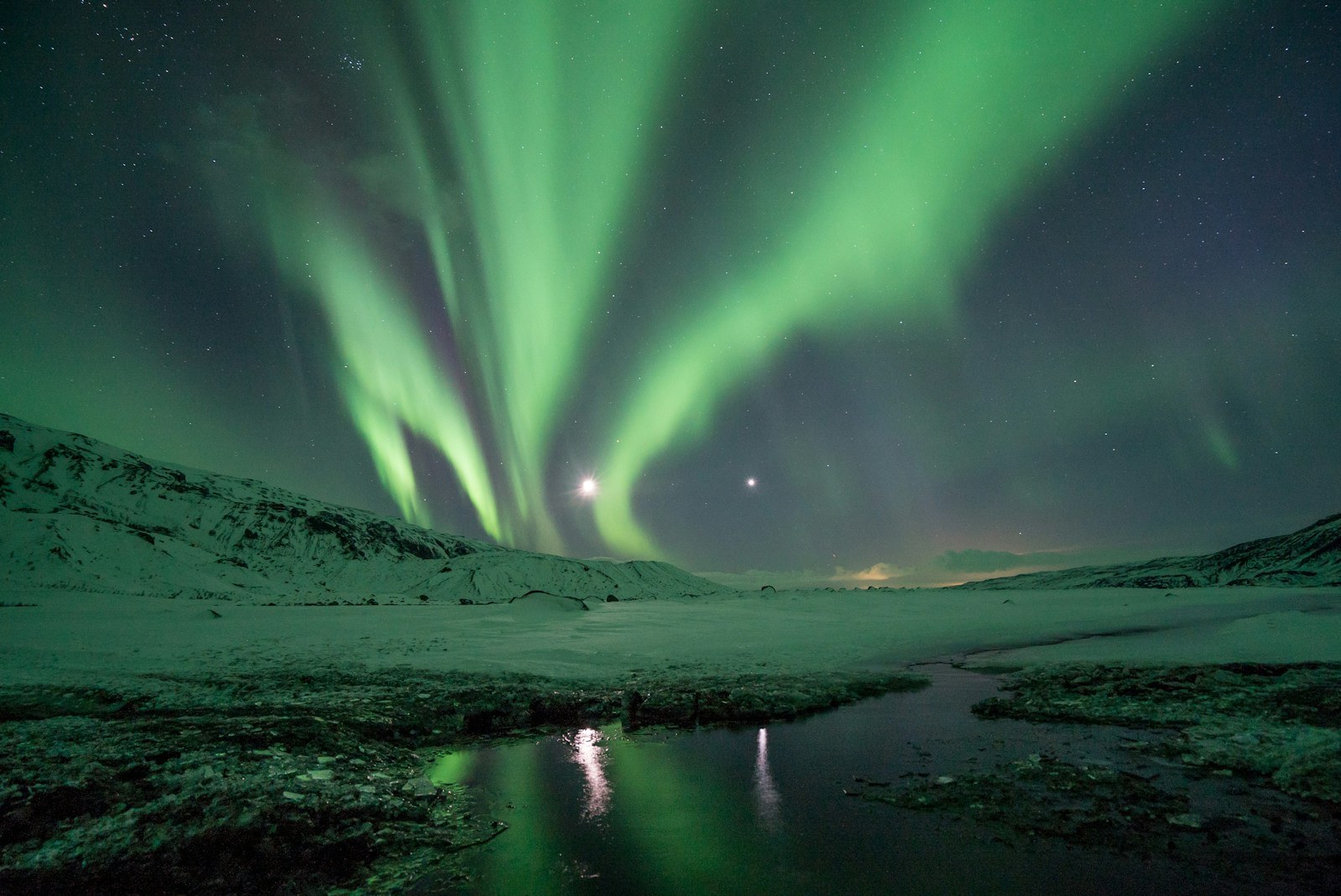
An emerald celestial arch spans the dramatic volcanic landscape along Iceland’s wild southern coast.
Planning Your Journey: Top 5 Global Aurora Destinations
Choosing the right base camp is the most critical decision in planning an aurora adventure. Here are the world’s premier destinations highlighted by Karl:
1. Tromsø, Norway — “The Gateway to the Arctic”
Situated at 69°N in the center of the auroral oval, Tromsø combines rich Nordic culture, coastal fjords, and heated coastal cruise departures. The Gulf Stream keeps coastal Norway significantly milder than continental subarctic locations. Best Season: Mid-September through early April.
2. Reykjavik & The South Coast, Iceland
Iceland combines world-class astrotourism with dramatic geological wonders: glacier lagoons, black sand beaches, thundering waterfalls, and steaming geothermal hot springs. While coastal Iceland experiences variable weather, mobile guided super-jeep tours chase clear skies every night. Best Season: September to mid-April.
3. Finnish Lapland & Kakslauttanen
Few travel experiences compare to lying in bed beneath a heated thermal glass igloo at Kakslauttanen Arctic Resort while emerald ribbons ripple directly overhead. Paired with reindeer sleigh rides, husky safaris, and authentic smoke saunas, Finnish Lapland offers pure winter wonderland magic. Best Season: Late August to late April.
4. Fairbanks & The Brooks Range, Alaska
Located just two degrees below the Arctic Circle in Alaska’s interior, Fairbanks boasts exceptionally dry, stable continental weather with minimal cloud cover. Spending three consecutive nights in Fairbanks yields an astronomical 90% probability of seeing the aurora. Best Season: August 21 to April 21.
5. Yellowknife & Churchill, Canada
Canada’s Northwest Territories (Yellowknife) and northern Manitoba (Churchill) offer flat subarctic terrain and crystal-clear inland skies. Churchill combines autumn polar bear migrations on tundra vehicles with world-class night auroral viewing from heated observation domes. Best Season: Mid-November to April.
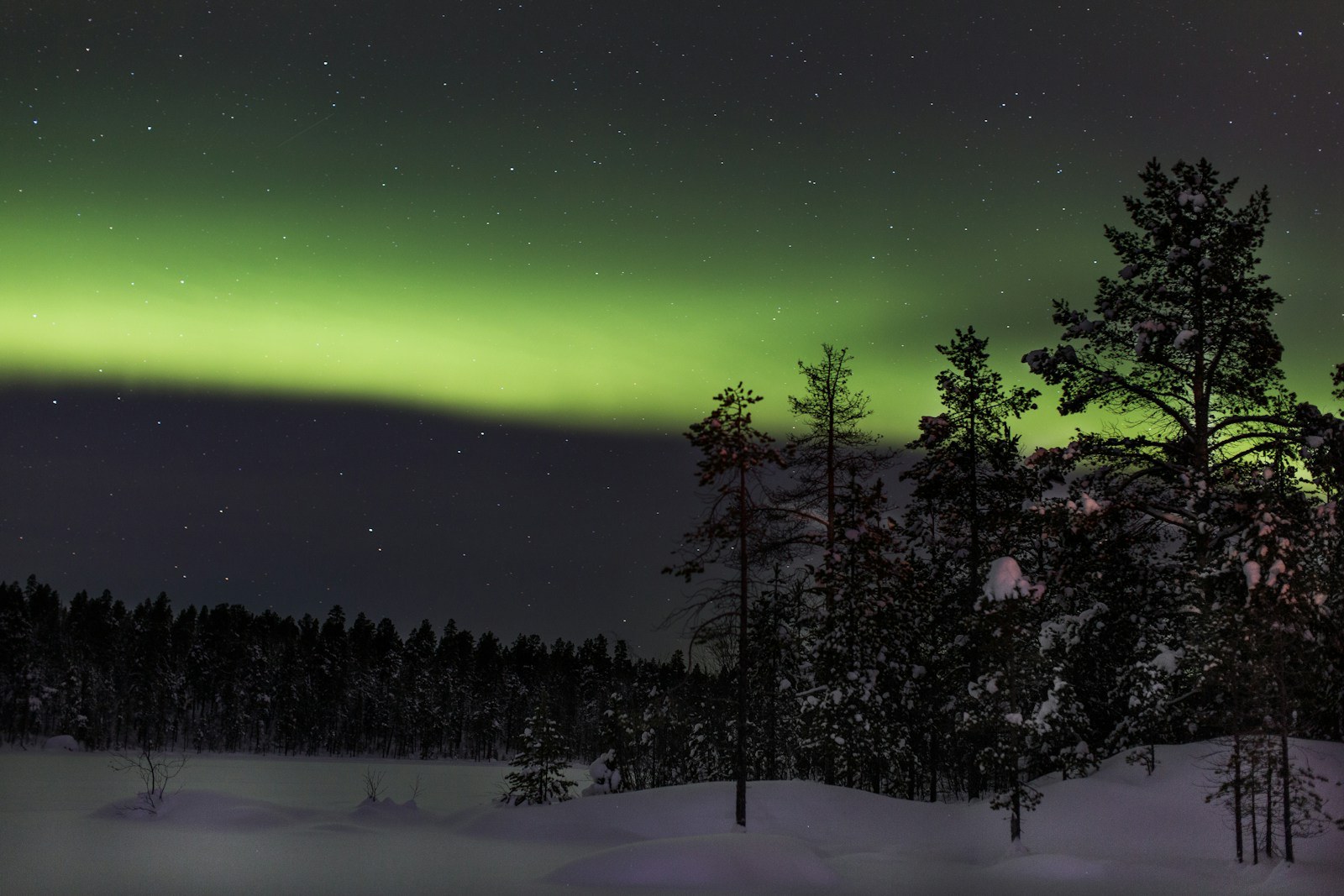
Snow-caked taiga pine forests illuminated under incandescent green auroral skies in Finnish Lapland.
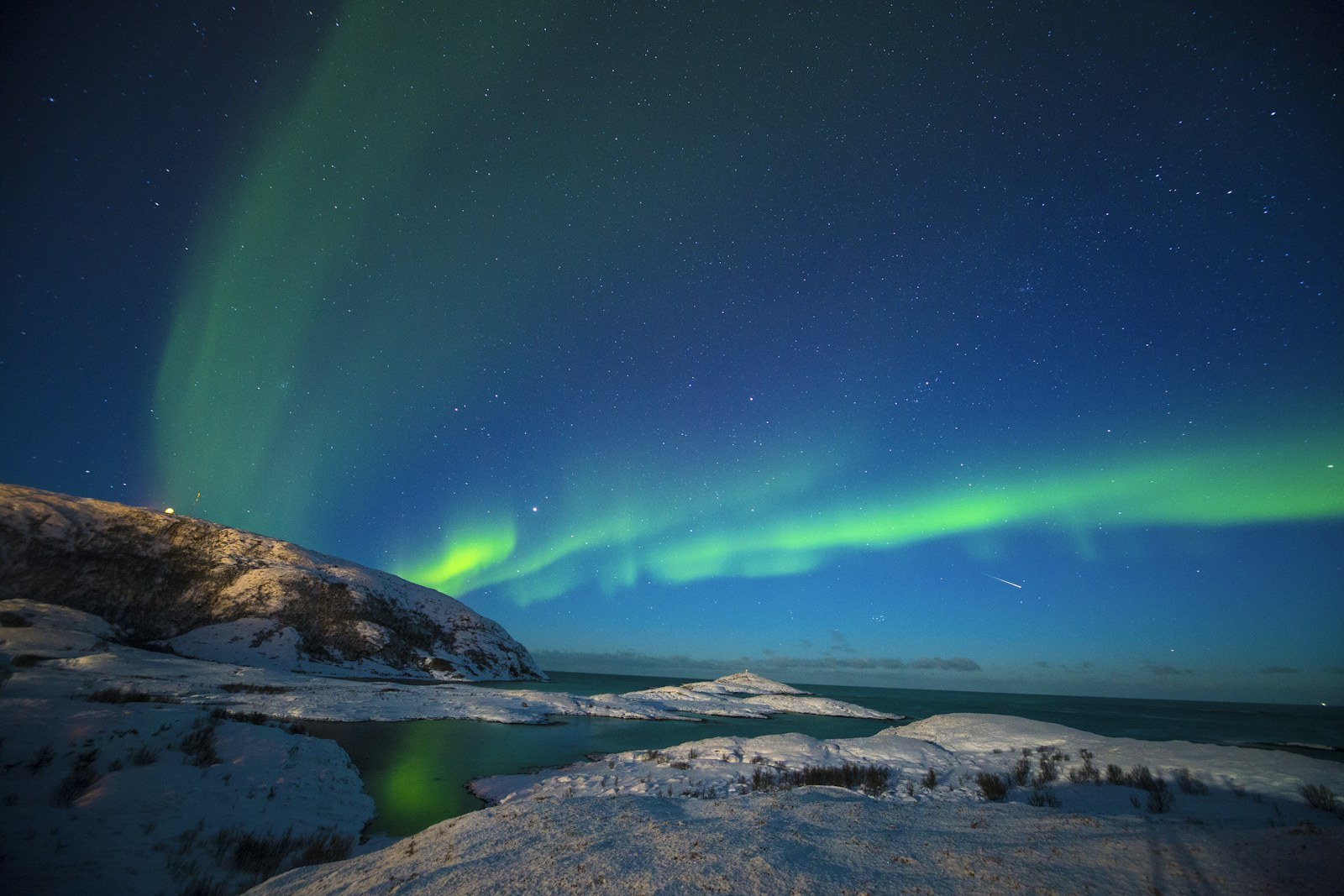
A shooting star streaks through brilliant green auroral ribbons in a pristine, light-pollution-free Arctic sky.
Cruise vs. Wilderness Lodge: Which Is Right for You?
Travelers generally debate two distinct styles of aurora exploration:
- Expedition & Coastal Cruising (e.g. Hurtigruten, Havila, Silversea, Viking): Sailing along Norway’s fjords or Canada’s coastlines offers a moving viewpoint away from city lights, with luxury dining, panoramic observation lounges, and outdoor whirlpools. Coastal sailings must take place between late September and March to ensure sufficient night darkness. Many lines even offer an official “Northern Lights Promise” (a free future voyage if the lights do not appear on 11+ night sailings!).
- Wilderness Lodges & Glass Igloos: Staying at an inland wilderness lodge offers total immersion in snowy silence, snowmobiling, ice fishing, dog-sledding, and stepping straight onto private decks or viewing through heated glass domes without rocking motion for long-exposure tripod photography.
The Golden Rule of Northern Lights Travel
“An old Alaskan tour operator once told me: ‘There are three things you never promise in the travel business—weather, fishing, and bears.’ I would add Northern Lights to that list.” — Karl Kannstadter
The Northern Lights are a wild, magnificent natural phenomenon. Predicting an aurora sighting months in advance is like predicting a rainbow. While a certified travel advisor can position you under the right latitude during the peak season with multi-night itineraries, travelers should always approach an aurora journey by embracing the complete destination: the Nordic cuisine, local Sami culture, sled dogs, thermal spas, and breathtaking frozen landscapes. Seeing the lights dance is the ultimate crowning jewel.
Insider Pro-Tips: Cruise Cabins & Aurora Photography
Signature Advisor Daniela Harrison’s Insider Tips
1. Extinguish Upper Deck Lights: If you are sailing on an ocean or coastal cruise and the aurora begins to display, don’t hesitate to ask the expedition leader or crew to request the Bridge extinguish extraneous exterior lighting on the higher decks aft (such as decks 10–14). Eliminating deck glare transforms your viewing experience from faint glow into vivid, full-sky color.
2. Join the Nightly Aurora Wake-Up Call List: Most ships will not announce aurora sightings over in-stateroom public address speakers at 2:00 or 3:00 a.m. to avoid waking sleeping guests. Visit the Guest Services desk upon boarding and add your room to the nightly “Northern Lights Wake-Up Call List.”
3. Learn Your Night Photography Settings in Advance: Practice night-mode manual exposure settings on your DSLR or smartphone before you depart. Modern smartphones with dedicated Night Mode (3- to 10-second exposure mounted on a pocket tripod) can capture stunning auroral colors that human retinas cannot fully process in the dark!
Experience the Solar Maximum with Certified Astrotourism Planners
Vincent Vacations advisors partner directly with premier Scandinavian lodges, Alaskan wilderness camps, and polar cruise lines. Secure exclusive cabin amenities, heated igloo reservations, and custom multi-night viewing itineraries.
Request Your Custom Aurora Proposal →
Frequently Asked Questions: Solar Maximum & Northern Lights
How long does the Solar Maximum window last?
▼
The peak of Solar Cycle 25 spans from late 2023 through 2026. Solar maximums are broad, multi-year peaks rather than a single fleeting moment, providing an extended multi-season window to plan bucket-list polar journeys with peak auroral frequency and strength.
How many nights should I plan to guarantee seeing the Northern Lights?
▼
We recommend spending a minimum of 4 to 7 nights within the auroral zone. Because weather systems and clouds can obscure the sky on any given night, staying multiple consecutive nights gives you a greater than 90% statistical chance of experiencing at least one clear-sky night of vibrant auroral activity.
Can you photograph the Northern Lights with a modern smartphone?
▼
Yes! Recent flagship smartphones (iPhone 13 and newer, Samsung Galaxy S21 and newer, Google Pixel 6 and newer) feature highly capable Night Sight and Night Mode algorithms. By mounting your phone on a small travel tripod to keep it rock-steady and setting an exposure time between 3 and 10 seconds, you can capture breathtaking, vivid green and purple aurora photos directly on your phone.
What should travelers wear for subarctic night aurora viewing?
▼
Dress strictly in layers: a moisture-wicking merino wool thermal base layer, an insulating fleece or down mid-layer, and a windproof, waterproof outer parka. Essential accessories include thermal wool socks, insulated winter boots (rated to -20°F or lower), thin touchscreen liner gloves inside heavy insulated mittens, a fleece-lined beanie, and a neck gaiter or balaclava.
What is the difference between Aurora Borealis and Aurora Australis?
▼
They are identical physical phenomena occurring around opposite magnetic poles. The Aurora Borealis occurs in the northern hemisphere (over Norway, Iceland, Finland, Canada, and Alaska), while the Aurora Australis (“Southern Lights”) occurs around Antarctica, the Southern Ocean, and occasionally southern New Zealand and Tasmania. Because the northern auroral oval covers far more accessible inhabited land and luxury resorts, the Aurora Borealis is much more commonly visited.
Explore More Astrotourism & Northern Lights Resources