The Living Silk Road: Ancient Bukhara
The awe-inspiring Poi Kalyan complex in Bukhara: the spiritual and architectural zenith of Central Asia. Photo captured firsthand by Ignacio Maza.
Along with Samarkand, Bukhara is undisputed royalty among the ancient Silk Road destinations of Uzbekistan. The city boasts an illustrious history spanning more than 2,500 years. For centuries, Bukhara was a crucial caravan crossroads on the Great Silk Road, drawing conquerors from Alexander the Great to Genghis Khan, as well as intrepid explorers like Marco Polo.
Over the centuries, Bukhara flourished as an independent, wealthy Islamic Emirate governed by absolute rulers until September 1920, when the Red Army assaulted the citadel, and the final ruler—Emir Mohammed Alim Khan—was forced into exile in Afghanistan.
Unlike modern metropolitan cities where archaeological sites sit stranded between office towers, Bukhara’s historic Old Town is a fully preserved, cohesive medieval world. My single best piece of advice for visiting travelers: concentrate your time on the pedestrian-friendly Old Town, where the vast majority of top architectural wonders, artisan markets, and authentic teahouses are located.
The Ark Citadel & Bolo Hauz Mosque
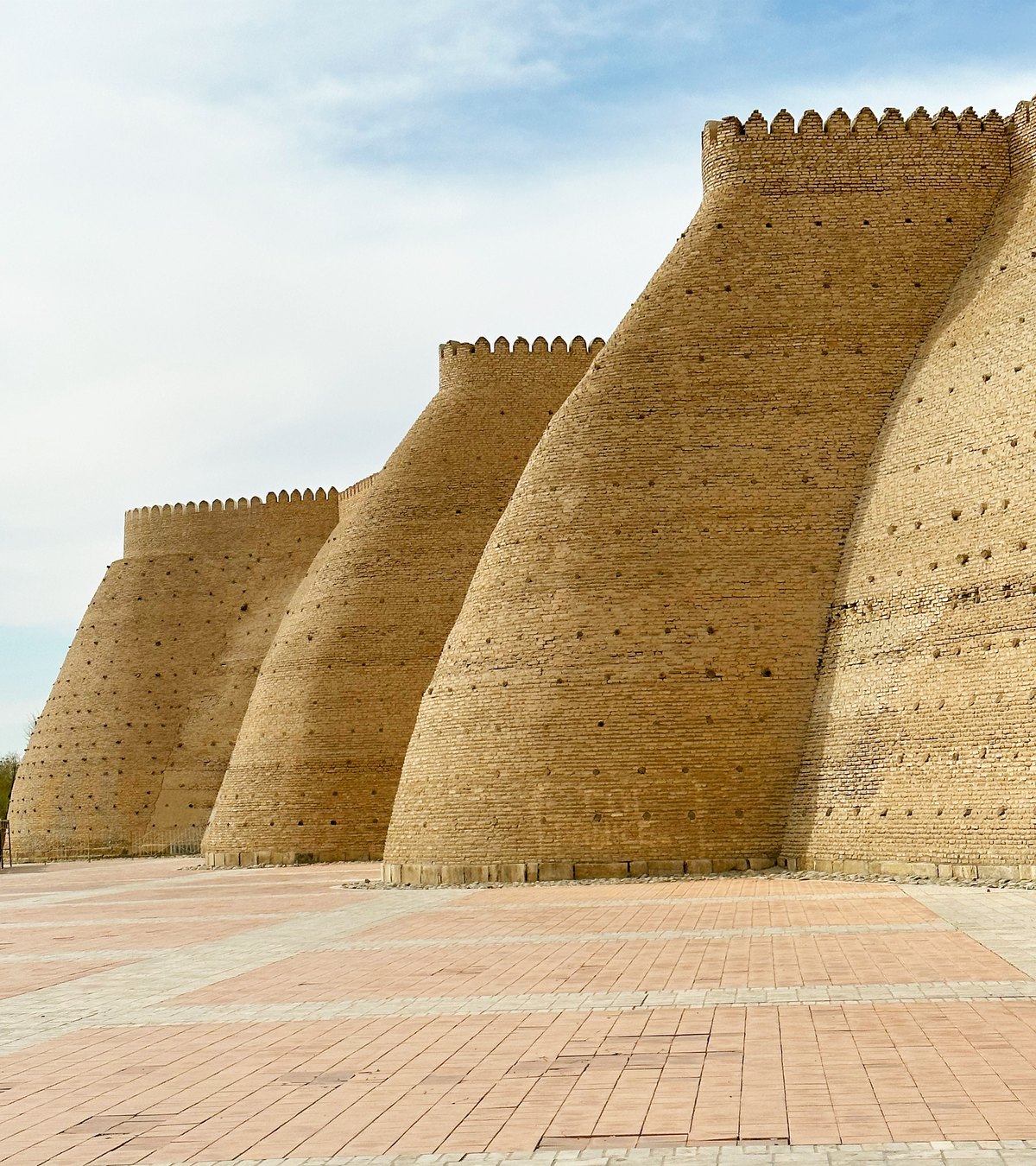
The imposing 5th-century mudbrick fortress walls of the Ark of Bukhara—a city within a city.
1. The Ark: The Throne of the Emirs
Start your exploration at The Ark, the most emblematic, formidable monument in Bukhara. This colossal mudbrick fortress was originally founded in the 5th century and steadily expanded over centuries of dynastic rule. Rising on an immense artificial mound, the Ark operated as a sovereign city within a city, housing the Emir’s royal palace, harem, mint, coronation courtyard, state treasury, arsenals, and infamous underground dungeons.
Walking through the towering ramparts and into the ancient administrative courtyards where the Emirs held court and received foreign ambassadors offers a chilling and awe-inspiring step into medieval Silk Road geopolitics.
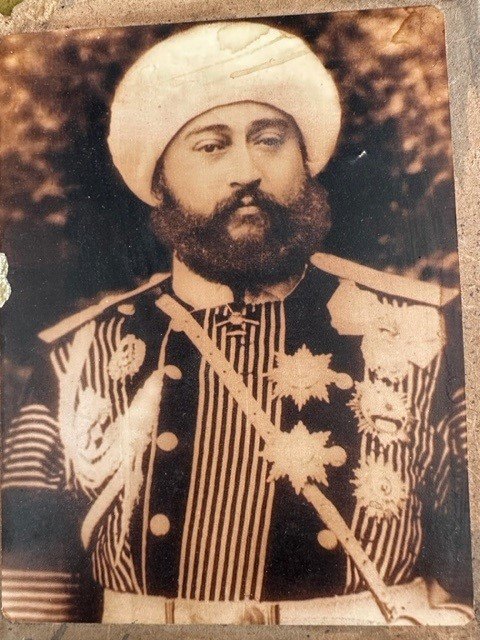
Mohammed Alim Khan: the last Emir of Bukhara.
2. Bolo Hauz Mosque
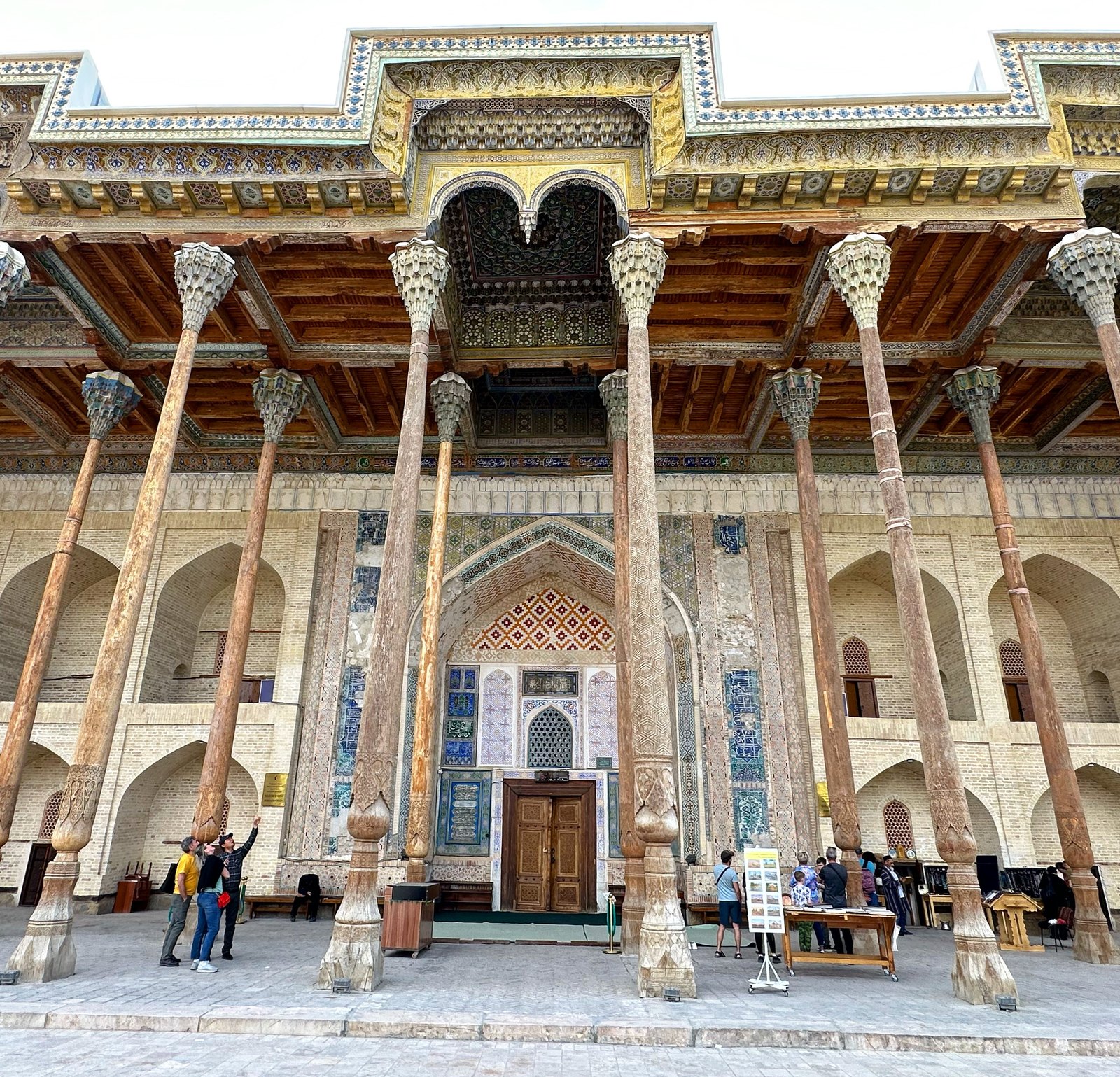
Directly opposite the Ark fortress sits the exquisite Bolo Hauz Mosque, built in 1718 as the royal chapel where the Emir worshiped during Friday prayers. Its crowning glory is an open wooden portico (aivan) supported by twenty soaring, intricately carved poplar-wood pillars, painted with delicate floral motifs and perfectly mirrored in the tranquil public pool (hauz) before it. Remarkably, it was one of the few religious edifices to escape destruction during the 1920 Soviet bombardment.
Poi Kalyan: The Star Attraction of Bukhara
Poi Kalyan Square: the grand architectural highlight of Bukhara.
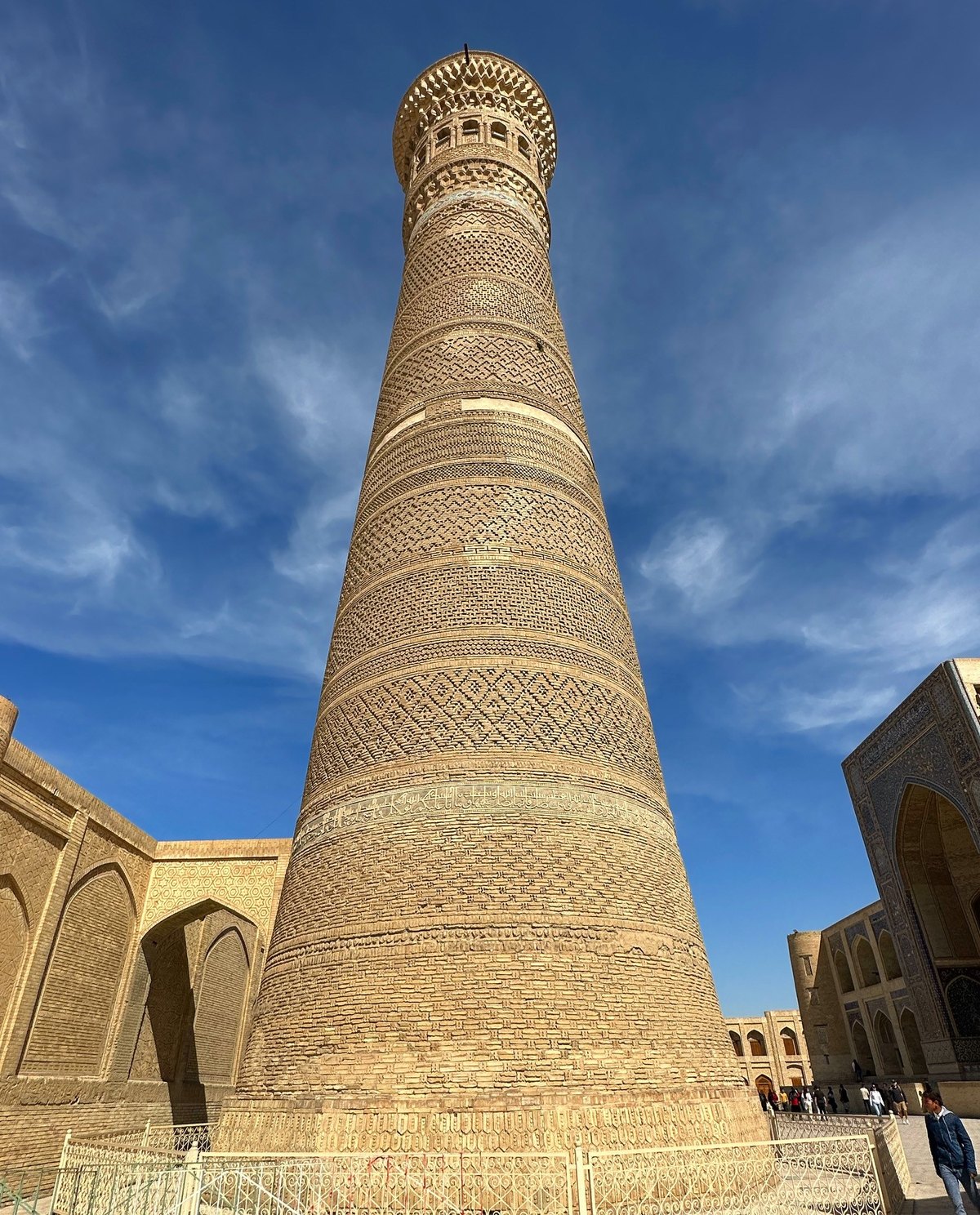
The 150-foot Kalyan Minaret, built in 1127 with 14 distinct brick relief bands.
The undisputed visual climax of Bukhara is Poi Kalyan Square (“Foot of the Great”), the historic spiritual heart of Central Asia. The ensemble features three monumental masterpieces:
- The Kalyan Minaret (1127): Commissioned by Karakhanid ruler Arslan Khan, this 150-foot baked-brick pillar was the tallest standing structure in the world when erected. Fourteen horizontal decorative bands showcase completely distinct geometric brick patterns. When Genghis Khan sacked Bukhara in 1220, he looked up at this towering marvel in such awe that he specifically commanded his generals to leave it unharmed—making it one of the few pre-Mongol monuments standing in Central Asia.
- Great Kalyan Mosque (1514): An enormous open-air courtyard mosque rivaling Samarkand’s Bibi-Khanym, accommodating 10,000 worshipers across 288 shallow vaults supported by 208 solid stone columns.
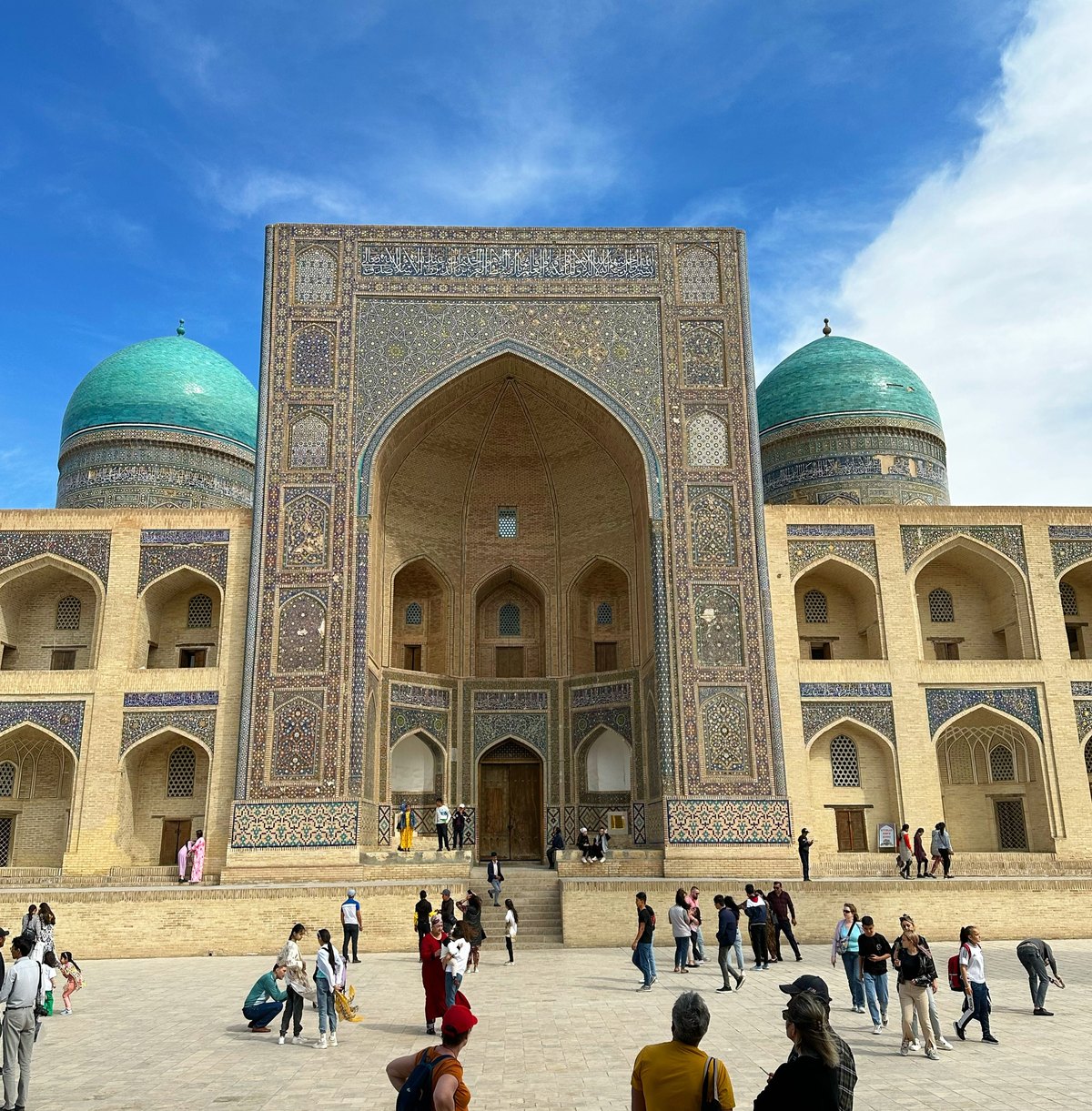
- Mir-i-Arab Madrasa (1536): Facing the mosque across the cobblestone plaza, this functioning Islamic academy is crowned by twin turquoise fluted domes that blaze brilliant azure against the desert sky.
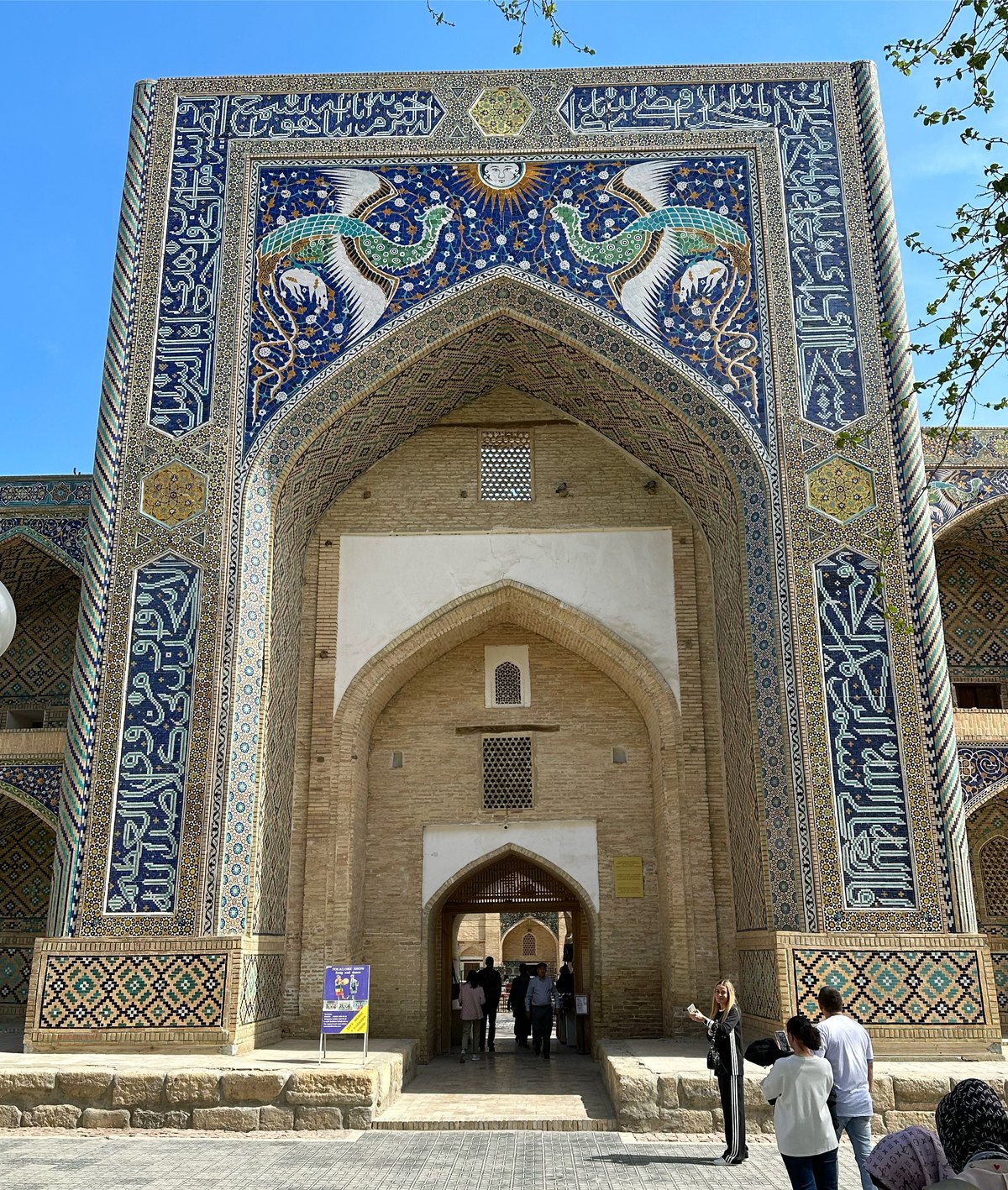
The majestic Mir-i-Arab Madrasa: twin turquoise ribbed domes and intricate majolica facade tilework.
Lyabi-Hauz & The Ancient Trading Domes
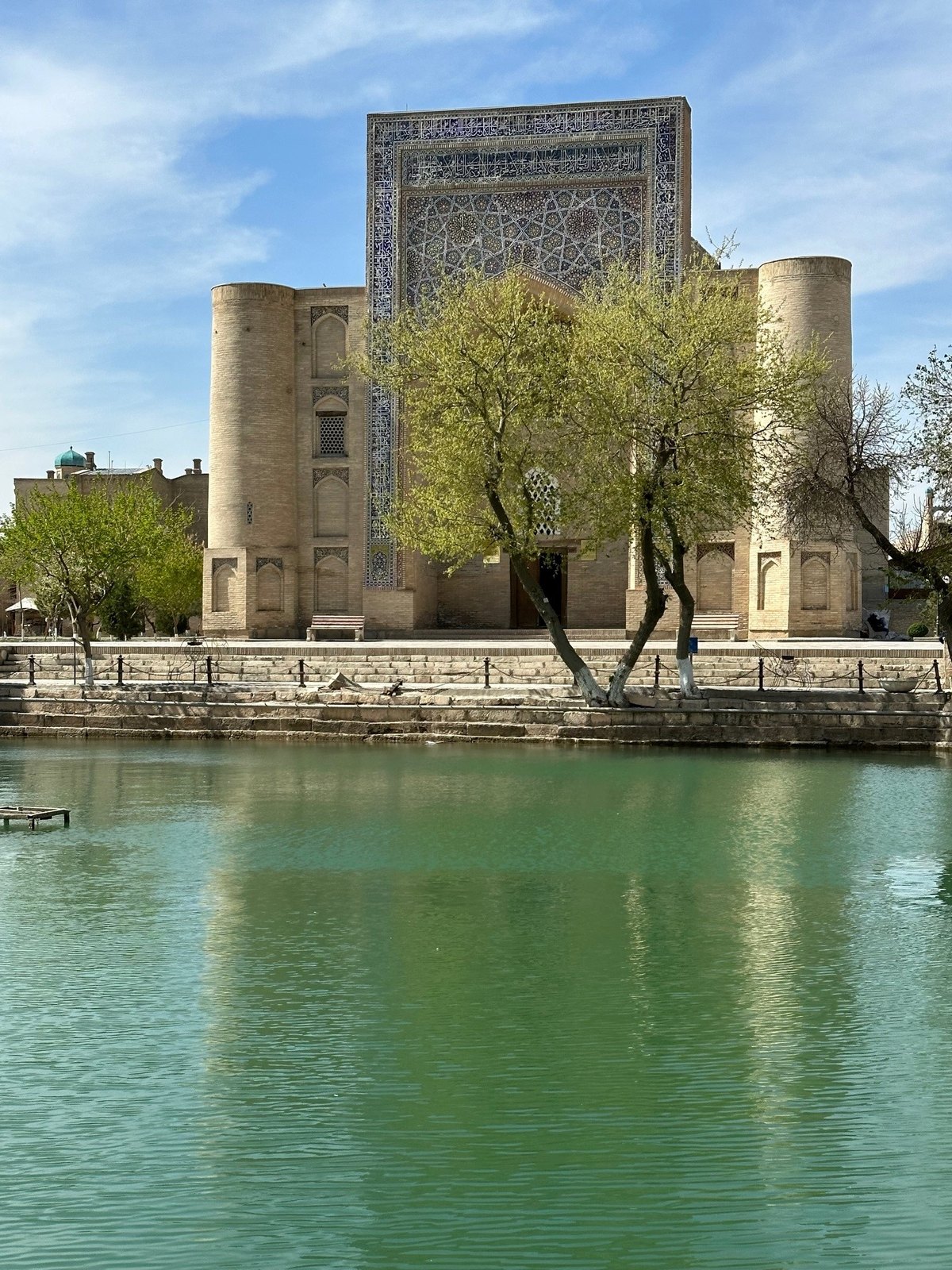
Lyabi-Hauz: Bukhara’s beloved open-air gathering square centered around an ancient reflecting pool.
1. Lyabi-Hauz: The Quintessential Bukhara Experience
Another absolute must-see is Lyabi-Hauz Square (“By the Pond”), situated in the vibrant heart of the Old Town. Built around an artificial stone-lined reservoir dating to 1620, the square is shaded by centuries-old, twisted mulberry trees and framed by the Nadir Divan-begi Madrasa and Khanaka.
Advisor Field Tip: Sunset Dining at Lyabi-Hauz
Organize your daily sightseeing schedule so that you enjoy lunch or dinner at one of the open-air restaurants ringing the reservoir. Relaxing on traditional raised tapchan daybeds with pots of fragrant green tea, skewered lamb shashlik, fresh pomegranate salad, and freshly baked bread is the quintessential Bukhara cultural experience.
2. 500-Year-Old Covered Trading Domes
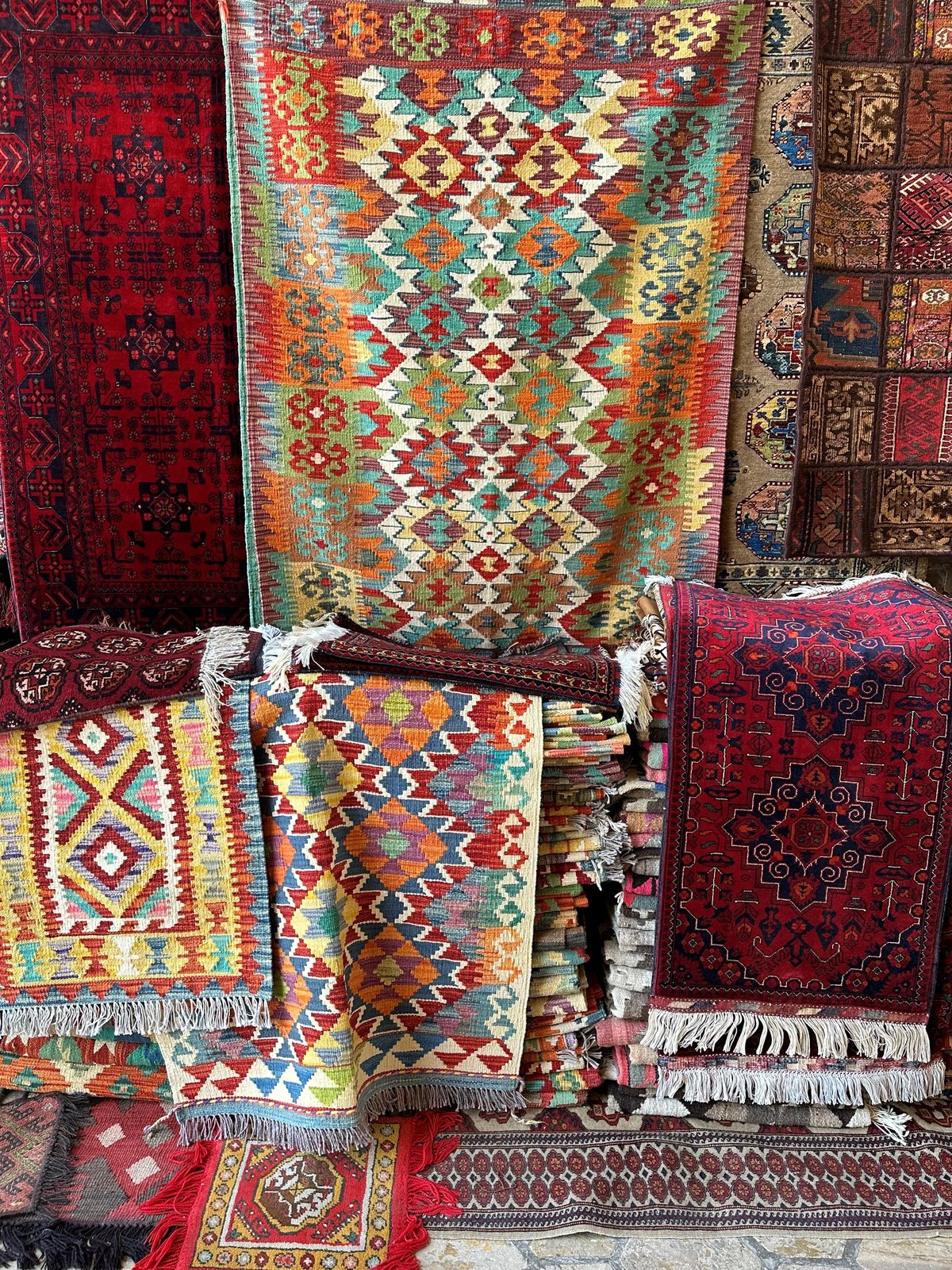
Hand-knotted silk carpets inside Bukhara’s medieval trading domes.
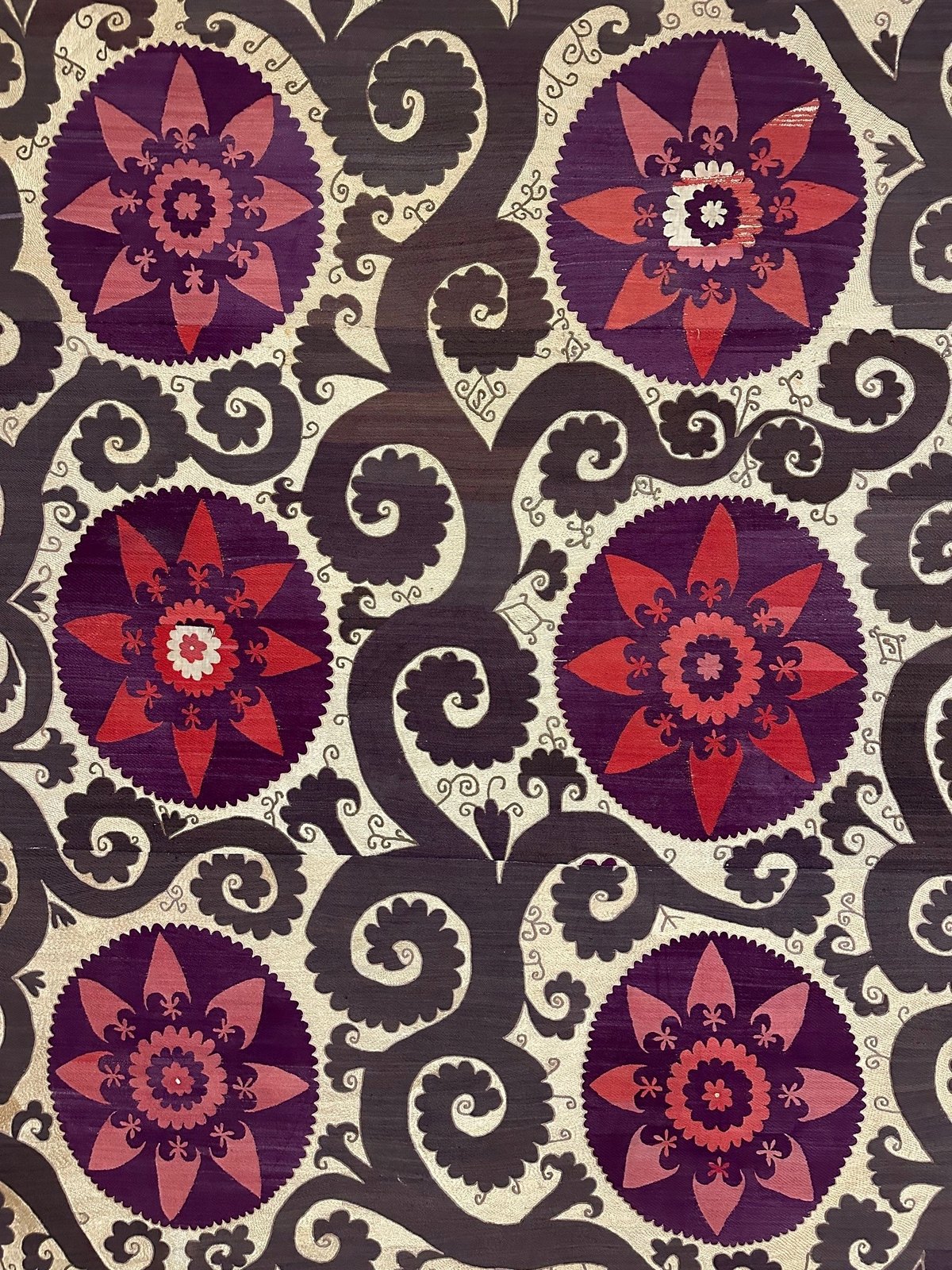
Authentic Uzbek suzanis: hand-embroidered silk and cotton tapestries.
Some of the most rewarding shopping in Central Asia takes place within Bukhara’s 16th-century domed trading markets (toqi), located at key medieval canal and caravan crossroads: Toqi Zargaron (Jewelers’ Dome), Toqi Telpak Furushon (Cap Makers’ Dome), and Toqi Sarrofon (Money Changers’ Dome).
Bargaining here is relaxed and friendly. Travelers will find exceptional handmade silk carpets, forged Damascus-steel scissors shaped like storks, lapis jewelry, miniature paintings executed on camel bone, and the iconic Suzani—vibrant, hand-embroidered cotton and silk textiles featuring pomegranate, floral, and solar patterns that represent fertility and good fortune. Prices represent extraordinary value compared to boutique imports in the US or Western Europe.
Outside Bukhara: Palaces & Sacred Shrines
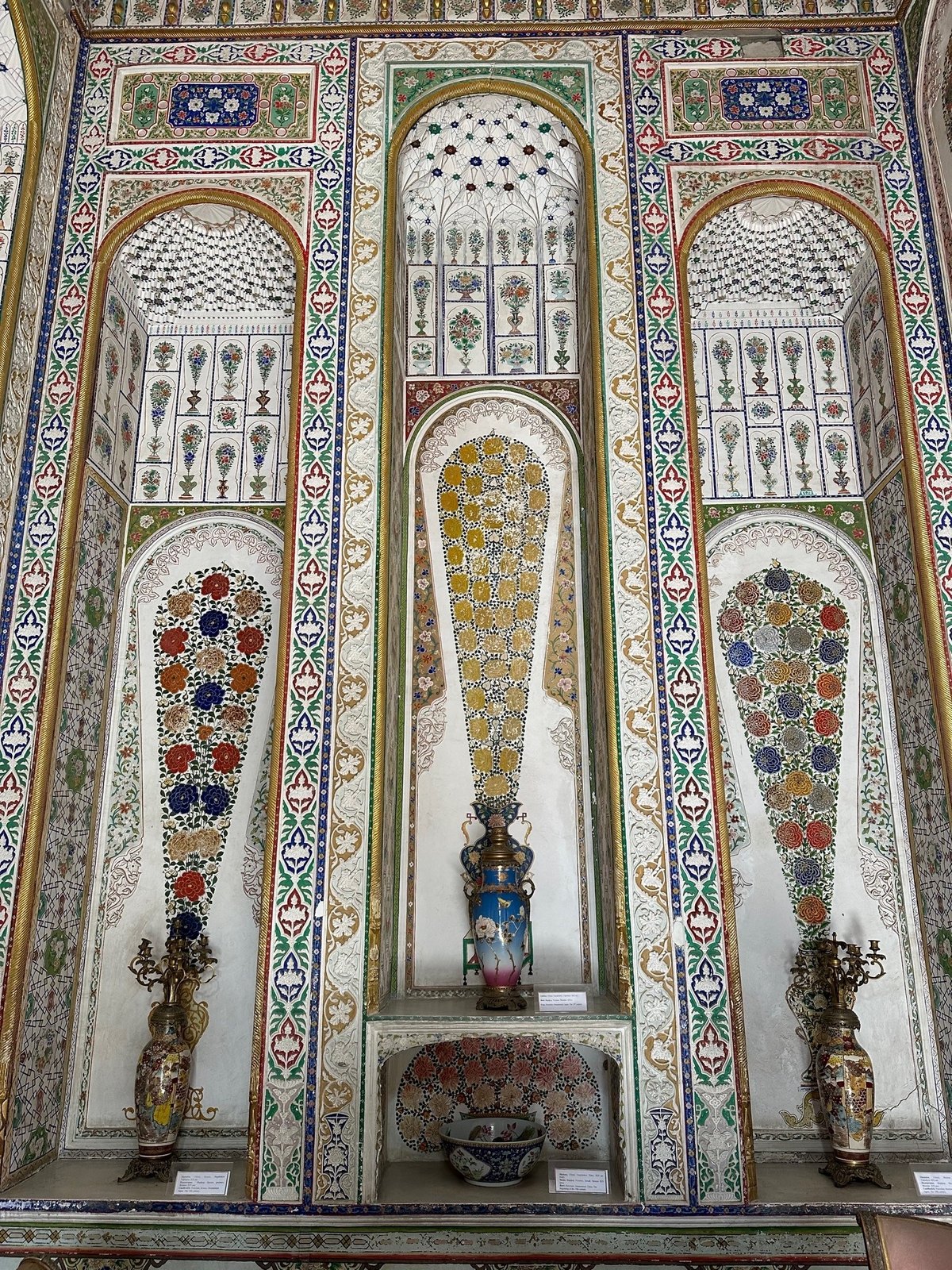
Sitorai Mokhi-Khosa: the opulent summer palace of the last Emirs of Bukhara.
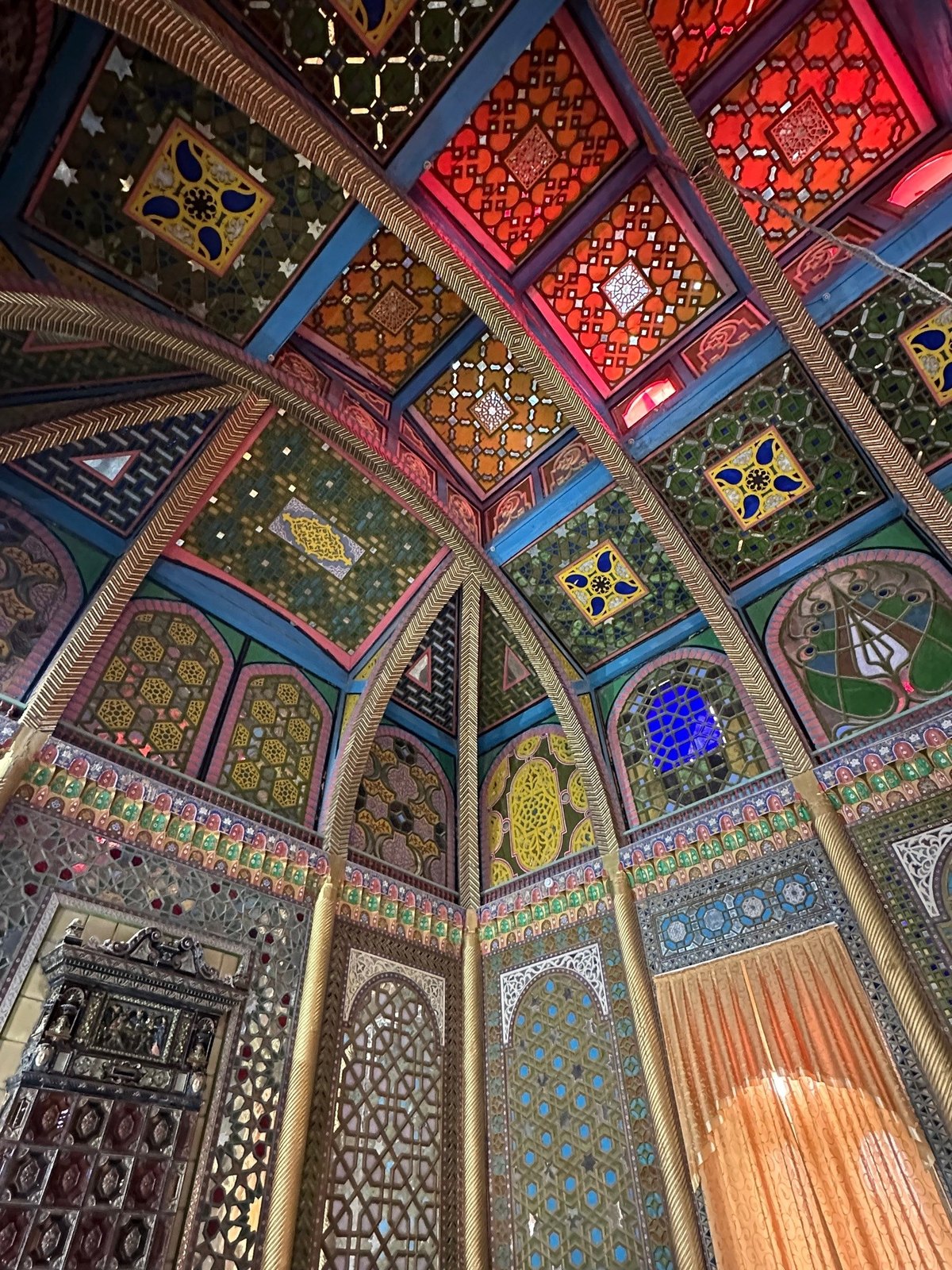
The White Hall: Venetian mirrors covered in delicate carved plaster lace.
Just beyond Bukhara’s historic center lies a wealth of countryside historical sites:
- Sitorai Mokhi-Khosa (Palace of Moon-like Stars): Built in 1912–1918 by the last Emir, this whimsical estate fuses traditional Uzbek tilework and carved plaster with Russian Tsarist imperial styles. Its famous “White Hall” features mirrored glass overlaid with hand-carved alabaster plasterwork by master craftsman Shirin Muradov.
- Bahauddin Naqshbandi Memorial: Located 45 minutes outside Bukhara, this tranquil garden complex is the spiritual sanctuary of the founder of the Naqshbandi Sufi order. It remains one of the holiest Islamic pilgrimage sites in Central Asia.
Accommodations & Practical Advisor Resources
Where to Stay: Mercure Bukhara Old Town
At present, the premier hotel in Bukhara is the Mercure Bukhara Old Town Hotel. Located on the immediate perimeter of the historic pedestrian zone, this modern boutique hotel blends contemporary comforts with local architectural motifs. It offers quiet, comfortable guestrooms, an indoor heated swimming pool, an authentic hamam wellness spa, and an expansive rooftop restaurant and bar overlooking the historic minarets.
Expert Tour Operator: Exeter International
For seamless travel across Central Asia, Ignacio strongly recommends partnering with Exeter International, Signature Travel Network’s preferred luxury specialist for Central Asia and Eastern Europe. Exeter provides:
- Private, hand-picked English-speaking historian guides throughout Bukhara, Samarkand, and Tashkent.
- Dedicated air-conditioned Mercedes vans and professional drivers for all city and desert transfers.
- VIP access to private madrasa workshops and palace courtyards away from group tours.
- Firsthand itinerary management ensuring smooth high-speed rail connections on the Afrosiyob.
IM
About the Author: Ignacio Maza
Senior Luxury Travel Advisor • Executive Vice President, Signature Travel Network • 40+ Years Luxury Travel Veteran
Ignacio Maza has spent over four decades leading luxury travel and development initiatives at Virtuoso, American Express, TWA, and Pan Am before his distinguished tenure at Signature Travel Network. A prolific contributor to Luxury Travel Advisor, Ignacio has visited over 100 countries and territories on all seven continents, bringing unparalleled firsthand destination expertise to luxury advisors and their clients.