We recognize that Disney vacations are not just an investment, but often the highlights of our lives, and we take that responsibility seriously. We want to ensure you have the best vacation experience.
Interested in a job in travel? Click here to learn: How to Become a Disney Travel Agent
Overview
Introduction
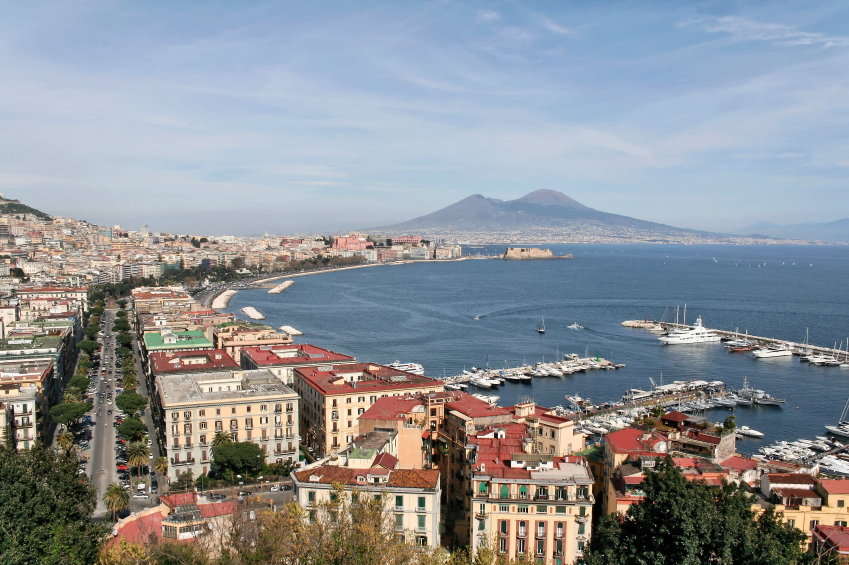
There are as many stories about Naples, Italy, as there are sides to the city, but there's one thing almost everyone can agree on: You either love it or hate it.
Unlike other Italian cities, Naples does not offer calm cobblestoned streets or a leisurely passeggiatta. Its streets are painted with graffiti, and to the untrained eye, there is very little leisure to be had.
Although Naples appears dirty and chaotic, luxury is prevalent in some areas. Scratch the surface and you will find spas, designer shopping and fine-dining restaurants with some of the best views in the world. Each Neapolitan neighborhood has its own character.
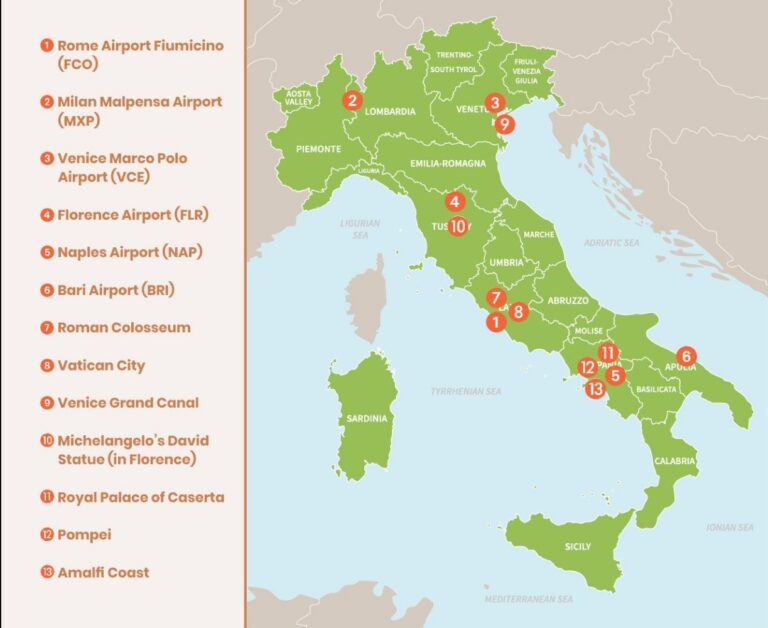
Naples is located in the beautiful Campania region, and many visitors use the city as a base to explore the surrounding areas, particularly Mount Vesuvius, the amazingly preserved cities of Pompeii and Herculaneum, the Amalfi Coast and the island of Capri.
Within Naples itself, historic sights are so numerous that you can't help but come across them. The National Archaeological Museum is one of the best in the world, and the Museo di Capodimonte houses a collection of art that includes the Farnese Collection and rivals the Uffizi in Florence. Strolling along the Gulf of Naples with Mount Vesuvius in the background, you can quickly forget the chaos of the Centro Storico.
Then, of course, there's the food. Naples has some of the best cuisine in all of Italy. From espresso and biscotti to dishes of pasta overflowing with fresh seafood, Naples does it like no other city. True Neapolitan pizza cannot be found anywhere else, and even the street food is worth sampling, especially when served piping hot from storefronts.
The stress of Naples can be overwhelming, and the city is not for everyone. But if you can pick up the pace, it's possible that you might just fall in step.
Must See or Do
Sights—Castel dell'Ovo; Napoli Sotterranea (Naples Underground); Pompeii; Herculaneum.
Museums—Museo Archeologico Nazionale di Napoli; Museo del Capodimonte; MADRE.
Memorable Meals—Pizza with double mozzarella at Antica Pizzeria "Da Michele" Dal 1870; elegant Neapolitan cuisine at Palazzo Petrucci, a refurbished palace; a splurge with incredible water views at George's Restaurant; the seafood risotto and a carafe of house white wine on the waterfront at Ristorante La Bersagliera.
Late Night—Live jazz and a whiskey at Bourbon Street; a glass of good Campanian wine at Enoteca Belledonne; a nonstop night of food, cocktails, live music and dancing at the popular Velvet Zone.
Walks—Through Naples's authentic Centro Storico neighborhood, along either Via Tribunali or Via Benedetto Croce; the seaside promenade; along Via Chiaia, an avenue of shopping delight, to Piazza dei Martiri, surrounded by the best names in fashion.
Especially for Kids—Museo Ferroviario Nazionale; Naples Aquarium; running around the Castel dell'Ovo while catching great views of Mount Vesuvius and the Bay of Naples; Liberty City Fun amusement park.
Geography
Naples wraps along the coast of the Bay of Naples. The central train station is on the eastern edge of the city, and the hilly Posillipo neighborhood constitutes the western side. The Vomero neighborhood is located on the hills that compose the northern portion of the city.
The city's center is large and contains numerous alleyways, nooks and crannies. The most important neighborhoods are the Centro Storico, Chiaia and San Ferdinando. Via Toledo runs north to south and divides the city in two with Centro Storico to the east and Chiaia and San Ferdinando to the west.
The Centro Storico and San Ferdinando neighborhoods are where most historical monuments and museums are found, including Castel Nuovo and Castel dell'Ovo, Piazza Plebiscito, the Duomo, Sotterranea (Naples Underground) and the National Archaeological Museum. The Centro Storico is the best place to find true Neapolitan pizza, although its tiny streets and hectic traffic can make it stressful to walk in. Alternatively, Chiaia is more modern and relaxed, featuring Villa Comunale and Naples' best waterfront area, which is full of fine-dining restaurants.
From the central train station, a 30-minute walk through the Centro Storico gets you to Via Toledo; from there, it takes another 20 minutes to walk to the heart of the Chiaia neighborhood, which is accessed by taking Via Chiaia. For this reason, using Naples' public transportation is paramount when crossing the city.
History
The Greeks founded Naples in the sixth century BC. The settlement was located in what is today the Centro Storico neighborhood, and it was named Neapolis, which literally means "new city." The Romans claimed Neapolis in 326 BC and ruled until AD 800, when Naples became an independent city. This independence lasted until AD 1100, when the city was briefly controlled by the Lombards before falling under Norman rule.
The Normans began to make Naples a world-renowned cultural center. Holy Roman Emperor Frederick II built the first state-run university in Europe, the University of Naples, in 1224. Subsequently, the Angevin dynasty built Sant'Elmo and Castel Nuovo. Artists of all kinds came to Naples during the 13th and 14th centuries, creating an influx of Spanish Gothic and Renaissance-inspired works. Byzantine-influenced art also entered the region when fugitives from Constantinople came to the city. These three styles are still present in the city's architecture. Because the city drew musicians, poets, philosophers, writers and scientists, such people as Handel and Goethe held it in high esteem.
The Golden Period came when the Spanish Bourbons took control in 1734. They named Naples the capital of their southern kingdom, which included southern Italy and Sicily. Charles of Bourbon, better known as King Charles III of Spain, became "king of the two Sicilies." He was king of Naples from 1734 to 1759, during which he accomplished an extraordinary number of artistic feats. He united the Farnese Collection, financed the unearthing of Pompeii and Herculaneum as well as the retrieval of their impressive artworks, and built Capodimonte palace, Regina di Caserta palace and Teatro San Carlo.
Also, for the first time, Naples developed its own unique school of painting, exemplified by Ferdinando Galiani, Pietro Giannone and Giambattista Vico. Charles of Bourbon left Naples in 1759, when he became king of Spain, passing down the throne of Naples to his son, Ferdinand I.
In the late 18th century, Naples's political allegiance switched from Spain to Britain, just in time to unite against Napoleon. The Bourbons were forced to flee in 1798. They returned a few years later, after signing an agreement with Napoleon, and promptly broke the agreement by ruthlessly executing everyone sympathetic to the French. These atrocities and others are attributed to the royal leaders King Ferdinand I (son of Charles of Bourbon) and Queen Maria Carolina, who is known to have greatly influenced her husband. (Perhaps some of their cruelties toward the French can be explained by the death of her sister, Marie Antoinette.)
Public opinion eventually turned against the iron-fisted Bourbons, making the city sympathetic to Giuseppe Garibaldi, who united Italy in 1860. This marked the beginning of the downfall of Naples. The Piedmont region confiscated the city's massive gold reserves, and heavy taxes were leveled by the north. This downfall was further facilitated by a cholera outbreak in 1884 and the severe destruction of World War II.
However, things have begun to look up for Naples. The city's museums and tourist sites have been revitalized. Former mayor Antonio Bassolino spent more than 30 million euros on the tourist industry and fixing inner-city traffic congestion. He also has been blamed for the famous garbage strikes of the 1990s and 2000s, for which the Camorra (the local organized crime ring) shared the blame. The strikes have since stopped.
Potpourri
Pizza was "invented" in the city of Naples around 1860. It is one of the few words that is understood all over the world today.
The Margherita pizza is named for Queen Margherita, the wife of King Umberto I. In the late 1800s, Raffaele Esposito, the owner of Pizzeria di Pietro e Basta Cosi (now Antica Pizzeria Brandi), made a pizza for the queen, on request. He prepared three pizzas; she preferred the pizza with mozzarella and basil, which reminded her of the Italian flag. (He left off the traditional garlic, thinking it unsuitable for the queen's refined palate.)
In 1818, Naples launched the first steamboat ever to grace the Mediterranean Sea.
Naples was originally founded by Greek settlers from the city of Partenope, which was located on the isle of Megaride where Castel dell'Ovo sits today. Legend says that Partenope was named after a mermaid who was one of the sirens in Homer's Odyssey. Early settlers said they found her corpse on the isle of Megaride; she had committed suicide after failing to entrap Ulysses with her intoxicating songs.
An episode of The Sopranos was filmed inside Sybil's Cave, which is located in the city of Cuma in Campi Flegrei. Sybil was an oracle that the Greeks believed lived inside the cave. She was granted immortality by the gods, but she forgot to ask for eternal youth; legend has it that she was hideous to behold.
In Naples, the nativity scene is more important than the Christmas tree, which was only introduced in the 1950s. Elaborate displays feature not only Mary, the baby Jesus and the three wise men, but also ordinary Neapolitans.
When a law was passed in Naples requiring all passengers in a car to wear their seatbelts, a wildly popular fashion took hold in the city: shirts with seatbelts stenciled across the front.
Location
Ferries and superfast hydrofoils serve Naples from various departure points, the most popular of which are Molo Beverello and Mergellina.
The Stazione Maritima at Molo Beverello is the main ferry terminal in Naples, and ferries run to the Amalfi Coast, Capri, Ponza, Ischia, Sardinia and Sicily. This is also the main cruise ship terminal for Naples, with a modern cruise facility with information desks, cafes and restaurants, a post office, banks and ATMs, and shopping. All the major cruise lines dock at Naples. It's about 2 mi/3 km from the main ferry terminal to the Naples Garibaldi main train station, about 1 mi/2 km to the Centro Storico (historical district).
Catch a bus to the Molo Beverello marina from the central train station and get off at the Piazza Municipio stop, or take a tram, car or taxi. A taxi is sure to give you an exciting ride, as Naples is notorious for its traffic. Italian ferry companies running out of Naples include MedMar Group, Tirrenia and SNAV.
Ferries from the Mergellina terminal run to the Aeolian Islands, Palermo and Cagliari. Mergellina is reachable by car, bus, train, tram and taxi.