New York City has always been a city of superlatives: largest, tallest, trendiest, best. It's also one of the world's most dynamic places. The skyline seems to be ever-changing, and exciting new restaurants and shops continue to pop up in unexpected neighborhoods. First-time visitors and natives alike will experience variety at every turn.
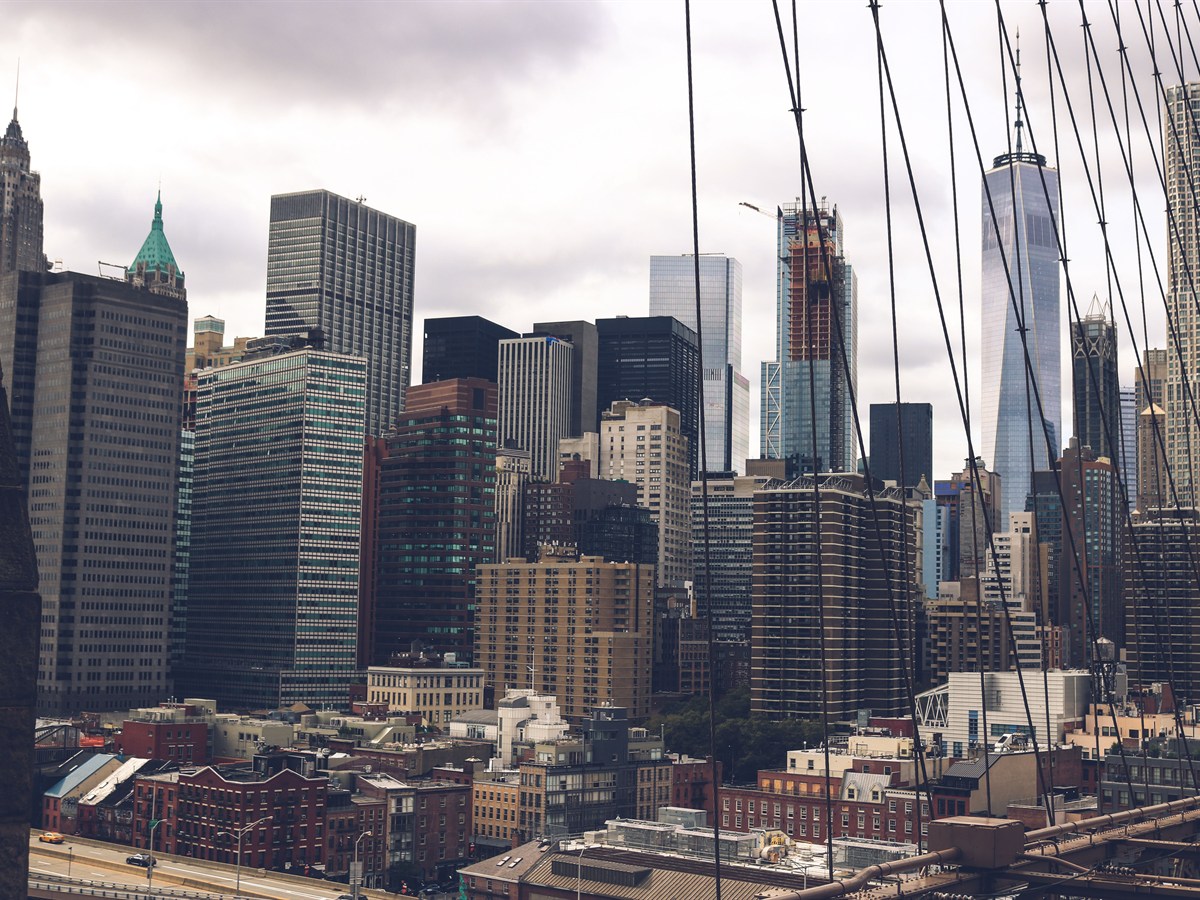
New York offers more to see and do than you can manage in one visit. You'll find the finest selection of entertainment, museums and restaurants in the world. Some stunning new attractions have opened, and some old favorites have been rebuilt and refurbished like an old Broadway musical. But the New York City skyline is still the awe-inspiring star. Two amazing icons are still mourned, but the Freedom Tower has already taken its place among the city's other world-famous landmarks: the Empire State Building, the Chrysler Building, Lincoln Center, the Flatiron Building and the bridges—Brooklyn, Queensboro, Verrazano—to name just a few. Most reassuring of all: The Statue of Liberty is still there, waiting to say hello.
Best Travel Agents
Best Carnival Cruise Line Travel Agents and Deals
We are your premier destination for all things Carnival Cruise! As certified experts in Carnival Cruise Line travel, we pride ourselves on offering the best deals and personalized service to make your cruise vacation unforgettable.
Must See or Do
Sights—The Statue of Liberty; the Empire State Building; the World Trade Center Site and National September 11 Memorial Museum; Times Square; Grand Central Terminal; a ride on the Staten Island Ferry; Ellis Island National Monument; the Brooklyn Bridge; The United Nations; Central Park; Chinatown; Rockefeller Center; the New York Public Library.
Museums—Metropolitan Museum of Art; Museum of Modern Art; Solomon R. Guggenheim Museum; Brooklyn Museum; Studio Museum in Harlem; New Museum of Contemporary Art; Cooper-Hewitt National Design Museum; Frick Collection; The Morgan Library & Museum; Whitney Museum of American Art.
Memorable Meals—Daniel or Jean Georges for quintessential upscale New York dining; spectacular views of nighttime Manhattan from the River Cafe in Brooklyn; farm-to-table cuisine with an Italian twist at Maialino.
Late Night—A performance at Joe's Pub; a Broadway show or an evening of music at Carnegie Hall or Lincoln Center's Metropolitan Opera House; stand-up comedy at Caroline's on Broadway; cool new jazz at Smoke.
Walks—Window-shopping along Fifth Avenue in the 50s and Madison Avenue from 59th to 86th streets; a daytime stroll through Central Park from 59th Street to the Metropolitan Museum of Art; walking up Broadway in SoHo from Grand Street to Greenwich Village; exploring the narrow streets and great shops of the Lower East Side; the Chelsea art galleries and bars from 13th to 27th streets between 10th and 11th avenues; Brooklyn Bridge Park.
Especially for Kids—The American Museum of Natural History and its Rose Center for Earth & Space; the Bronx Zoo; playing on the Alice in Wonderland statue in Central Park; ice skating at Rockefeller Plaza (fall through spring) and at The Pond at Bryant Park (late October to mid-January); the Central Park Zoo; the Children's Museum of Manhattan; the New York Hall of Science; the Central Park Carousel.
Geography
When most people think of New York City, they think of Manhattan, a skinny island about 13 mi/21 km long and just more than 2 mi/4 km across at its widest point. Manhattan is bordered on the west by the Hudson River and on the east by the East River (which is actually a tidal estuary rather than a true river). The Harlem River defines the northern tip, and New York Bay, which leads out to the Atlantic, is at the south end of the island.
New York City includes four other boroughs: Brooklyn, Queens, Staten Island and The Bronx. Brooklyn and Queens are on the western end of Long Island. Only The Bronx (the definite article is part of the official name) is located on the mainland. New Jersey is just across the Hudson River from Manhattan.
Manhattan can be roughly divided into three regions: Downtown is the southern end of the island, including Wall Street; Midtown begins around 31st Street and extends north to the southern end of Central Park (59th Street); Uptown is anywhere farther north. The city is further divided into numerous sections within these regions. Chelsea, Gramercy Park, SoHo, the East and West villages, the Lower East Side, Hell's Kitchen and Harlem are just a few of the famous areas of New York.
Manhattan streets generally follow a simple grid pattern, with a few notoriously confusing exceptions, such as the twisty streets of lower Manhattan, Greenwich Village and the diagonal swath cut by Broadway. Numbered streets (15th Street, 16th Street) run east-west with the numbers increasing as you go north. Numbered avenues (Fifth Avenue, Sixth Avenue) run north-south with the numbers increasing as you go west. Fifth Avenue is conventionally the dividing line between the East and West sides of the city. This grid system makes getting around quite easy. If you're ever lost, just look for the cross streets, and you will inevitably find your way.
A few avenues with names can cause additional confusion. In Midtown and on the Upper East Side, the avenues east of Fifth are, in order: Madison, Park, Lexington, Third, Second, First, York (north of 60th Street) and East End (north of 79th Street). At Columbus Circle (59th Street) on the Upper West Side, Eighth Avenue becomes Central Park West. West of that you'll find Columbus (it's Ninth Avenue south of there), Amsterdam (10th), Broadway, West End (11th) and Riverside Drive. And south of Houston Street (in SoHo and TriBeCa—"South of Houston" and "Triangle Below Canal"), the numbered streets are replaced by names. This lower part of Manhattan has been known to cause confusion for even the most steadfast New Yorker.
History
Ships have been crucial to the city's development since Italian explorer Giovanni da Verrazano landed on Staten Island in 1524. Henry Hudson, an Englishman employed by the Dutch East India Co., was the first European (in 1609) to set foot on the island now known as Manhattan—the Dutch named the place Nieuw Amsterdam. They went on to buy it from the native population at a now infamous bargain-basement price (supposedly worth about US$24 in today's dollars). Rule over the colony changed hands between the Dutch and English three times, until England won final possession in the late 1660s. By 1700, some 7,000 people lived in the city now called New York.
Manhattan played a key role in the American Revolution. It was designated the new country's temporary capital in 1785, and George Washington assumed the presidency there in 1789. The city's excellent natural harbor led to its increasing importance, as it became a commercial shipping center and a major port of entry for immigrants. By 1800, the city's population had swelled to 60,000—more than any other city in the U.S.
The area around Manhattan grew at the same time, of course. With the completion of bridges that spanned the area waterways (the Brooklyn Bridge was the first in 1883), the door was opened for the creation of today's five-borough New York City. The union of Manhattan with Brooklyn, Queens, The Bronx and Staten Island in 1898 made it a metropolis—an engine that would lead the continent and the world in such diverse realms as finance, banking, shipping, advertising, art, theater, media, garment and other manufacturing, and, of course, tourism.
Of course, the city has faced its share of adversity. Traffic jams, crime and pollution are all persistent issues, though most New Yorkers will be quick to point out that the city is a good bit safer than it was even 15 years ago—and if you happen to come across a photo of New York subways in the 1970s-80s, today's absence of graffiti will seem like a shock.
The 2001 terrorist attacks caused profound trauma to New York. A memorial at the site—and ones at firehouses and other locations throughout the city—serve to remind families, friends and New Yorkers of the human cost. In 2012, Hurricane Sandy caused considerable destruction across the region, flooding nearly one-fifth of the city and damaging more than 150,000 homes.
The city showed its resiliency and completed more than US$1 billion worth of recovery efforts, and plans are underway to construct extensive levees to secure the city from rising sea levels.
Potpourri
New York City has 840 mi/1,352 km of subway track and 1,745 mi/2,808 km of bus routes.
Manhattan comes from the Delaware Indian name Man-a-hat-ta, meaning "island of the hills."
Macy's Department Store is the world's largest store, with 2 million sq ft/195,096 sq m of storage and shopping space. It is also the world's second-largest consumer of helium (for balloons in the Thanksgiving Day parade), after the U.S. government.
The far eastern corner of the East Village is also known as Alphabet City because the avenues east of First Avenue are named avenues A, B, C and D.
Aretha Franklin, Lauryn Hill, James Brown and Ella Fitzgerald are past winners of Apollo Theater's Amateur Night—but Luther Vandross was booed off the stage four times before his career took off.
The site where the United Nations headquarters sits today was a slaughterhouse until the late 1940s. The Tudor City complex, across First Avenue, has few windows facing the United Nations because when the buildings were completed in 1928, there were still slaughterhouses to the east.
Nearly 30 men perished in the building of the Brooklyn Bridge, including designer John Roebling, who suffered what was ultimately a fatal accident during the sinking of the bridge's western support.
Location
The modern and comfortable Manhattan Cruise Terminal on Manhattan's West Side handles as many as five cruise ships at once at piers 88-94. There is easy access from the West Side Highway (12th Avenue) by car, taxi or bus. Each pier is equipped with rooftop parking, a snack bar, waiting area, phones, taxi stand, public bus stop, tour-bus stop and complete customs processing. Phone 212-246-5450. http://www.nycruise.com.
The pier area (12th Avenue, 48th-55th streets) is strictly a place to get on and off your ship, as this far West Side neighborhood does not lend itself to walking. Twelfth Avenue itself is a wide, multilane boulevard that is normally heavy with traffic. However, Manhattan Waterfront Greenway, a bicycle and pedestrian path, does run along the Manhattan shore. If you arrive in the city by ship, don't fear: Most of the city's sights, including Fifth Avenue, the Theater District and Times Square, are only a short cab ride away.
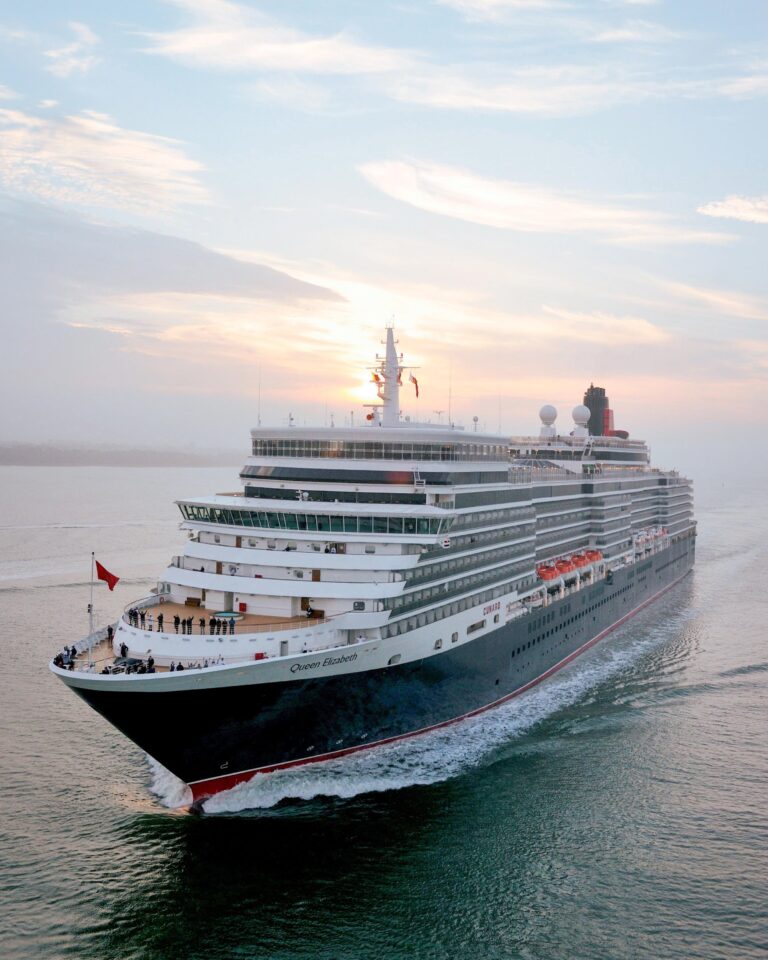
Many ships, including the elegant Queens of the Cunard Lines, dock at the Brooklyn Cruise Terminal at Pier 12 in Red Hook, a slowly developing but trendy neighborhood. There is a convenient and secure outdoor parking lot a short walk away (US$25 overnight). Taxis and authorized town-car services are available; it's about US$51 to midtown Manhattan. Some cruise lines also provide bus transportation. Within a few minutes' walk from the terminal, there are two city bus lines: the B77 and the B61. With either line, it is a short ride to subway stations, and then a quick trip into Manhattan. These are fairly straightforward connections, but it is worth having a map or asking directions at the terminal.
Though this Brooklyn terminal is smaller (it services one ship at a time), it has plenty of amenities for travelers—an on-site food truck, vending machines, ample seating and climate control. Bowne and Imlay Streets, Brooklyn. Phone 718-855-5590. http://www.nycruise.com.
Shore Excursions
New York is the starting point for many cruise trips to the Caribbean, Atlantic Canada, Europe and even Asia. All cruises visiting New York offer shore excursions of the city, but New York is best explored on your own. If you do decide to take a guided tour, the ones offered by your ship will give you a general idea of the city. They may also be more cost-effective and will guarantee that you get back to your ship in time.
The itineraries and prices of shore excursions vary among cruise lines. Some typical ship-sponsored excursions may include a scenic drive in Lower Manhattan with a visit to the September 11 Memorial, a driving tour of New York landmarks, a walk on the Brooklyn Bridge and various shopping excursions. Check with your travel advisor for more information.