From Tashkent, I flew west to Urgench, the closest airport to the ancient oasis city of Khiva. One of the absolute gems of Uzbekistan, Khiva is an open-air museum, a UNESCO World Heritage Site, and an ancient trading citadel with over 2,500 years of living history.
Khiva rose to prominence during the early Middle Ages and flourished as a fabled stop along the historic Silk Road. While it was ransacked and rebuilt multiple times across centuries of conquerors, the Khiva that modern travelers journey across continents to see is Ichon Qala: the ancient inner walled city with its labyrinth of cobblestone walkways, majestic madrasas, and towering mosques.
“Old Khiva is truly frozen in time. You almost expect Genghis Khan and his warriors to appear around the corner as you walk down its weathered clay streets.”
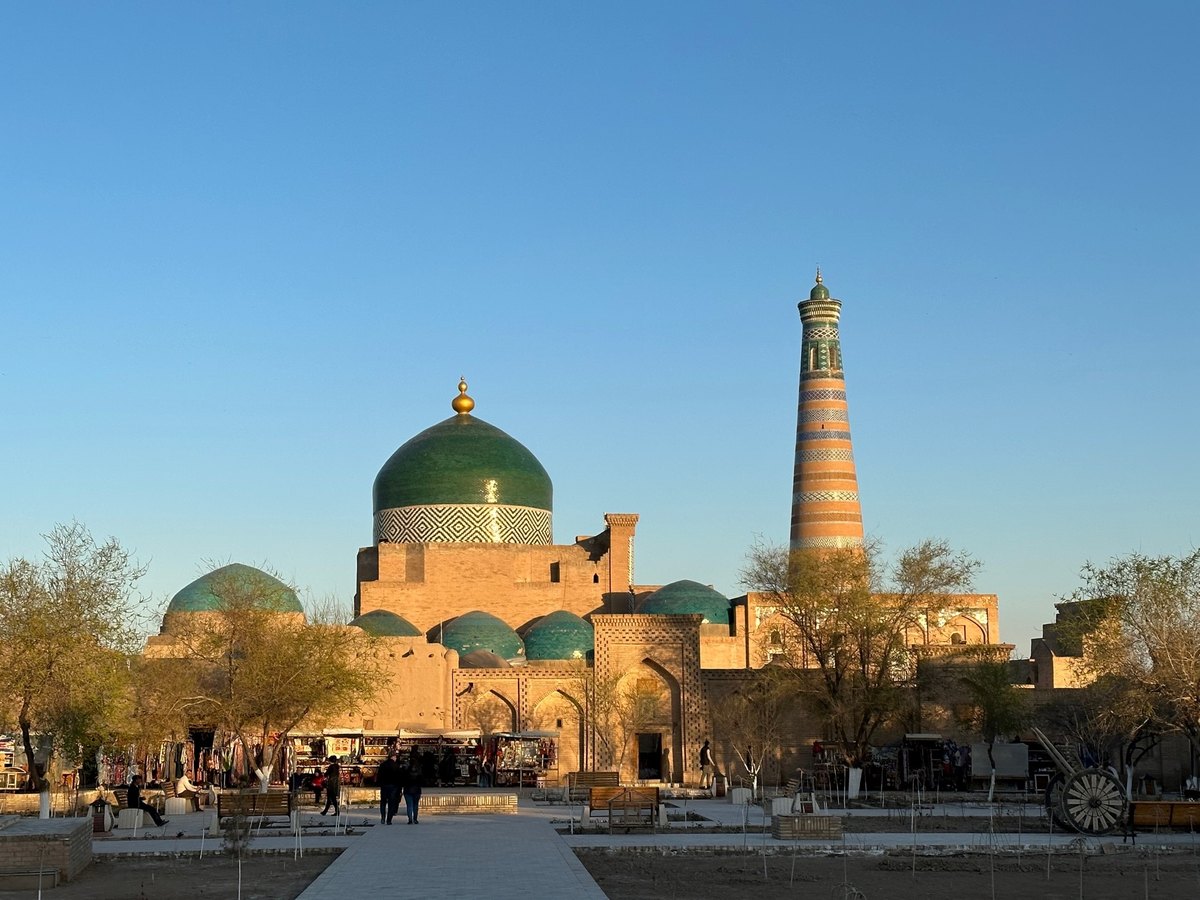
Ichon Qala, Khiva: Enclosed by dramatic crenellated mudbrick fortress ramparts, Khiva's inner city preserves an intact medieval skyline dominated by mosques, madrasas, and minarets.
The Iconic Minarets of Khiva
The very first architectural feature you notice upon stepping through the western gates of the citadel is the forest of minarets puncturing the desert sky. Each possesses its own distinctive character, engineering lineage, and ceramic mosaic technique.
Among the most celebrated is the Juma Mosque Minaret, standing gracefully beside the 10th-century Friday Mosque famous for its hypostyle hall supported by 218 intricately carved wooden pillars. But the most unmistakable monument in the entire citadel is the Kalta Minor (Short Minaret) — completely unique in Uzbekistan and enveloped from base to crown in brilliant aquamarine, lapis, and emerald glazed ceramic tiles.
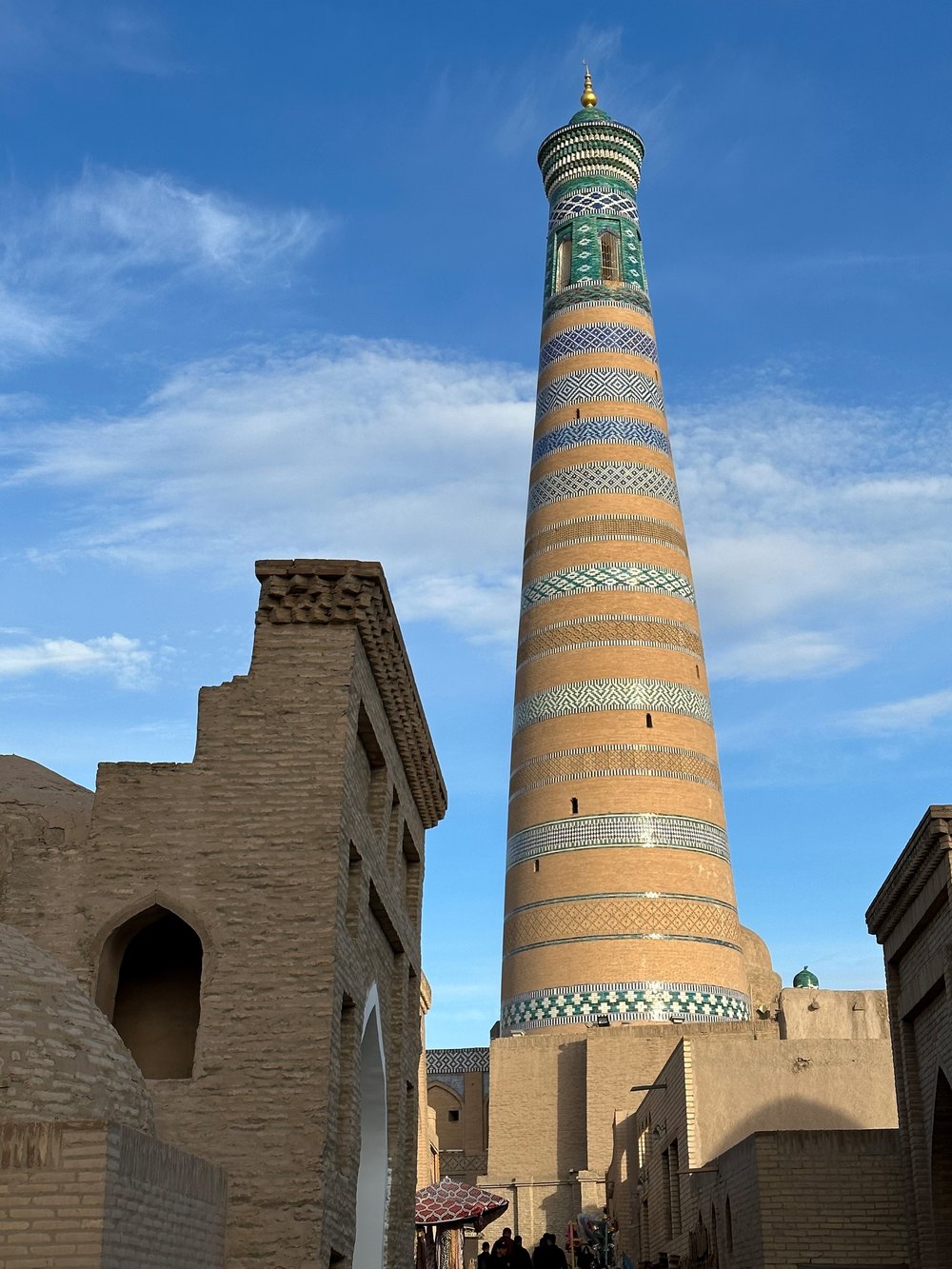
Islam Khoja Minaret: The tallest minaret in Khiva, reaching nearly 57 meters (187 feet) into the sky with bands of turquoise tilework.
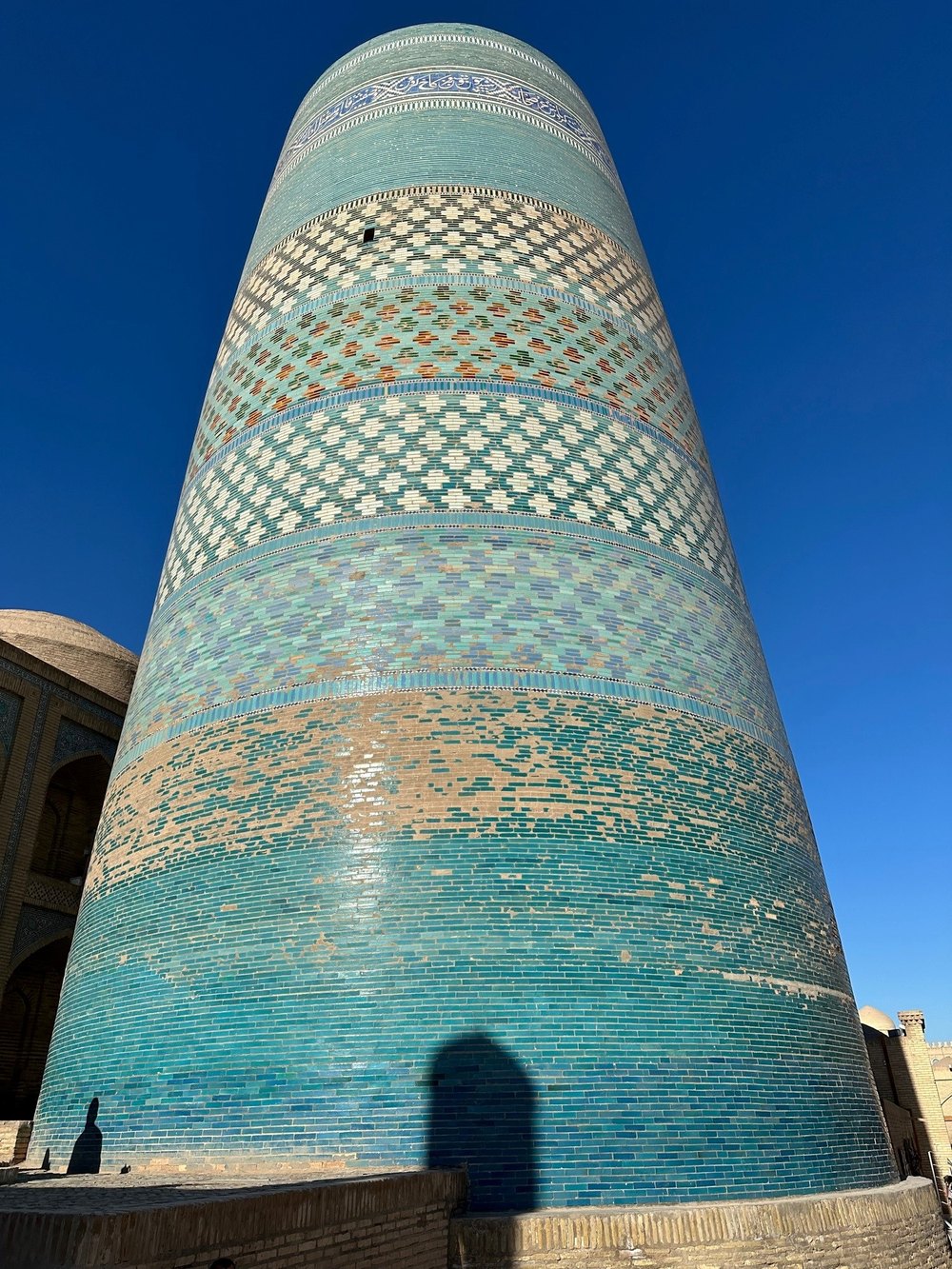
Kalta Minor: Originally planned to be the highest tower in the Islamic world, left unfinished at 29 meters in 1855, creating a mesmerizing jewel of glazed majolica.
Standing in contrast to the stout Kalta Minor is the Islam Khoja Minaret, the tallest minaret in Khiva at nearly 57 meters (187 feet). Its dramatic tapering silhouette, encircled by narrow horizontal bands of gleaming turquoise, white, and lapis tiles, served historically both as a religious call to prayer and as an illuminated beacon guiding camel caravans across the dunes of the Kyzylkum Desert.
Sacred Architecture: Over 50 Mosques & Madrasas
Within the compact two-square-kilometer confines of the walled city, there are over 50 mosques and madrasas (Islamic theological academies). It is virtually impossible to see them all during a single stay, but several stand out for their extraordinary preservation and artisanal mastery:
- Shergazi Khan Madrasa: Built in the early 18th century, this historic two-story academy is celebrated as one of the oldest centers of higher learning in Khiva, known for producing notable Central Asian poets and scholars.
- Muhammad Rakhim-Khan Madrasa: Located directly across from the royal Kunya-Ark citadel, this grand complex boasts some of the finest blue-and-white majolica floral tilework and geometric calligraphy in the Silk Road region.
- Tash Khauli Palace (Stone Palace): The labyrinthine 19th-century royal palace of the Khiva Khans, featuring over 150 lavish rooms, intricate painted wooden porticos, and wall-to-ceiling blue glazed tiles crafted by master ceramist Abdullah Jin.
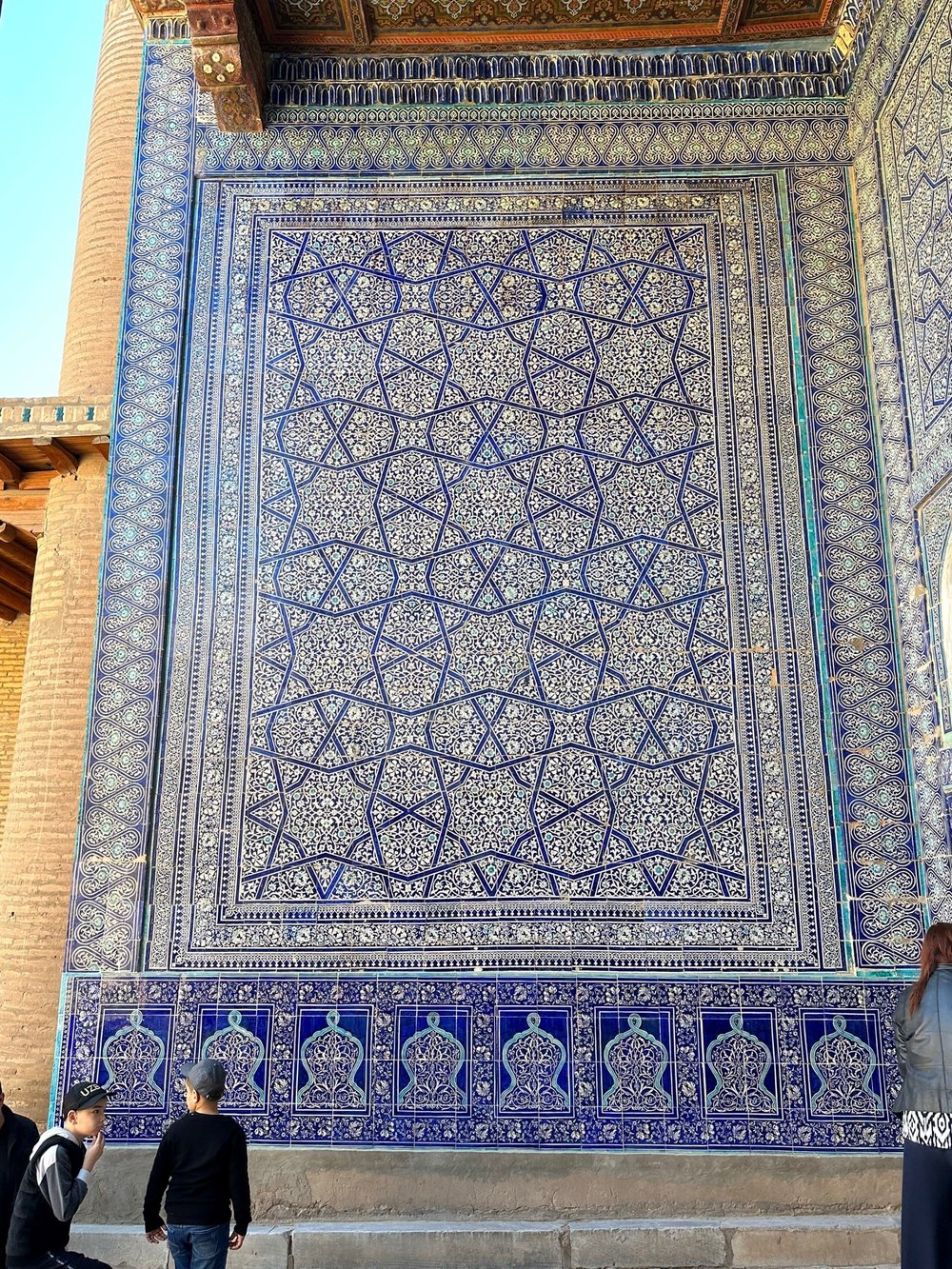
Master Ceramic Tilework: High-relief glazed tile mosaics featuring arabesque flourishes and Qur'anic calligraphy.
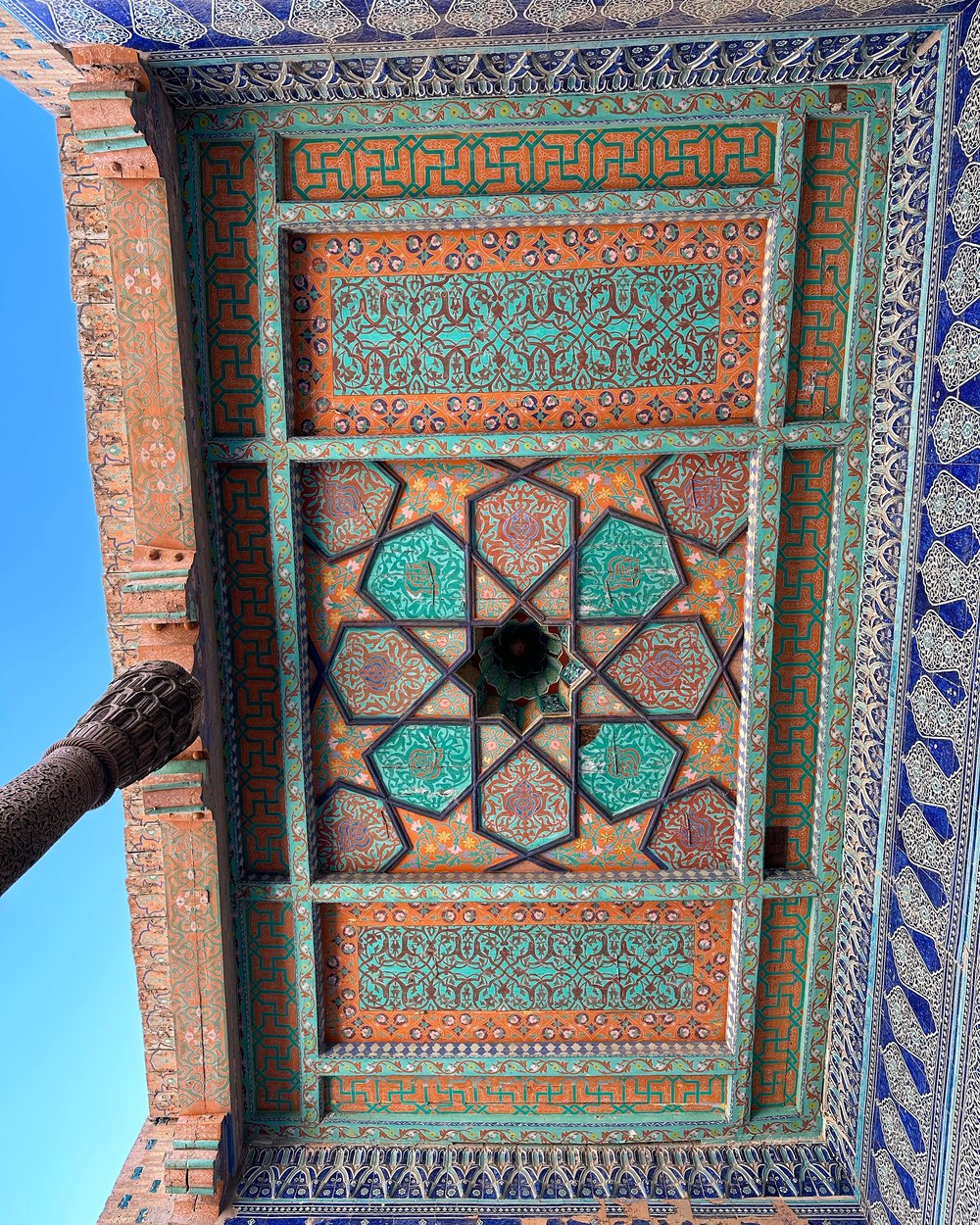
Carved Timber Ceilings: Elm and walnut beams carved with botanical motifs and painted in rich natural mineral pigments.
Bactrian Camels, Handicrafts & Citadel Ramparts
As you wander through the pedestrian streets of Old Khiva, you will pass local craftsmen carving decorative walnut doors, shaping traditional wool chugirma hats, and displaying hand-painted miniature art.
Insider Shopping Advice: While the atmospheric artisan stalls in Khiva are delightful to browse, my practical advice for serious collectors is to hold off on major textile and rug purchases until you arrive in Bukhara. Bukhara’s five-century-old covered trading domes offer far wider variety, higher artisan quality, and substantially better negotiated prices for authentic Uzbek suzanis and hand-knotted silk carpets.
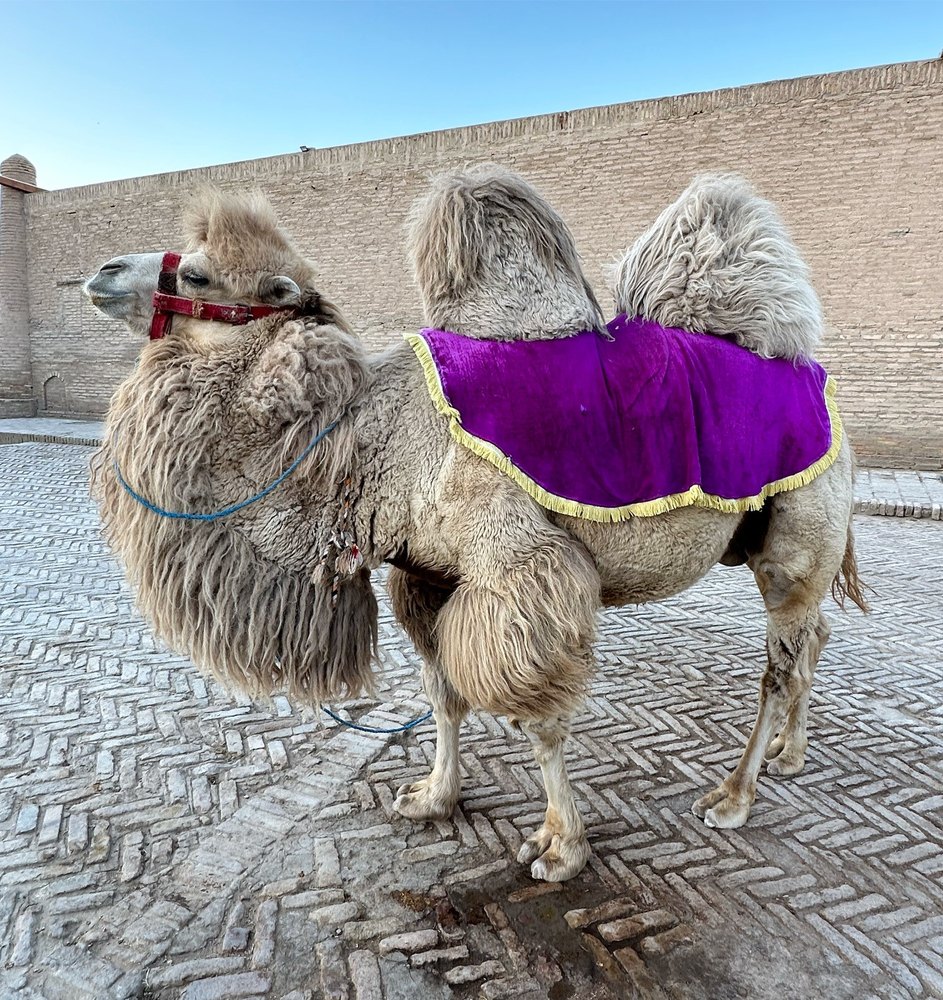
Misha the Bactrian Camel: Double-humped Bactrian camels were the true workhorses of the Silk Road caravan trade, capable of traveling weeks across arid deserts and rocky mountain passes without water.
If you have never encountered a live Bactrian camel, Khiva offers an authentic glimpse. Several gentle pack camels wander peacefully through the ancient citadel. My favorite was Misha (pictured above)—without question the best-looking and most photogenic camel I encountered on my entire journey across Uzbekistan. Bactrian camels have two humps, dense winter coats that protect against freezing desert winds, and the legendary stamina required to traverse the harsh sands of Central Asia.
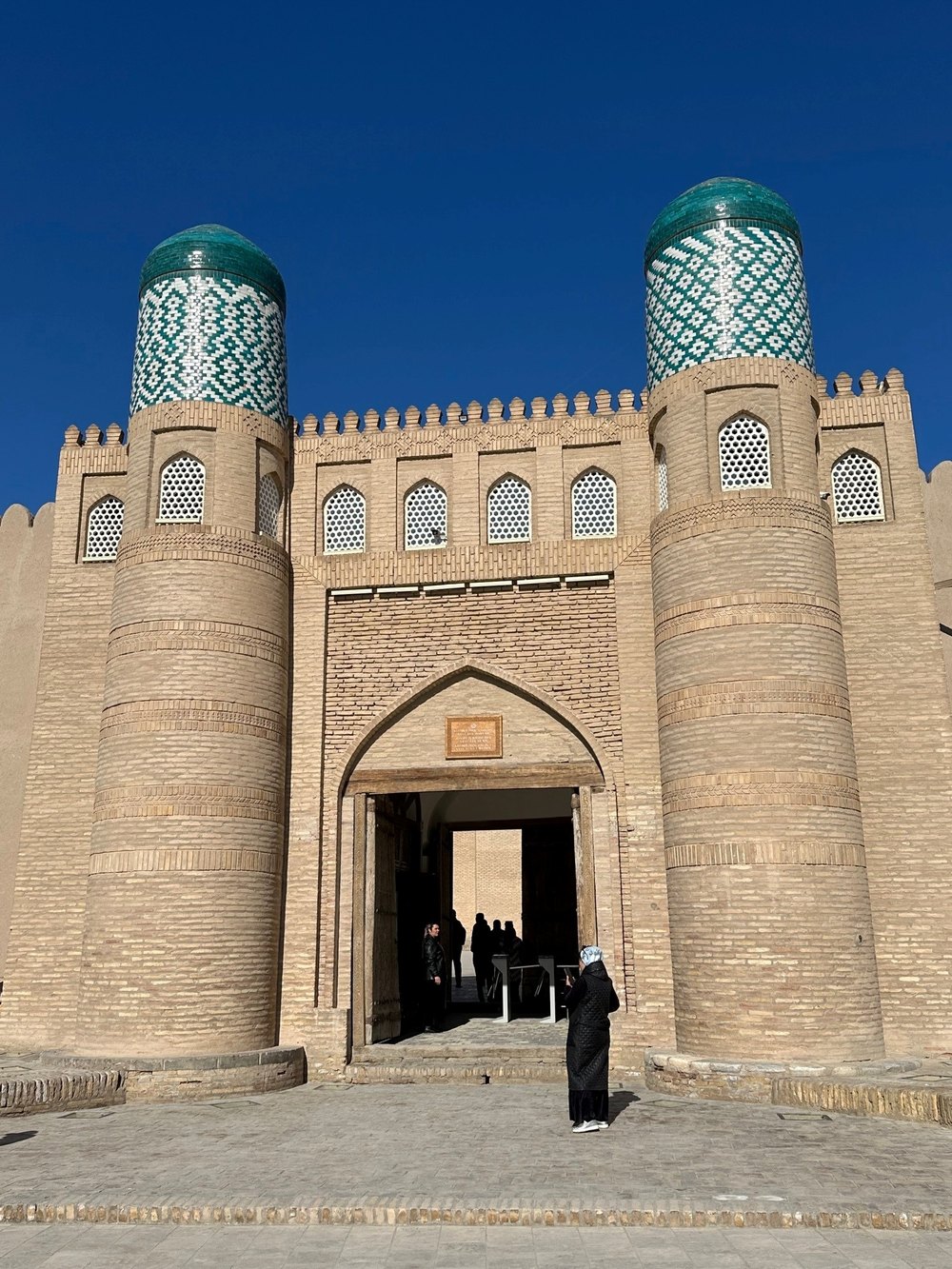
Fortress Ramparts: The massive dried mudbrick walls of Ichon Qala rise up to 10 meters (33 feet) high, guarding the medieval city against desert sieges.
Be sure to dedicate time to walking along the citadel walls, especially in the early morning before tour groups arrive and again at golden hour sunset. The watchtower atop the Kunya-Ark Fortress provides an unforgettable 360-degree panorama of clay rooftops, glowing turquoise domes, and the vast desert horizon.
Where to Stay: Authentic Boutique Hospitality
When planning a journey to Khiva, it is important to set proper expectations: there are currently no 5-star international luxury hotel chains within the historic citadel. Because Ichon Qala is an strictly guarded archaeological reserve, large-scale modern development is prohibited.
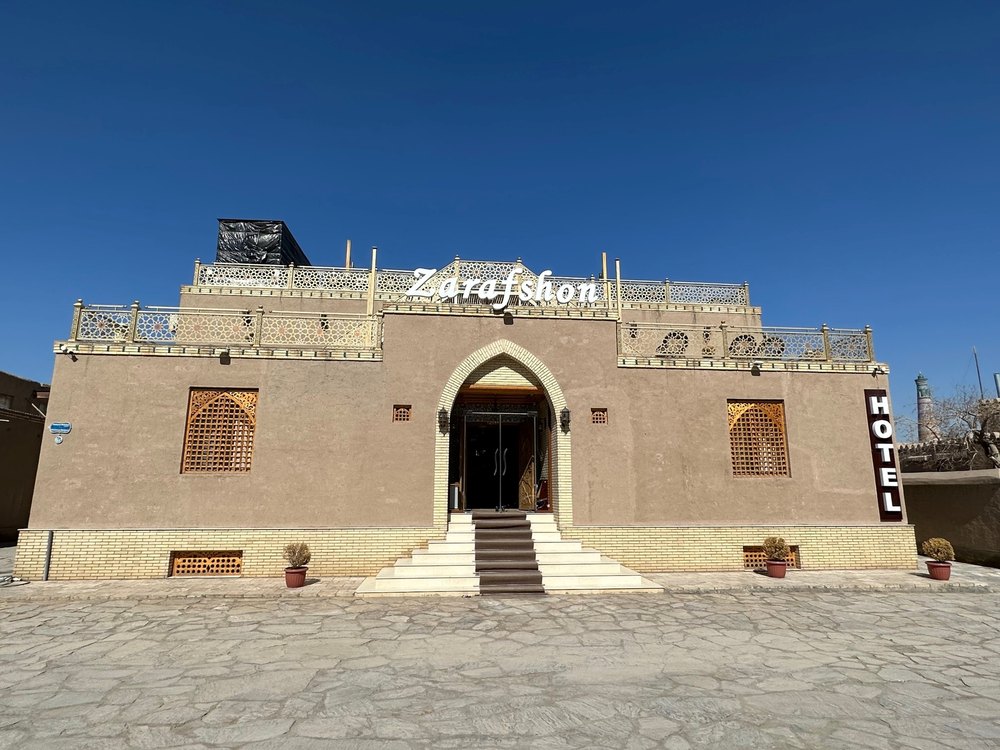
Zarafshon Boutique Hotel: An intimate, well-managed heritage bed-and-breakfast situated in the heart of Ichon Qala just steps from the Kalta Minor.
Within the old walled city, my top recommendation is the Zarafshon Boutique Hotel, where I stayed. It is a simple, exceptionally clean, comfortable, and well-run boutique bed-and-breakfast. The service is warm and hospitable, and its prime location near the Kalta Minor allows you to step directly out of your room into the quiet, lantern-lit streets of the medieval city after dark.
⚒ Khiva & Silk Road Field Summary
-
Gateway Airport
Urgench International (UGC), 30 min transfer
-
UNESCO Inscription
Ichon Qala Inner Fortress (1990)
-
Historical Age
Over 2,500 years of living history
-
Best Visiting Hours
Early morning & sunset (golden hour)
-
Recommended Stay
1 to 2 nights before continuing to Bukhara
-
Preferred Partner
Exeter International (Signature Preferred)
The Uzbekistan Silk Road Trilogy
Ignacio Maza’s expedition spans the three crown-jewel cities of Central Asia. Explore the companion firsthand guides to complete your Silk Road journey:
Your Silk Road Destination Resource: Exeter International
To experience Uzbekistan at the highest level of comfort, seamlessness, and cultural depth, private destination management is essential. Exeter International, Signature Travel Network’s preferred partner for Uzbekistan and Central Asia, designs bespoke tailor-made itineraries throughout the region.
Exeter provides experienced English-speaking private scholars and guides, vetted chauffeurs with premium air-conditioned vehicles, domestic flight and rail ticketing, and exclusive access to architectural monuments before public opening hours.
Frequently Asked Questions: Khiva & Uzbekistan Travel
How do you reach Khiva when traveling through Uzbekistan?
+
The fastest and most comfortable way to reach Khiva is via a domestic flight from Tashkent to Urgench Airport (UGC), followed by a scenic 30-minute private transfer into Khiva's historic center. High-speed rail and sleeper train options also link Khiva to Bukhara across the Kyzylkum Desert.
What is Ichon Qala and why is it significant?
+
Ichon Qala is Khiva's inner walled fortress and the first site in Uzbekistan inscribed on the UNESCO World Heritage list (1990). Enclosed by massive crenellated mudbrick ramparts that stretch over two kilometers, it preserves over 50 historic monuments and hundreds of residential clay homes virtually unchanged since the 18th and 19th centuries.
Why was the Kalta Minor Minaret left unfinished?
+
Commissioned in 1851 by ruler Mohammed Amin Khan, the Kalta Minor was envisioned as a colossal 70-meter minaret tall enough to gaze across the desert all the way to Bukhara. When the Khan was killed in battle in 1855, construction halted abruptly at 29 meters. Today, its stout silhouette completely enveloped in vibrant turquoise and emerald majolica tilework is one of Central Asia's most recognizable architectural icons.
Where should luxury travelers stay in Khiva?
+
Because Ichon Qala is a protected open-air museum, there are no large 5-star international chain resorts within the citadel walls. Instead, discerning travelers stay at charming, boutique heritage bed-and-breakfasts such as the Zarafshon Boutique Hotel or Orient Star Khiva (a converted 19th-century madrasa), providing clean, comfortable rooms, hospitable service, and immediate walking access to the illuminated monuments.
Tailor-Made Silk Road Expeditions
Plan Your Silk Road Journey with Vincent Vacations
Connect with Vincent Vacations’ certified Central Asia and Silk Road specialists to curate your private expedition across Khiva, Bukhara, and Samarkand with Exeter International.
Request a Custom Silk Road Quote →