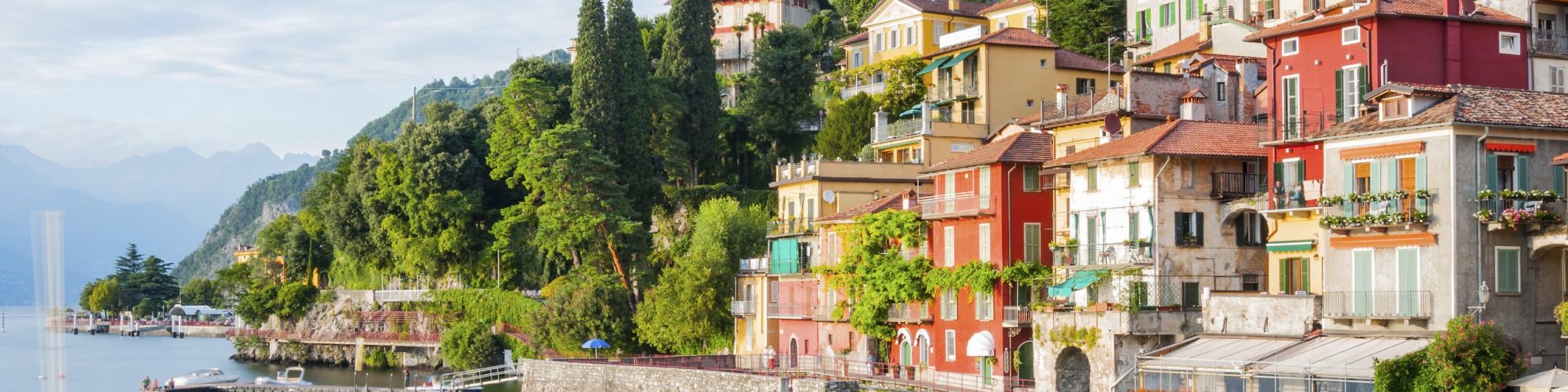
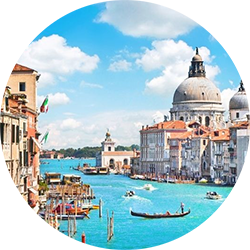
The poet Percy Bysshe Shelley was right: "This lake exceeds anything I ever beheld in beauty," he wrote in 1818. Beautiful Romanesque churches, splendid aristocratic villas with exuberant gardens, romantic medieval towns with steep cobbled lanes and spectacular viewing points, which offer an ever-changing panorama of the blue lake with the backdrop of snow-capped mountains—Lake Como has it all.
Como, the largest city on the lake, is best enjoyed on a day excursion, whereas Bellagio, Menaggio, Tremezzo and Cernobbio are idyllic towns and perfect for longer stays.
Best Travel Agents
Best Carnival Cruise Line Travel Agents and Deals
We are your premier destination for all things Carnival Cruise! As certified experts in Carnival Cruise Line travel, we pride ourselves on offering the best deals and personalized service to make your cruise vacation unforgettable.
Must See or Do
Sights—Como's medieval Cathedral and its Romanesque Basilica di Sant'Abbondio; the medieval gem of Santa Maria del Tiglio in Gravedona; world-famous Villa Carlotta and its magnificent gardens in Tremezzo; the subtropical gardens of Villa Monastero in Varenna.
Museums—Tempio Voltiano, dedicated to the inventor of the battery; Museo Didattico della Seta with its silk displays; Museo degli Strumenti per la Navigazione with its nautical collection.
Memorable Meals—A formal dinner at Mistral in the Hotel Serbelloni; sea bass or rack of lamb in a romantic setting at Sant'Anna 1907 in Como; fish specialties or rabbit ravioli at Alle Darsene di Loppia near Bellagio; Michelin-starred creative Mediterranean seafood at Al Porticciolo 84 in Lecco; wonderful local dishes at La Cucina della Marianna in Griante.
Late Night—Opera or concert at Teatro Sociale in Como; exotic cocktails at Fresco Cocktail Shop in Bellagio; a romantic sun-downer at Lido di Lenno Beach Bar.
Walks—A stroll through the charming old town of Bellagio and up to Monte San Primo; a haunted walk around Isola Comacina; an ambitious hike along the Via dei Monti Lariani from Cernobbio to Sorico.
Especially for Kids—The falconry displays in the castle gardens of Castello di Vezio near Varenna; the Christmas decorations in the shop I Vetri di Bellagio; the Adventure Park next to the upper station of Lecco's Funivia; the spooky gorge of the Pioverna torrent near Bellano.
Geography
Spanning 56 sq mi/146 sq km, Lake Como is Italy's third-largest lake, only surpassed by Lake Garda and the Lago Maggiore. All these lakes were formed by retreating glaciers at the end of the last Ice Age. Because of its characteristic shape (a "Y" turned upside down), the Lario, as Italians still call it, boasts the longest shoreline of all Italian lakes (105 mi/170 km), and it's also one of the deepest lakes in Europe.
Sheltered from cold northern winds by the foothills of the Alps, the climate is particularly mild. The middle and southern parts of the lake are especially graced with a subtropical vegetation. High mountains, including the Monte Legnone (8,557 ft/2,609 m) frame the north branch of the lake, the Ramo Colico. East of the southeast Lecco arm, the rocky Grigna mountains also provide great walking and hiking opportunities. The southwest Como branch, the Ramo di Como, is the most beautiful one, and the Riviera Tremezzina enjoys a truly wonderful setting, only topped by Bellagio, which sits right in the center of the lake, at the tip of the peninsula that separates the two southern arms. At Colico, the Adda flows into the lake and leaves it at Lecco, to continue its way on to the river Po.
Como lies about 40 km/25 mi north of Milan, and only a few miles/kilometers from Switzerland.
History
The Larius, as Lake Como was called by the Romans, who founded Como in 196 BC, always held a special place in Roman hearts, not just for its strategic importance but also for the beauty of the lake. Greek slaves imported by Julius Caesar are said to have planted the first olive trees in the region.
No wonder this little paradise was invaded numerous times, the Germanic tribe of the Langobards being just one of them. In the 12th century, Como was embroiled in a bitter fight with Milan, which it finally won with the help of Emperor Frederic Barbarossa. Freedom didn't last long. In the 14th century, the Visconti family took over; 100 years later, the Sforza came to rule Como, and Milan was back in charge. Then came the Austrians and the Spanish—even the French under Napoleon ruled it for a short time. In 1859, Como finally became part of the kingdom of Italy.
Pliny the Elder was the first known celebrity to build a villa on the lush shores of the Lario, as the Italians still often call Lake Como. Many noble and rich guests were to follow, and they left beautiful villas, embellished with magnificent gardens. Poets from Virgil to Shelley have sung the praise of Lake Como. Composers such as Gabriel Faure and Liszt stayed there, and even George Clooney bought a large villa there, continuing to attract celebrities and gazers alike.
For 500 years, Como has been an important center for textiles. Today the area controls 80% of Europe's silk production. Even when it comes to industry, Lake Como prefers beauty.
Potpourri
Lake Como has its own version of "Nessie"—the Lariosaurus. Fossils of the Lariosaurus are on display in the Castel del Vezio, but sightings of a "living monster" have been reported since 1940, and several books have been written about it.
All inhabitants of Bellagio, which inspired the building of the luxurious Hotel Bellagio in Las Vegas, could easily be accommodated in the rooms of this hotel.
Scenes from Star Wars Episode II, Casino Royale and Ocean's Twelve were filmed on Lake Como locations.
Benito Mussolini was caught by Italian partisans on 27 April 1945 near Como when he tried to flee to Switzerland. He was executed one day later.
Como is Europe's most important center for high-quality silk products.
The Comacine Masters, or the Masters of Como, have been called the most important Masonic guild in Europe.