For most travelers journeying to Uzbekistan, Tashkent will serve as the first and last stop on the itinerary. Uzbekistan’s cosmopolitan capital is a bustling metropolis of 2.5 million residents and the largest city in all of Central Asia.
Originally founded over two millennia ago as an oasis staging post along northern Silk Road trading routes, Tashkent evolved through Arab conquests, Genghis Khan’s devastation, and Tsarist Russian rule. The city travelers experience today was largely rebuilt following a catastrophic earthquake in 1966 that flattened much of the mudbrick core. Soviet architects rebuilt Tashkent with broad, tree-lined boulevards, grandiose neoclassical plazas, and sprawling green parks, complemented by monumental modern structures erected since national independence in 1991.
“Tashkent surprises many first-time visitors: it seamlessly weaves deep Silk Road spiritual heritage with tree-shaded Soviet boulevards, underground subway palaces, and sophisticated hospitality.”
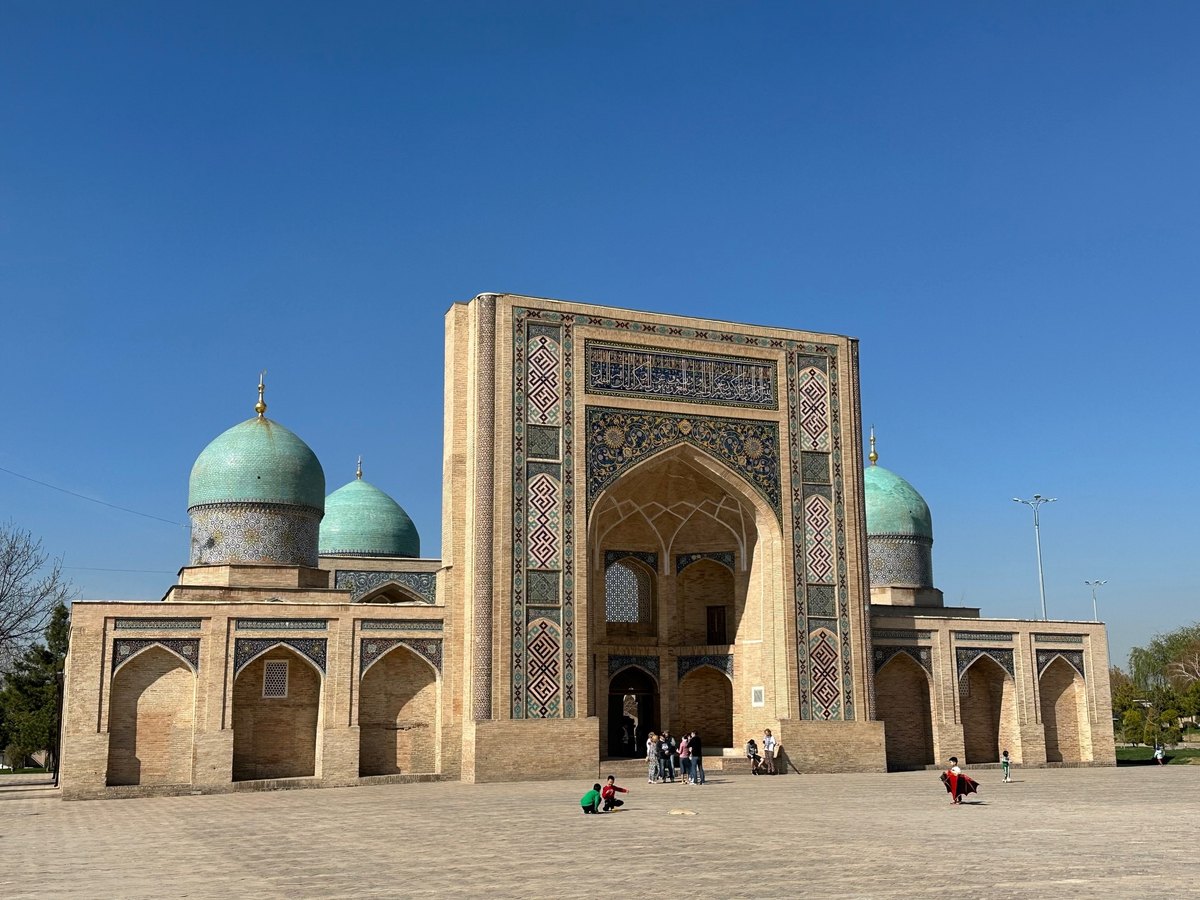
Hazrat Imam Complex: The historic and spiritual epicenter of Tashkent, showcasing 500 years of Islamic architectural preservation, turquoise domes, and soaring minarets.
The Hazrat Imam Complex & The World's Oldest Quran
The most sacred site in the city is the Hazrat Imam Complex (locally known as Hast Imam), the spiritual heart of Tashkent dating back over five centuries. This serene pedestrian plaza offers travelers a tangible impression of what old Tashkent looked like before the 1966 earthquake leveled the ancient neighborhoods.
At the center of the complex stands the Muyi Muborak Library & Madrasa, home to one of Islam’s most revered treasures: the Uthman Quran (Samarkand Kufic Quran). Dating to the 7th century (circa 651 AD) and written on massive deer parchment leaves, it is considered the oldest surviving written copy of the Holy Quran in existence, stained with the blood of the third Caliph, Uthman ibn Affan.
Adjacent to the library are three extraordinary mosques built across different architectural epochs: the 16th-century Barak-Khan Madrasa, the 19th-century Tilla Sheikh Mosque, and the monumental 21st-century Hazrat Imam Friday Mosque, flanked by two 50-meter minarets and illuminated by gleaming turquoise cupolas.
Kukeldash Madrasa & Chorsu Bazaar
A short drive into the Old City brings you to the Kukeldash Madrasa, an imposing Islamic theological academy built in the 1570s during the Shaybanid dynasty. Its towering 20-meter yellow-brick portal, intricate blue majolica mosaics, and serene inner student courtyard survived centuries of earthquakes and historical repurposing — having served at various points as a fortress, a Silk Road caravanserai for traveling merchants, and an educational academy.
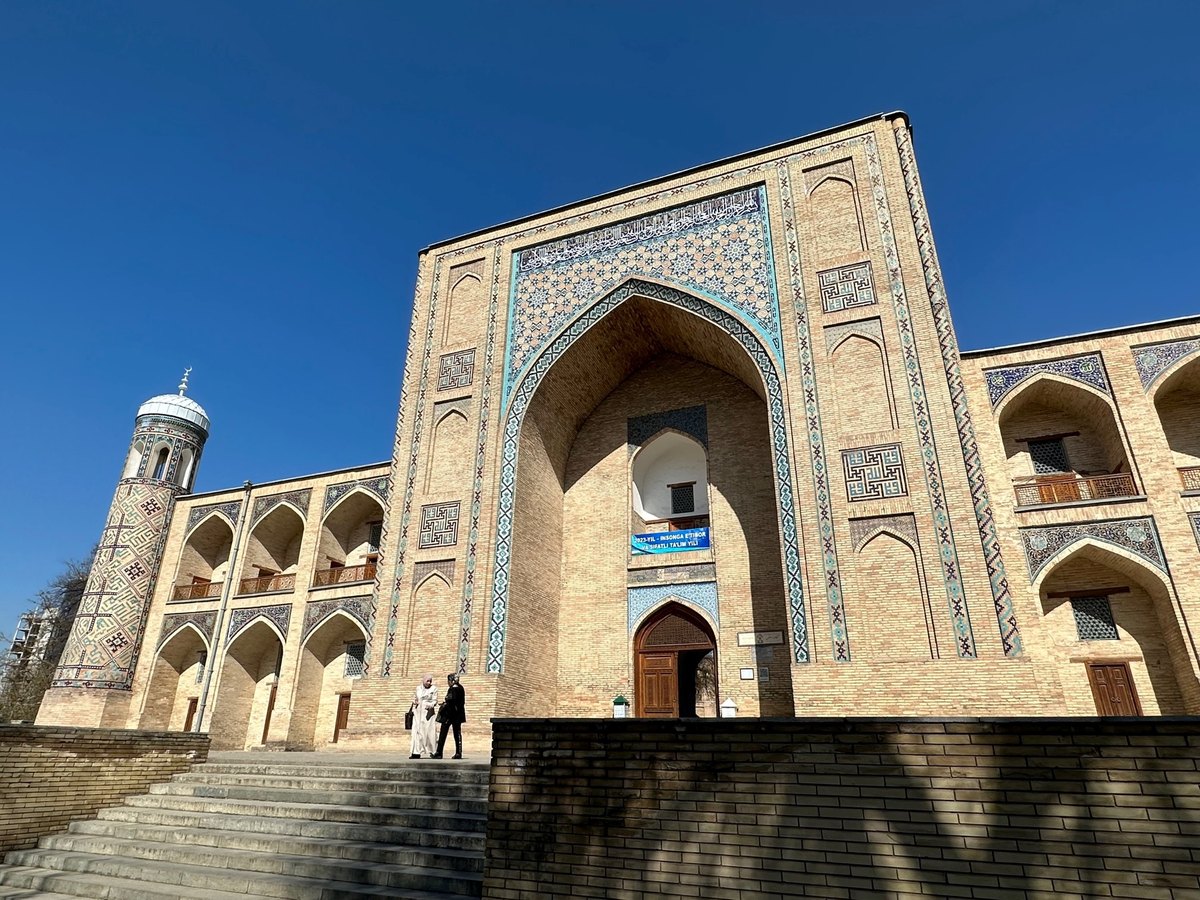
Kukeldash Madrasa: Built in the 1570s, this massive portal and courtyard complex anchored caravan trade and Islamic scholarship along the ancient Silk Road.
Directly adjacent to Kukeldash lies Chorsu Bazaar (“Crossroads Bazaar”), the vibrant commercial heartbeat of Tashkent. This sprawling open-air emporium is crowned by a colossal Soviet-era turquoise tiled geodesic dome.
Inside, the sensory immersion is unforgettable: pyramids of dried apricots, golden raisins, walnuts, and pistachios from the Fergana Valley; towering stacks of freshly baked lepyoshka (Uzbek flatbread) stamped with traditional circular patterns; fragrant mounds of cumin and saffron; and lively butchers and cheesemakers serving warm samples to passersby.
The Museum of Applied Arts: Uzbekistan's Finest Crafts
For collectors and lovers of design, my strongest recommendation in Tashkent is the Museum of Applied Arts (Amaliy San’at Muzeyi), without question the most beautiful boutique museum in the capital.
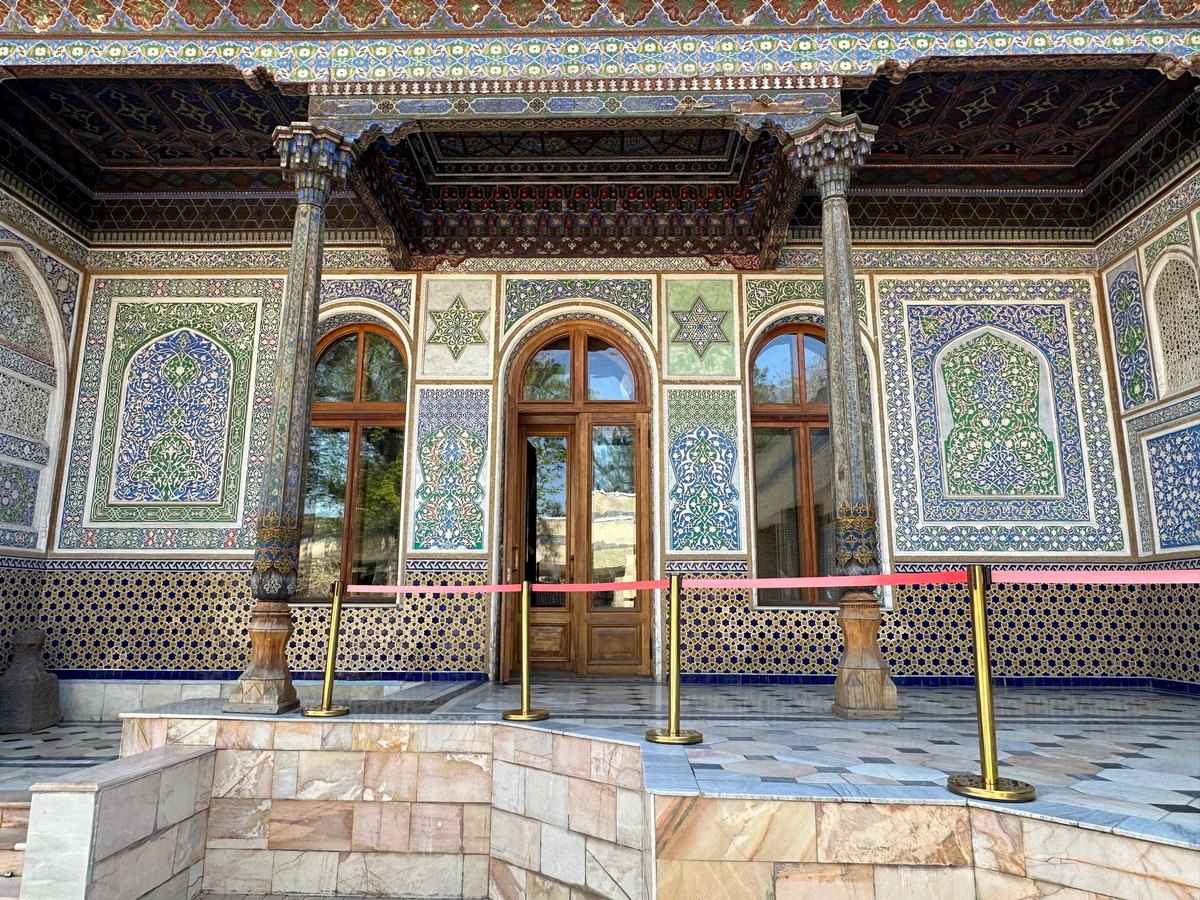
State Museum of Applied Arts: Housed within the former 19th-century residence of Tsarist diplomat Alexander Polovtsov, featuring hand-carved ganch plasterwork and painted cedar ceilings.
The museum itself is housed in the opulent 19th-century mansion built for Russian Tsarist diplomat Alexander Polovtsov. He hired master craftsmen from Bukhara, Samarkand, and Khiva to adorn every wall and ceiling with intricate ganch (carved gypsum plaster), hand-painted floral woodwork, and glazed ceramic tiles.
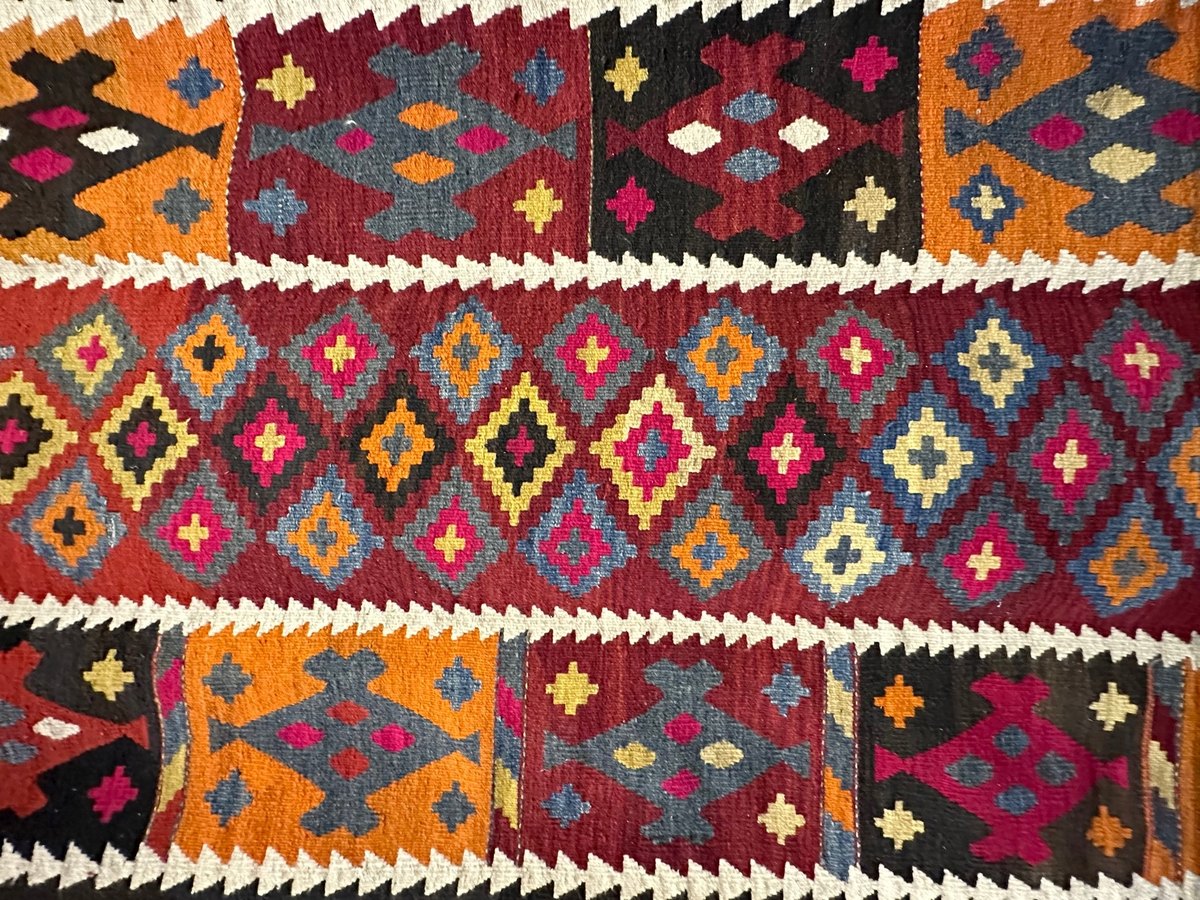
Master Textile Arts: Uzbekistan's legendary weaving heritage on display, featuring antique silk suzanis, ikat textiles, and hand-knotted Silk Road rugs.
Inside the museum’s galleries, you can examine museum-quality antique suzanis (hand-embroidered wedding hangings), silk ikat fabrics, carved walnut furniture, hammered copper ewers, and regional pottery traditions from Rishtan and Gijduvan.
The Tashkent Metro: Soviet Underground Art Palaces
One of the most enjoyable and surprising highlights of Tashkent is its Metro system. Built in 1977 following the earthquake, it was designed with dual purposes: efficient public transit and blast-resistant civil defense shelters.
For a fare of approximately $0.10 USD, you gain access to an subterranean art museum where each station was created around a unique cultural or scientific theme, adorned with marble, granite, crystal chandeliers, and ceramic bas-reliefs.
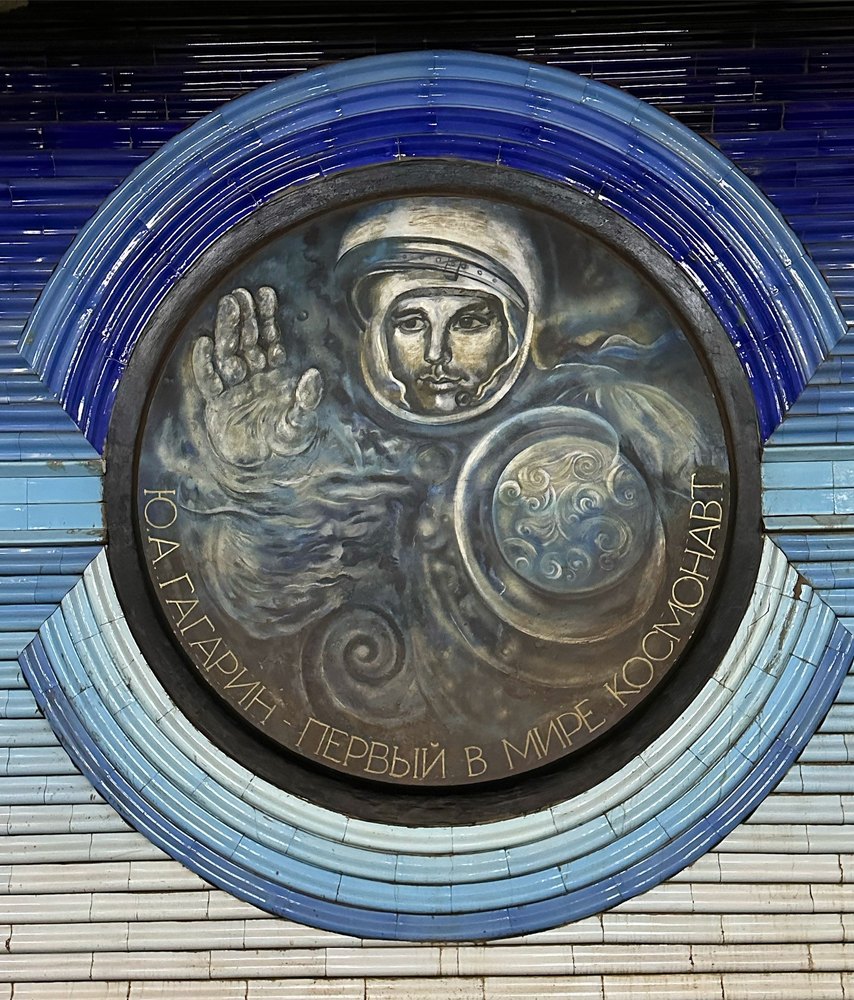
Kosmonavtlar Station: Ceramic medallion honoring cosmonaut Yuri Gagarin, the first human in outer space (1961).
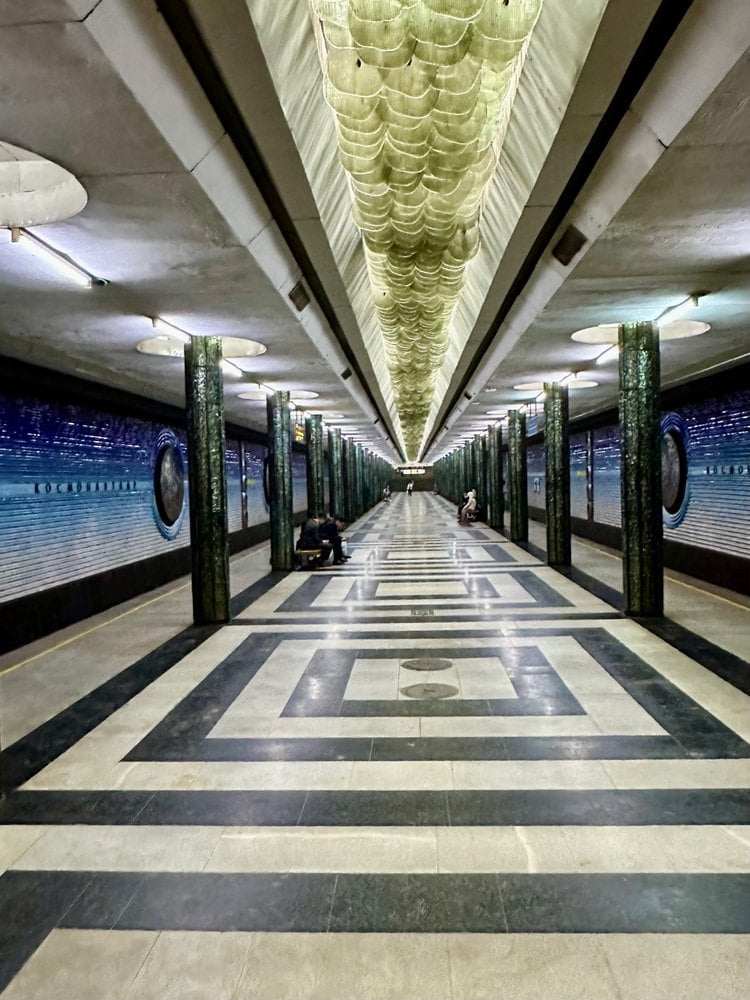
Cosmonauts Platform: Columns and walls transition through cosmic color gradients from deep space black to atmospheric turquoise.
My personal favorite station is Kosmonavtlar (“Cosmonauts”), celebrating Soviet human spaceflight. The subterranean walls transition through graduated shades of ceramic tile from dark midnight blue to daylight sky, flanked by glass columns and circular portrait medallions honoring Yuri Gagarin, Valentina Tereshkova, and ancient astronomer Ulugh Beg.
Day Excursion: Ugam-Chatkal National Park
If you enjoy mountain scenery and outdoor recreation, consider dedicating a day to Ugam-Chatkal National Park, located just over an hour’s drive northeast of Tashkent in the western Tian Shan mountain range.
The park offers crisp alpine air, hiking trails winding through walnut groves, rushing mountain streams, and panoramic vistas of Lake Charvak and snow-capped peaks rising over 3,000 meters. It provides a refreshing natural contrast to the historic mudbrick citadels of the Silk Road plains.
Where to Stay: Hyatt Regency Tashkent
The undisputed premier luxury address in the capital is the Hyatt Regency Tashkent, located on Navoi Avenue within walking distance of government plazas, theaters, and shopping boulevards.
This sleek, contemporary five-star property offers some of the most comfortable and spacious guest rooms in Central Asia. The 7th-floor wellness facility includes a full-service spa, fully equipped fitness center, and a tranquil 20-meter indoor lap pool with floor-to-ceiling city views.
Dining Recommendation: Don’t miss dinner at the hotel’s top-floor rooftop Italian restaurant, Sette. Featuring wood-fired pizzas, handmade pastas, and an extensive international wine list, its outdoor terrace offers panoramic views over the illuminated boulevards of modern Tashkent.
⚒ Tashkent Field Summary & Travel Facts
-
Population & Status
2.5 million • Capital of Uzbekistan
-
Gateway Airport
Islam Karimov Tashkent Int'l (TAS)
-
Top Cultural Treasure
7th-Century Uthman Quran (Hast Imam)
-
Subway Experience
Tashkent Metro ($0.10 fare • Kosmonavtlar)
-
Premier Hotel
Hyatt Regency Tashkent (Navoi Ave)
-
Recommended Stay
2 nights (arrival & departure buffer)
The Uzbekistan Silk Road Expedition Series
From the capital of Tashkent, your Silk Road journey advances westward across the ancient caravan trails. Explore Ignacio Maza’s companion field reports:
Planning Your Central Asia Journey: Exeter International
Navigating Uzbekistan across long overland distances, high-speed rail connections, and private museum permissions requires expert regional coordination. Exeter International, Signature Travel Network’s preferred DMC for Central Asia, specializes in tailor-made luxury travel throughout Uzbekistan.
Through Vincent Vacations and Exeter International, guests enjoy vetted private drivers, expert scholarly guides, seamless VIP airport assistance in Tashkent, and curated behind-the-scenes access to private textile collections and culinary experiences.
Frequently Asked Questions: Tashkent & Uzbekistan
What role does Tashkent play on an Uzbekistan Silk Road itinerary?
+
For virtually all international travelers, Tashkent is the primary gateway into and out of Uzbekistan via Islam Karimov Tashkent International Airport (TAS). Beyond being a transit hub, it offers a fascinating architectural contrast between ancient Islamic monuments, grand Soviet neoclassical avenues, and modern Central Asian cosmopolitan culture.
What is the historic significance of the Hazrat Imam Complex?
+
Dating back over 500 years, the Hazrat Imam (Hast Imam) complex is the spiritual heart of Tashkent. It houses the Muyi Muborak Library, home to the revered 7th-century Uthman Quran (Samarkand Kufic Quran), stained with the blood of the third Caliph Uthman and recognized by UNESCO as the world's oldest surviving written Quran manuscript.
Why is the Tashkent Metro considered an architectural marvel?
+
Constructed in 1977 as the first underground rapid transit system in Central Asia, each station of the Tashkent Metro was designed as an ornate subterranean palace featuring carved marble, granite, crystal chandeliers, and ceramic mosaics celebrating Uzbek folklore, poets, and space exploration (such as the famed Kosmonavtlar station honoring Yuri Gagarin).
Where is the best luxury hotel to stay in Tashkent?
+
The premier luxury hotel in Tashkent is the Hyatt Regency Tashkent, located on Navoi Avenue in the city center. It features spacious contemporary rooms, exemplary service, a top-floor 7th-level indoor swimming pool and luxury spa, and acclaimed dining at its rooftop Italian restaurant Sette.
Tailor-Made Central Asia Expeditions
Plan Your Silk Road Journey with Vincent Vacations
Connect with Vincent Vacations’ certified Silk Road destination specialists to craft your bespoke cultural itinerary across Tashkent, Khiva, Bukhara, and Samarkand with Exeter International.
Request a Custom Silk Road Quote →