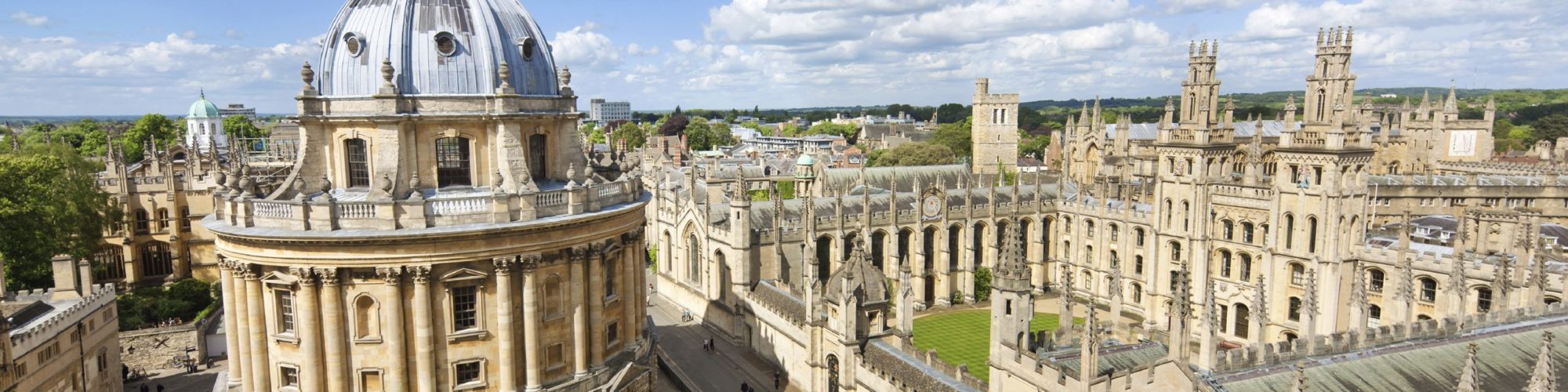
Visiting England is like finding your way through a well-developed hedge maze: You can't hurry your way through. Around nearly every bend in the road you'll find stately homes, crumbling castles, magnificent gardens, thatch-roofed cottages, cozy pubs and beautiful churches to explore. It's easy to while away hours admiring the details—a painting here, an architectural detail there. In fact, despite the country's relatively small size, you never seem to see it all.
From Shakespeare and royalty to Stonehenge and thousands of years of history, England is simply a wonderful place to visit time and time again. And London is a destination in itself.
Geography
England is only one of four countries that make up the U.K. or, more formally, the United Kingdom of Great Britain and Northern Ireland. The name "Great Britain" and the term "British" refer to a geographic rather than political division and should only be used when making reference to the island comprising England, Scotland and Wales. "British Isles" is another geographical description: It includes Ireland as well as Britain but has no political meaning.
England itself is divided into 47 counties, many of which have long histories and retain strong local identities. But it's easier to lump them into more general regions. The area surrounding London is known as the Home Counties. East Anglia, a region of agricultural flatlands, spans the area from the northeast of London to The Wash (a North Sea Bay).
The central part of the country—around Birmingham and Coventry—is appropriately called the Midlands, the heart of industrial England. North of the Humber and the River Mersey, reaching to the Scottish border, is home to enchanting and sometimes rugged countryside. The West Country is the area southwest of Bristol and Bournemouth that includes the sometimes pastoral, sometimes rugged terrain of Dorset, Somerset, Devon and Cornwall. Rocky cliffs, seagulls and the briny foam crashing on the beach give this region much of its character.
History
England's history—especially during its empire years—had a tremendous influence worldwide. It provided the basis for many of the traditions of its former colonies and gave them the English language. It also started the Industrial Revolution, whose effect on the people and the landscape is apparent throughout the country, from the vestiges of early steam-powered mills to a landscape crisscrossed by canals, railroads and bridges.
When the Romans invaded in AD 43, they found a highly developed, tribal-based island culture in Britain. These were the indigenous Celts—they fought an endless stream of invaders for the next millennium and were eventually assimilated or forced west into Wales and Ireland and north into Scotland. After the Romans, the Saxons followed, and then came the Vikings. Finally, in 1066, the Norman Conquest was the last foreign invasion of England. The Normans (French) were enthusiastic builders of castles and churches that are still evident today.
The Middle Ages were difficult times: A drawn-out war with France, political and religious revolts, and recurring bouts of the Black Death (plague) took their toll on the people. Toward the end of the Middle Ages, the Tudor family gained control of the monarchy and began a dynasty that included the much-married Henry VIII and ended with the 45-year reign of Elizabeth I. The Elizabethan period (dating from 1558) was a golden age, when Shakespeare enthralled the London crowds, and great seafarers such as Sir Francis Drake and Sir Walter Raleigh explored new territories.
Over the years, England continued to expand its reach around the globe, reaching its height of power during the reign of another great queen, Victoria, who ruled for 64 prosperous years in the 19th century. At its height, the British Empire was the largest the world has ever seen—encompassing approximately a quarter of the world's area and an equal fraction of its population.
The 20th century marked a turning point in British history: Two costly wars and the demise of the Empire took their toll. Britain remains torn between traditional ties with the U.S. and its geographic, social and economic links to Europe. Increased autonomy for Scotland and Wales has many people seeing the increased layers of government as more bureaucracy rather than increased autonomy.
In a June 2016 referendum commonly known as Brexit, the U.K voted by a slim margin to withdraw from the European Union. The most immediate effect of Brexit was a drop in value of the pound sterling; economic uncertainty is expected to continue for some time. The separation became official on 31 January 2020, and terms of the new trade deal went into effect on 1 January 2021.
Snapshot
England's main attractions include historic sites, museums, royalty, theater, Stonehenge and other antiquities, London, rural scenery, stately homes, a varied coastline, quaint villages, formal gardens, walking trails, canal trips, shopping, friendly people, cultural events and quirky traditions (such as the biggest-liar competition, gurning, cheese rolling and fire-barrel carrying).
There is enough diversity in England to satisfy 99% of international travelers—everyone will find something to love. The only travelers who might not enjoy themselves are those who can't tolerate unpredictable weather—summer can be very hot, but it could just as easily be cloudy or wet. England has four very distinct seasons, each with its own charm, but to remain so gloriously green, it takes a lot of rain.
Potpourri
Numerous canals wind through England, and canal tours offer an unusual leisurely activity. Not designed to cover a long distance, canal cruising via narrow boat is a relaxing way to visit small towns and meet the local people (especially at canal-side pubs).
If you're a sports fan, you should take in a football (soccer) match. High-profile top teams play in big stadiums, but most Saturdays and Sundays you can watch local football teams playing in just about every park in the country (except in high summer).
One of the world's greatest day trips has to be the Eurostar train ride from London (St. Pancras International) to Paris (Gare du Nord): two European capitals, an engineering masterpiece and a culture clash all in one day, with little effort. It's quite easy to leave London early, spend several hours strolling around Paris and be back in time for a nightcap.
With roughly 2,000 mi/3,220 km of coastline, England is a nation surrounded by water. No place in the country is more than 75 mi/120 km from the coast.
The southwest of England has a thriving surfing scene, especially on the beaches of North Cornwall, where Atlantic rollers can create great conditions, given the right weather. The best beaches are found in Devon, Dorset and Cornwall, although the water can be quite cold.
Short walks (4-10 mi/6-16 km) on some of the 140,000 mi/225,400 km of public footpaths are the ideal way to get away from the crowds and see the quiet, pastoral side of England.
If you're in England around 5 November, attend some Guy Fawkes celebrations, which include fireworks and bonfires. Fawkes tried to blow up Parliament with kegs of gunpowder in 1605—hence the fireworks.
Small, semiwild native ponies still roam freely in Dartmoor National Park, on Exmoor (Somerset) and in the New Forest (Hampshire).